Department of Molecular & Human Genetics, Banaras Hindu University, Varanasi, India.
Indian J Med Res. 2018 Dec;148(Suppl):S100-S106. doi: 10.4103/ijmr.IJMR_494_18.
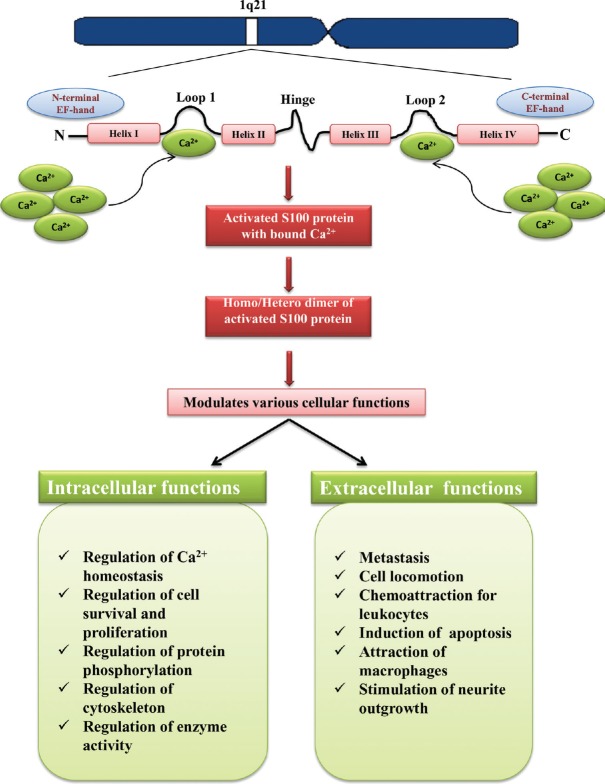
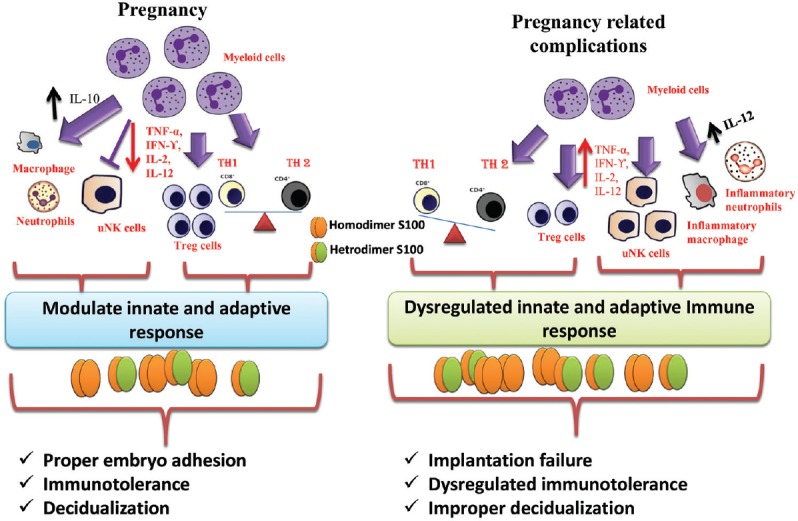
S100 proteins are calcium (Ca)-binding proteins and these have an important function in progression, manifestation and therapeutic aspects of various inflammatory, metabolic and neurodegenerative disorders. Based on their involvement in intracellular or extracellular regulatory effects, S100 proteins are classified into three subgroups: one subgroup is specialized in exerting only intracellular effects, other performs both intracellular and extracellular functions and the third subgroup members only display extracellular regulatory effects. S100 proteins are expressed particularly in vertebrates and have cell-specific expression. Functionally, S100 proteins act through their surface receptors and regulate cell functions in autocrine or paracrine mode. Receptor for advanced glycation end products (RAGEs) and toll-like receptor 4 are the main surface receptors. S100 proteins participate in the regulation of cellular differentiation, proliferation, apoptosis and inflammation along with Ca homeostasis, energy metabolism and cellular migration, and perform the respective functions through their interaction with transcription factors, nucleic acids, enzymes, receptors, cytoskeleton system, etc. Currently, their role in adverse pregnancy outcomes and compromised reproductive health is being explored. These proteins are present in amniotic fluid, endometrium tissue and foetal brain; therefore, it is quite likely that alterations in the expression levels of S100 family members will be affecting the particular function they are involved in and ultimately affecting the pregnancy in adverse manner. The current review discusses about an association of S100 proteins in pregnancy disorders such as endometriosis, intrauterine growth retardation and miscarriage.
S100 蛋白是钙(Ca)结合蛋白,在各种炎症、代谢和神经退行性疾病的进展、表现和治疗方面具有重要作用。根据它们在细胞内或细胞外调节作用中的参与程度,S100 蛋白被分为三个亚组:一个亚组专门发挥细胞内作用,另一个亚组发挥细胞内和细胞外功能,第三个亚组成员仅显示细胞外调节作用。S100 蛋白特别在脊椎动物中表达,并具有细胞特异性表达。在功能上,S100 蛋白通过其表面受体发挥作用,并通过自分泌或旁分泌模式调节细胞功能。晚期糖基化终产物受体(RAGEs)和 toll 样受体 4 是主要的表面受体。S100 蛋白参与细胞分化、增殖、凋亡和炎症的调节,以及 Ca 稳态、能量代谢和细胞迁移,通过与转录因子、核酸、酶、受体、细胞骨架系统等相互作用发挥各自的功能。目前,人们正在探索它们在不良妊娠结局和生殖健康受损中的作用。这些蛋白存在于羊水、子宫内膜组织和胎儿大脑中;因此,S100 家族成员表达水平的改变很可能会影响它们所参与的特定功能,并最终以不利的方式影响妊娠。目前的综述讨论了 S100 蛋白在子宫内膜异位症、宫内生长迟缓、流产等妊娠疾病中的作用。