Chen Hui-Min, Shen Ya-Li, Liu Ming
Department of Medical Oncology, West China Hospital, Sichuan University, Chengdu 610041, Sichuan Province, China.
World J Clin Cases. 2019 Mar 26;7(6):785-791. doi: 10.12998/wjcc.v7.i6.785.
Follicular dendritic cell sarcoma (FDCS) is an uncommon type of tumor with low incidence. To date, no standard treatment for the disease has been established. Surgery remains the main treatment. Adjuvant chemotherapy and radiotherapy are optional approaches. Metastatic cases require multidisciplinary collaborative treatments. However, the choice of chemotherapeutic drugs is controversial.
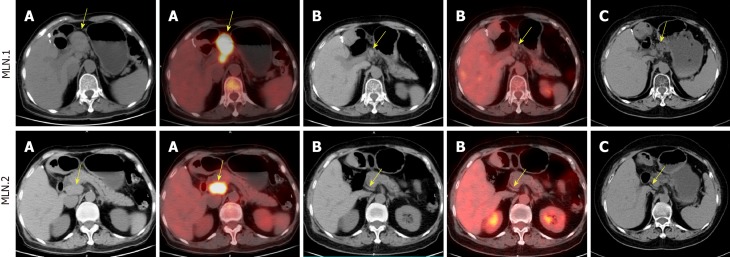
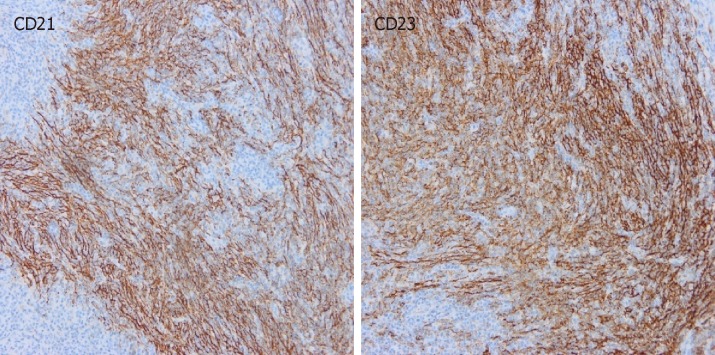
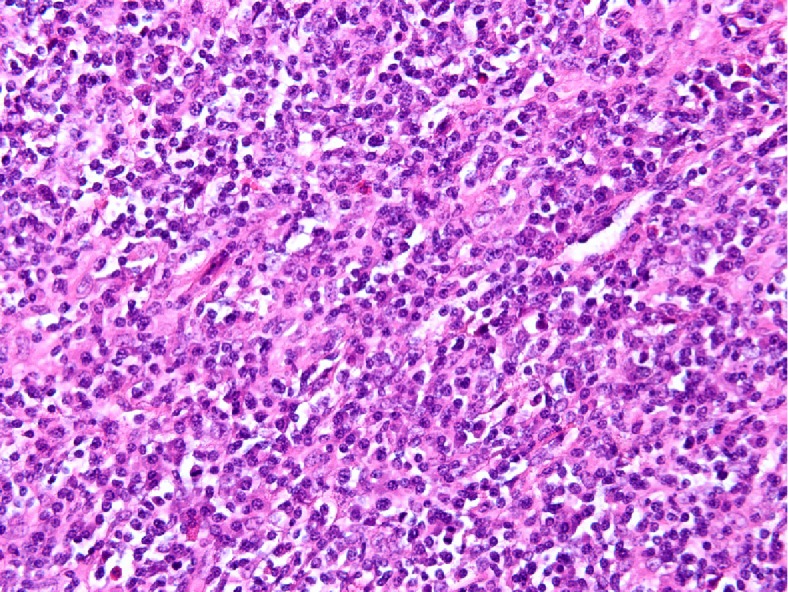
A 66-year-old Chinese woman presented to our hospital complaining of intermittent pain of right upper quadrant. An enhanced computed tomography (CT) scan of the abdomen revealed hepatocellular carcinoma. Subsequently, the patient underwent a radical partial hepatectomy. Primary FDCS of the liver was diagnosed pathologically. Except for regular follow-up examinations, the patient did not receive adjuvant chemotherapy or radiotherapy. However, fluorine-18-fluorodeoxyglucose positron emission tomography/CT (PET/CT) confirmed lymph node metastases in the space of ligamentum hepatogastricum and pancreatic head, as well as the portacaval space. The patient was given systemic chemotherapy with gemcitabine and docetaxel for she was unsuitable for surgery. Satisfactorily, the metastatic lymph nodes were significantly reduced to clinical complete remission after eight cycles of chemotherapy. Then, strengthened radiotherapy was followed when the patient rejected the opportunity of surgery. Eventually, the carcinoma got better control and the patient was free of progression.
This case highlights the importance of making suitable chemotherapy regimens for the rare tumor. The combination of gemcitabine, docetaxel, and consolidated radiotherapy may offer a new promising option for the treatment of metastatic hepatic FDCS in the future.
滤泡树突状细胞肉瘤(FDCS)是一种罕见的肿瘤,发病率较低。迄今为止,尚未确立针对该疾病的标准治疗方法。手术仍然是主要治疗手段。辅助化疗和放疗为可选择的方法。转移性病例需要多学科协作治疗。然而,化疗药物的选择存在争议。
一名66岁中国女性因右上腹间歇性疼痛就诊于我院。腹部增强计算机断层扫描(CT)显示为肝细胞癌。随后,患者接受了根治性部分肝切除术。术后病理诊断为原发性肝脏FDCS。除定期随访检查外,患者未接受辅助化疗或放疗。然而,氟-18-氟脱氧葡萄糖正电子发射断层扫描/CT(PET/CT)证实肝胃韧带间隙、胰头以及门腔间隙有淋巴结转移。由于患者不适合手术,给予吉西他滨和多西他赛全身化疗。令人满意的是,经过8个周期化疗后,转移淋巴结明显缩小至临床完全缓解。之后,患者拒绝手术机会,随后接受了强化放疗。最终,肿瘤得到较好控制,患者病情无进展。
该病例凸显了为这种罕见肿瘤制定合适化疗方案的重要性。吉西他滨、多西他赛联合巩固放疗可能为未来转移性肝脏FDCS的治疗提供一种新的有前景的选择。