Catalan Karina N, Corrales Tomas P, Forero Juan C, Romero Christian P, Acevedo Cristian A
Departamento de Física, Universidad Técnica Federico Santa María, Valparaíso 2340000, Chile.
Centro de Biotecnología, Universidad Técnica Federico Santa María, Valparaíso 2340000, Chile.
Polymers (Basel). 2019 Apr 9;11(4):642. doi: 10.3390/polym11040642.
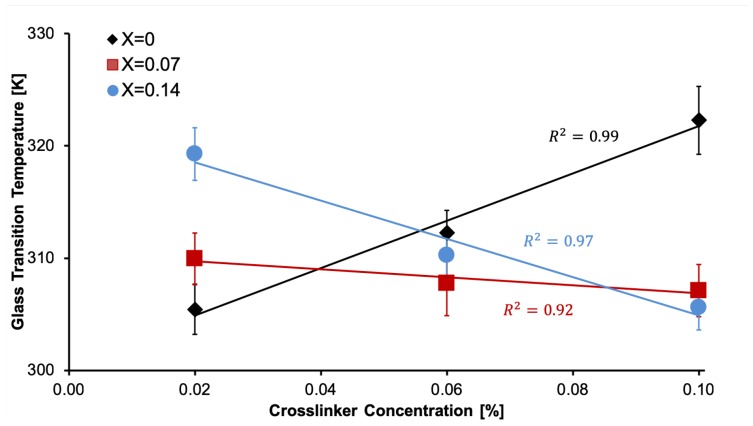
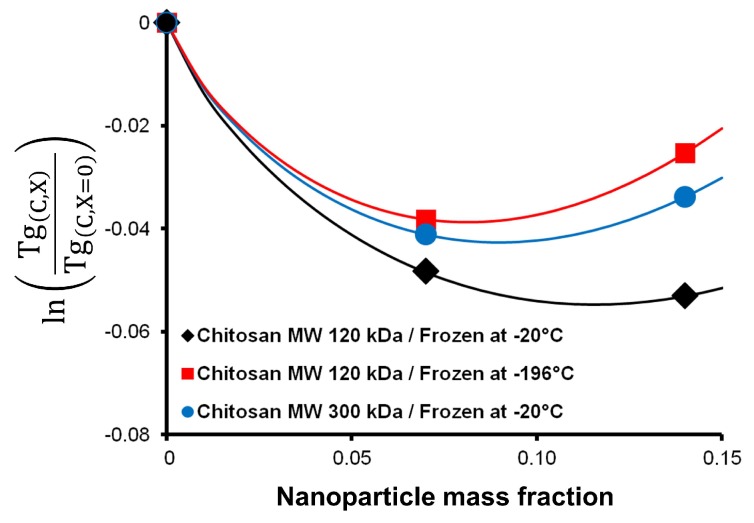
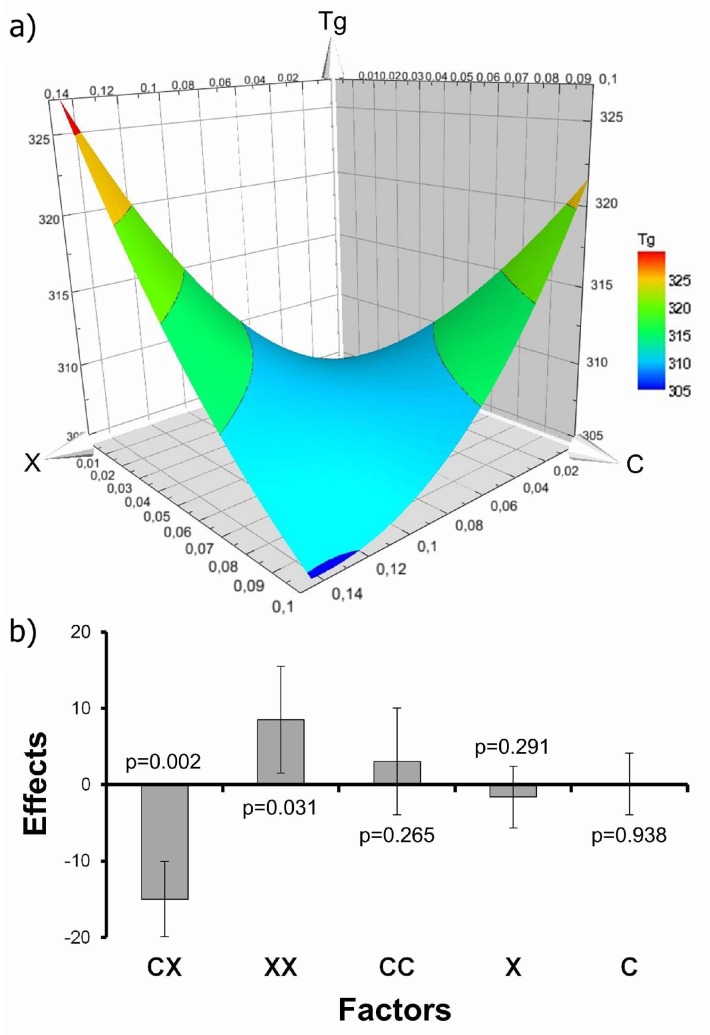
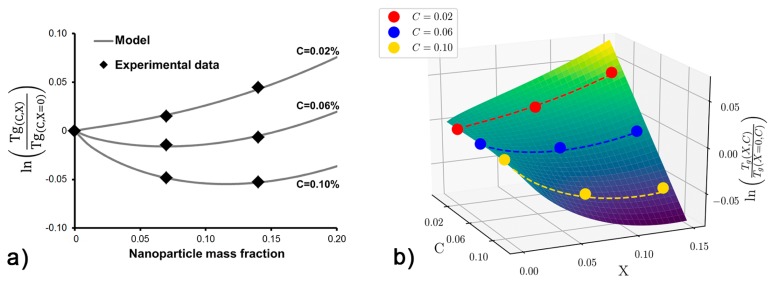
The development of biopolymeric scaffolds crosslinked with nanoparticles is an emerging field. Gelatin/chitosan scaffolds are gaining interest in medical areas, e.g., bone tissue engineering, given their suitability for nano-hydroxyapatite incorporation. The glass transition temperature is a thermodynamic property of polymer scaffolds that changes with crosslinker or nanofiller concentration. Here, we report the experimental change in glass transition temperature of gelatin/chitosan scaffolds modified by hydroxyapatite nanoparticles and crosslinker concentration. Our results show synergic effects between nanoparticles and crosslinking, which leads to a non-linear behavior of the glass transition temperature. Furthermore, a theoretical model to predict glass transition is proposed. This model can be used as a mathematical tool for the design of future scaffolds used in bone tissue engineering.
与纳米颗粒交联的生物聚合物支架的开发是一个新兴领域。明胶/壳聚糖支架因其适合掺入纳米羟基磷灰石而在医学领域,如骨组织工程中受到关注。玻璃化转变温度是聚合物支架的一种热力学性质,它会随交联剂或纳米填料浓度的变化而改变。在此,我们报告了经羟基磷灰石纳米颗粒和交联剂浓度改性的明胶/壳聚糖支架的玻璃化转变温度的实验变化。我们的结果表明纳米颗粒与交联之间存在协同效应,这导致玻璃化转变温度呈现非线性行为。此外,还提出了一个预测玻璃化转变的理论模型。该模型可作为一种数学工具,用于设计未来骨组织工程中使用的支架。