Xiao Xueliang, Wu Guanzheng, Zhou Hongtao, Qian Kun, Hu Jinlian
Key Laboratory of Eco-Textiles, Ministry of Education, Jiangnan University, Wuxi 214122, China.
Institute of Textiles and Clothing, The Hong Kong Polytechnic University, Hong Kong, China.
Polymers (Basel). 2017 Jun 30;9(7):259. doi: 10.3390/polym9070259.
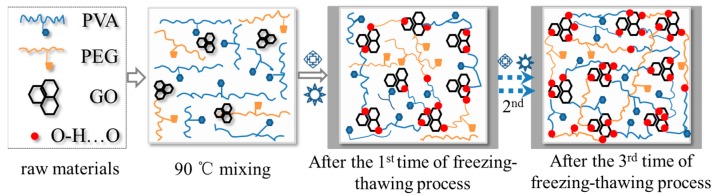
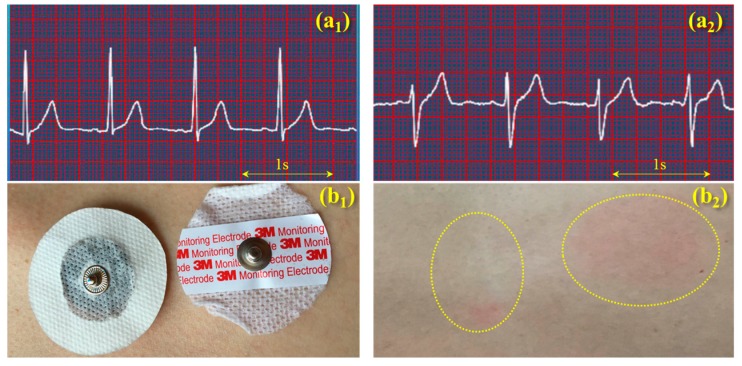
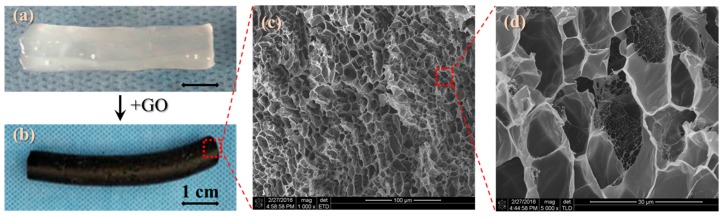
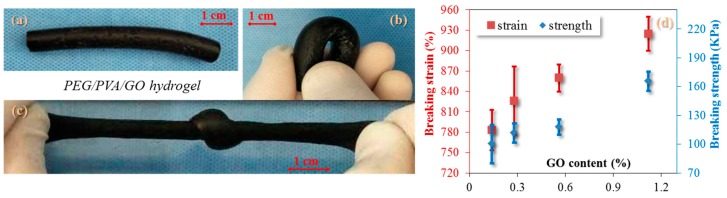
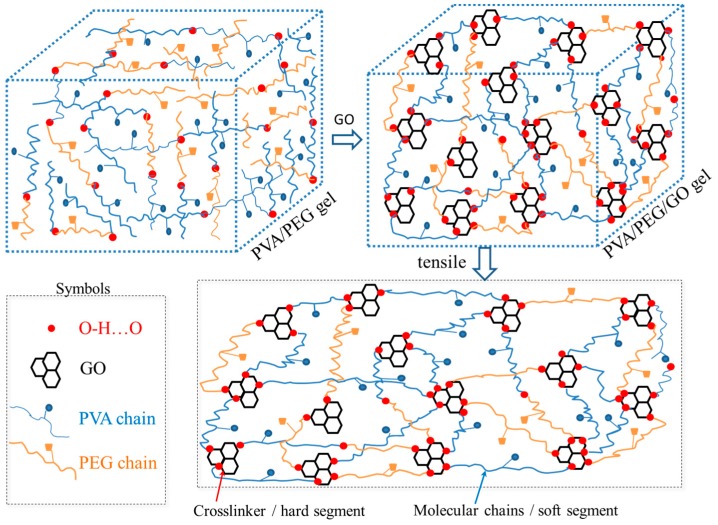
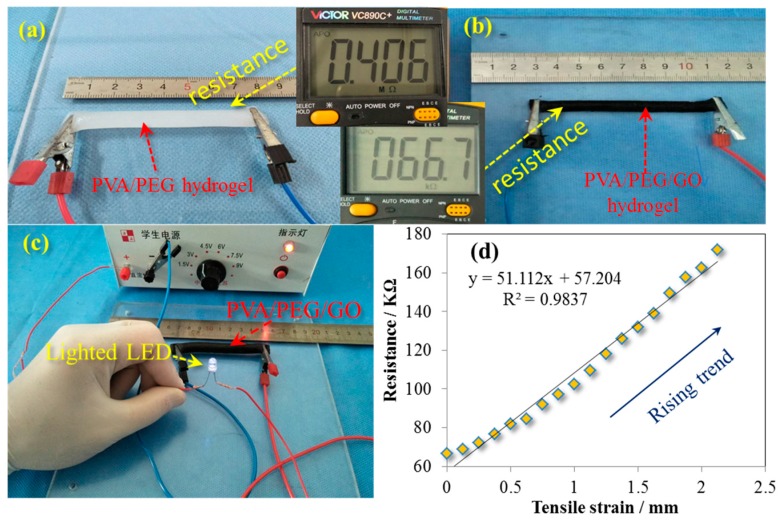
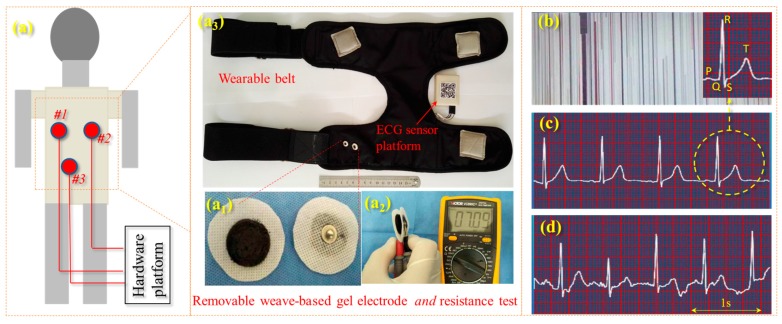
Conductive hydrogel combined with Ag/AgCl electrode is widely used in the acquisition of bio-signals. However, the high adhesiveness of current commercial hydrogel causes human skin allergies and pruritus easily after wearing hydrogel for electrodes for a long time. In this paper, a novel conductive hydrogel with good mechanical and conductive performance was prepared using polyvinyl alcohol (PVA), polyethylene glycol (PEG), and graphene oxide (GO) nanoparticles. A cyclic freezing⁻thawing method was employed under processing conditions of -40 °C (8 h) and 20 °C (4 h) separately for three cycles in sequence until a strong conductive hydrogel, namely, PVA/PEG/GO gel, was obtained. Characterization (Fourier transform infrared spectroscopy, nuclear magnetic resonance, scanning electron microscopy) results indicated that the assembled hydrogel was successfully prepared with a three-dimensional network structure and, thereafter, the high strength and elasticity due to the complete polymeric net formed by dense hydrogen bonds in the freezing process. The as-made PVA/PEG/GO hydrogel was then composited with nonwoven fabric for electrocardiogram (ECG) electrodes. The ECG acquisition data indicated that the prepared hydrogel has good electro-conductivity and can obtain stable ECG signals for humans in a static state and in motion (with a small amount of drift). A comparison of results indicated that the prepared PVA/PEG/GO gel obtained the same quality of ECG signals with commercial conductive gel with fewer cases of allergies and pruritus in volunteer after six hours of wear.
导电水凝胶与Ag/AgCl电极相结合,被广泛应用于生物信号采集。然而,目前市售水凝胶的高粘性会导致长时间佩戴电极水凝胶后,人体皮肤容易出现过敏和瘙痒症状。本文采用聚乙烯醇(PVA)、聚乙二醇(PEG)和氧化石墨烯(GO)纳米颗粒制备了一种具有良好机械性能和导电性能的新型导电水凝胶。在-40℃(8小时)和20℃(4小时)的加工条件下,依次分别进行三个循环的循环冻融法,直至获得一种强导电水凝胶,即PVA/PEG/GO凝胶。表征(傅里叶变换红外光谱、核磁共振、扫描电子显微镜)结果表明,成功制备了具有三维网络结构的组装水凝胶,此后,由于在冷冻过程中由密集氢键形成的完整聚合物网络,其具有高强度和弹性。然后将制备的PVA/PEG/GO水凝胶与无纺布复合制成心电图(ECG)电极。心电图采集数据表明,制备的水凝胶具有良好的导电性,能够在人体静态和运动状态下(有少量漂移)获得稳定的心电图信号。结果比较表明,制备的PVA/PEG/GO凝胶在佩戴六小时后,与市售导电凝胶获得相同质量的心电图信号,但志愿者出现过敏和瘙痒的情况较少。