Demina Tatiana S, Bardakova Kseniia N, Minaev Nikita V, Svidchenko Eugenia A, Istomin Alexander V, Goncharuk Galina P, Vladimirov Leonid V, Grachev Andrey V, Zelenetskii Alexander N, Timashev Peter S, Akopova Tatiana A
Enikolopov Institute of Synthetic Polymer Materials, Russian Academy of Sciences, 70 Profsoyuznaya str., Moscow 117393, Russia.
Institute of Photonic Technologies, Research center "Crystallography and Photonics", Russian Academy of Sciences, 2 Pionerskaya str., Troitsk, Moscow 142190, Russia.
Polymers (Basel). 2017 Jul 24;9(7):302. doi: 10.3390/polym9070302.
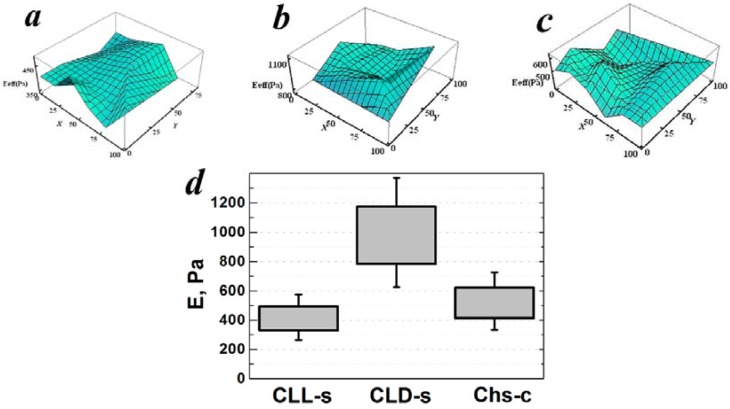
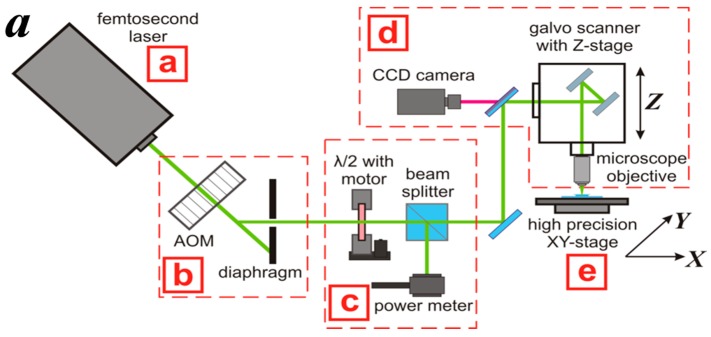
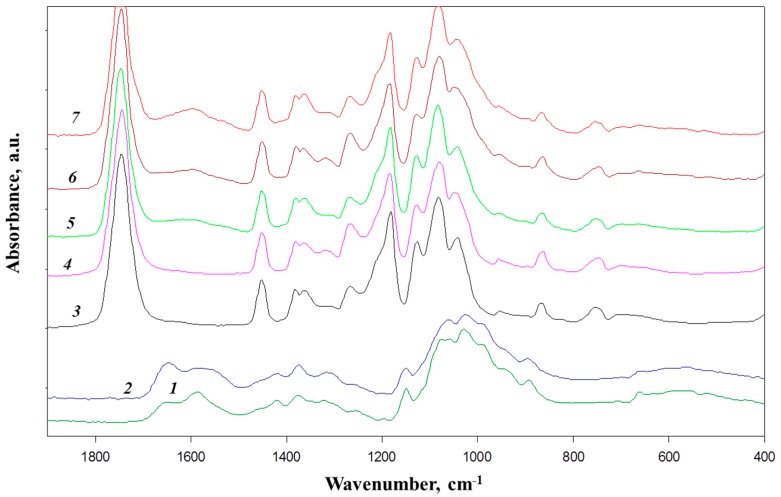
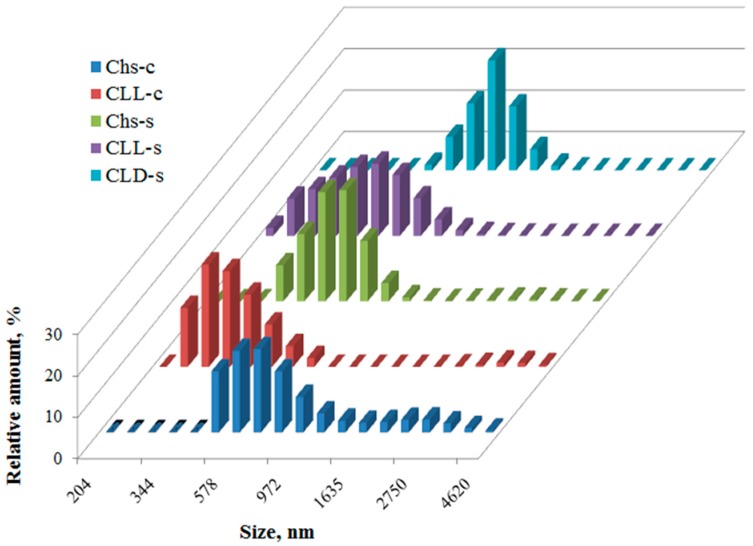
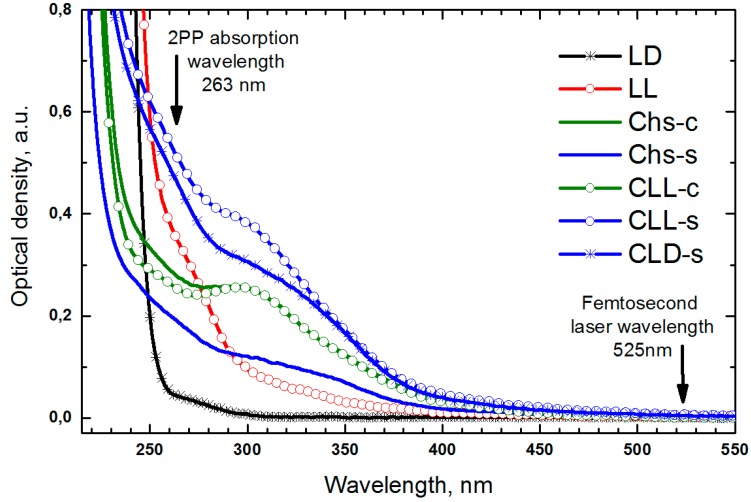
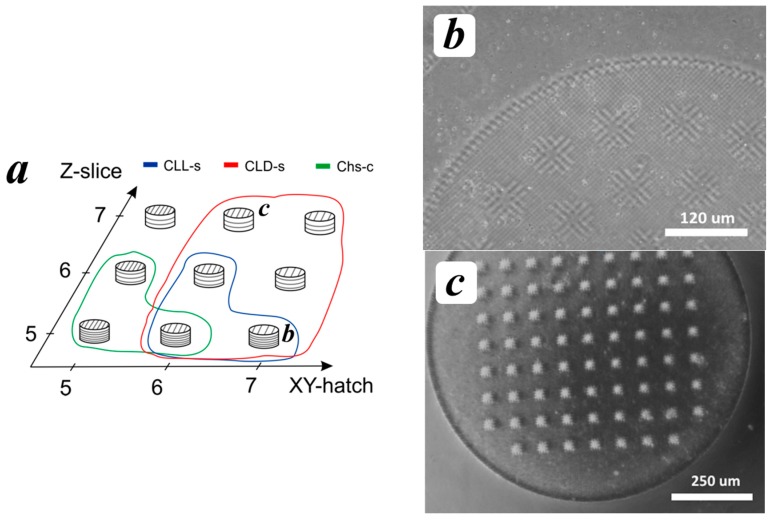
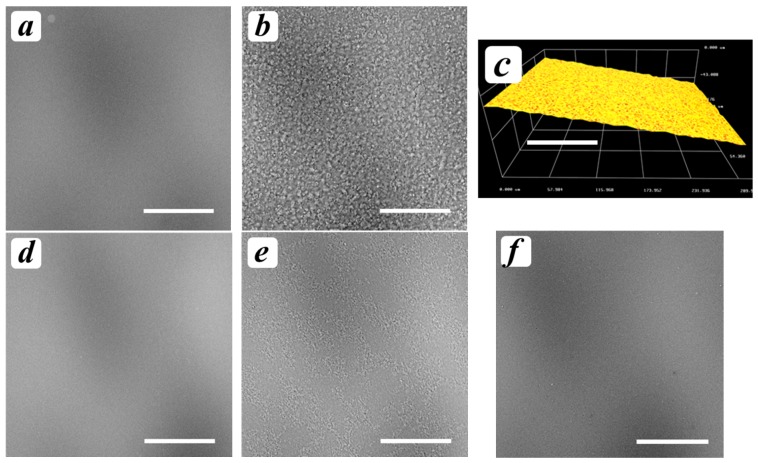
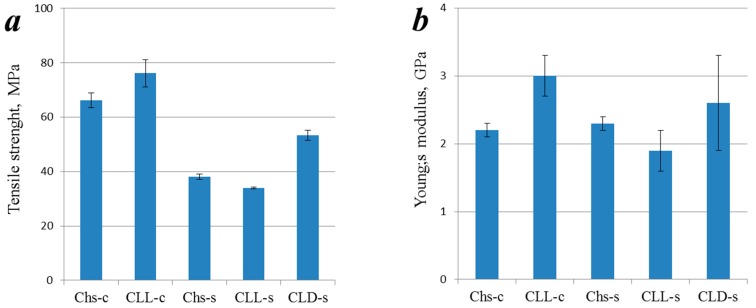
Chitosan--oligolactide copolymers with relatively long oligolactide grafted chains of various stereochemical compositions have been synthetized via a solvent-free mechanochemical technique and tailored to fabricate three-dimensional hydrogels using two-photon induced microstereolithography. An effect of the characteristics of chitosan and oligolactide used for the synthesis on the grafting yield and copolymer's behavior were evaluated using fractional analysis, FTIR-spectroscopy, dynamic light scattering, and UV-spectrophotometry. The lowest copolymer yield was found for the system based on chitosan with higher molecular weight, while the samples consisting of low-molecular weight chitosan showed higher grafting degrees, which were comparable in both the cases of l,l- or l,d-oligolactide grafting. The copolymer processability in the course of two-photon stereolithography was evaluated as a function of the copolymer's characteristics and stereolithography conditions. The structure and mechanical properties of the model film samples and fabricated 3D hydrogels were studied using optical and scanning electron microscopy, as well as by using tensile and nanoindenter devices. The application of copolymer with oligo(l,d-lactide) side chains led to higher processability during two-photon stereolithography in terms of the response to the laser beam, reproduction of the digital model, and the mechanical properties of the fabricated hydrogels.
通过无溶剂机械化学技术合成了具有各种立体化学组成的相对较长的低聚丙交酯接枝链的壳聚糖-低聚丙交酯共聚物,并采用双光子诱导微立体光刻技术对其进行定制以制备三维水凝胶。使用分数分析、傅里叶变换红外光谱、动态光散射和紫外分光光度法评估了用于合成的壳聚糖和低聚丙交酯的特性对接枝产率和共聚物行为的影响。发现基于较高分子量壳聚糖的体系共聚物产率最低,而由低分子量壳聚糖组成的样品显示出较高的接枝度,在l,l-或l,d-低聚丙交酯接枝的两种情况下相当。评估了双光子立体光刻过程中共聚物的加工性能与共聚物特性和立体光刻条件的关系。使用光学和扫描电子显微镜以及拉伸和纳米压痕装置研究了模型薄膜样品和制备的3D水凝胶的结构和力学性能。具有聚(l,d-丙交酯)侧链的共聚物的应用在双光子立体光刻过程中,在对激光束的响应、数字模型的再现以及制备的水凝胶的力学性能方面导致了更高的加工性能。