Jakaria Md, Kim Joonsoo, Karthivashan Govindarajan, Park Shin-Young, Ganesan Palanivel, Choi Dong-Kug
Department of Applied Life Science, Graduate School, Konkuk University, Chungju, Republic of Korea.
Research Institute of Inflammatory Disease, and Department of Biotechnology, College of Biomedical and Health Science, Konkuk University, Chungju 27478, Korea.
J Ginseng Res. 2019 Apr;43(2):163-171. doi: 10.1016/j.jgr.2018.01.001. Epub 2018 Jan 31.
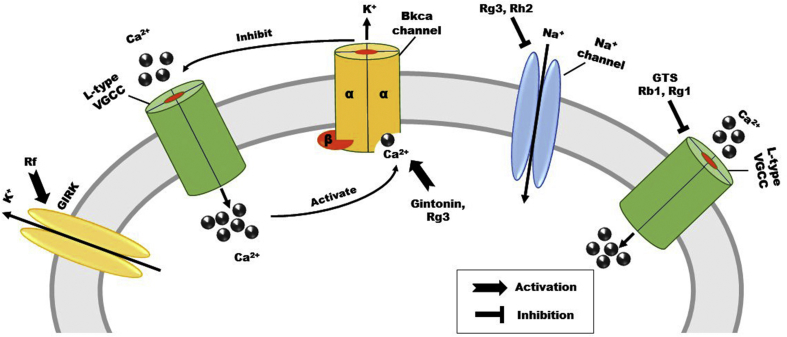
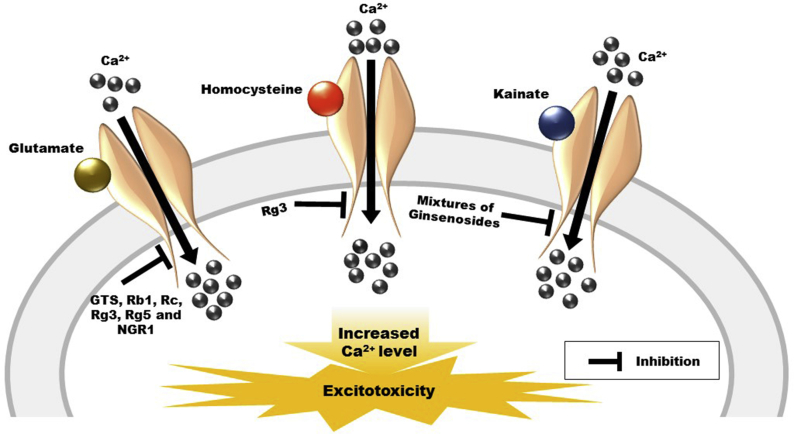
Common features of neurodegenerative diseases (NDDs) include progressive dysfunctions and neuronal injuries leading to deterioration in normal brain functions. At present, ginseng is one of the most frequently used natural products. Its use has a long history as a cure for various diseases because its extracts and active compounds exhibit several pharmacological properties against several disorders. However, the pathophysiology of NDDs is not fully clear, but researchers have found that various ion channels and specific signaling pathways might have contributed to the disease pathogenesis. Apart from the different pharmacological potentials, ginseng and its active compounds modulate various ion channels and specific molecular signaling pathways related to the nervous system. Here, we discuss the signal modulating potential of ginseng and its active compounds mainly focusing on those relevant to NDDs.
神经退行性疾病(NDDs)的共同特征包括渐进性功能障碍和神经元损伤,导致正常脑功能恶化。目前,人参是最常用的天然产物之一。由于其提取物和活性化合物对多种疾病具有多种药理特性,作为治疗各种疾病的药物已有悠久的历史。然而,NDDs的病理生理学尚未完全明确,但研究人员发现各种离子通道和特定信号通路可能与疾病发病机制有关。除了不同的药理潜力外,人参及其活性化合物还能调节与神经系统相关的各种离子通道和特定分子信号通路。在此,我们主要讨论人参及其活性化合物的信号调节潜力,重点关注与NDDs相关的方面。