Rop Kiplangat, Mbui Damaris, Njomo Njagi, Karuku George N, Michira Immaculate, Ajayi Rachel F
Department of Chemistry, University of Nairobi, P.O. Box 30197-00100, Nairobi, Kenya.
Department of Land Resource Management and Agricultural Technology, University of Nairobi, P. O. Box 29053- 00625, Kangemi, Nairobi, Kenya.
Heliyon. 2019 Mar 29;5(3):e01416. doi: 10.1016/j.heliyon.2019.e01416. eCollection 2019 Mar.
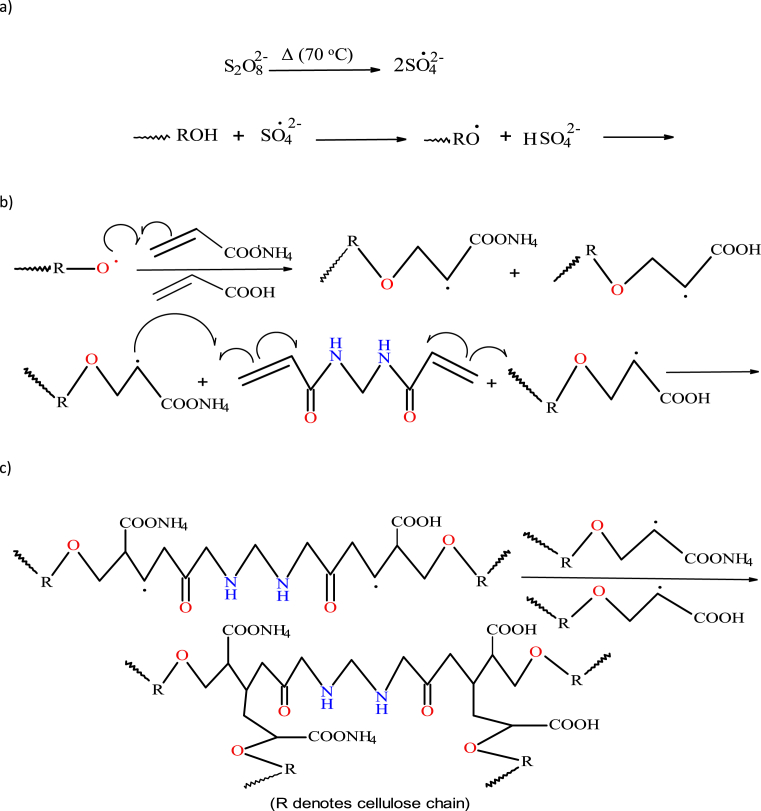
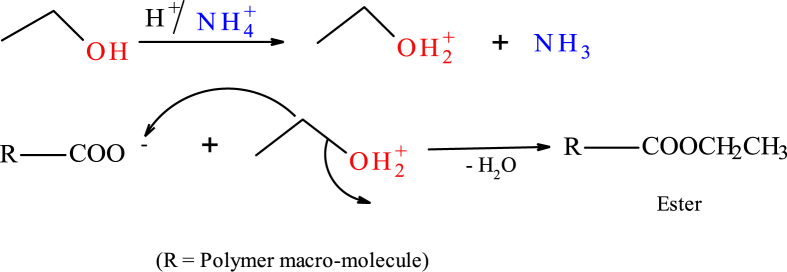
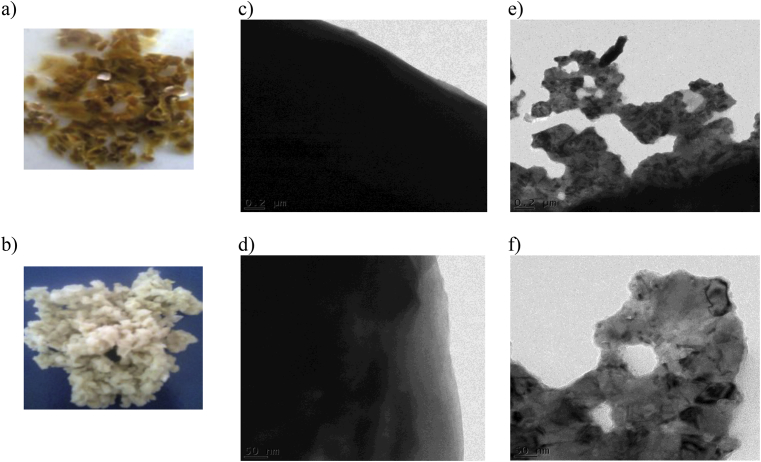
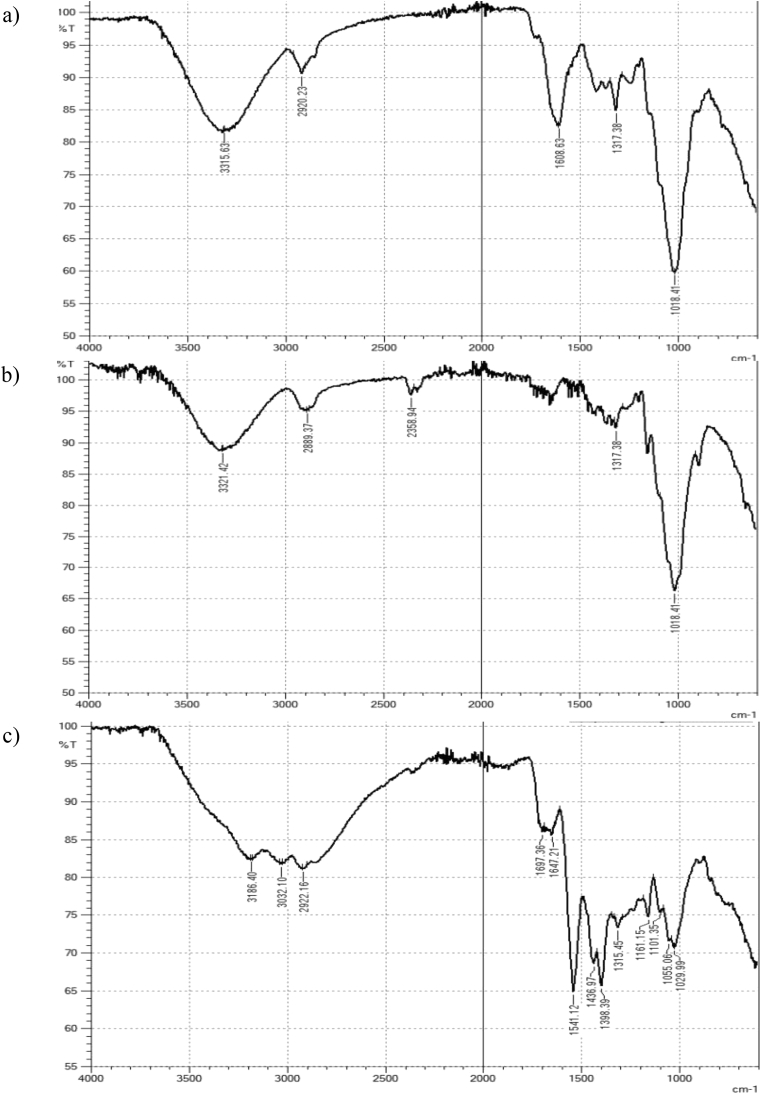
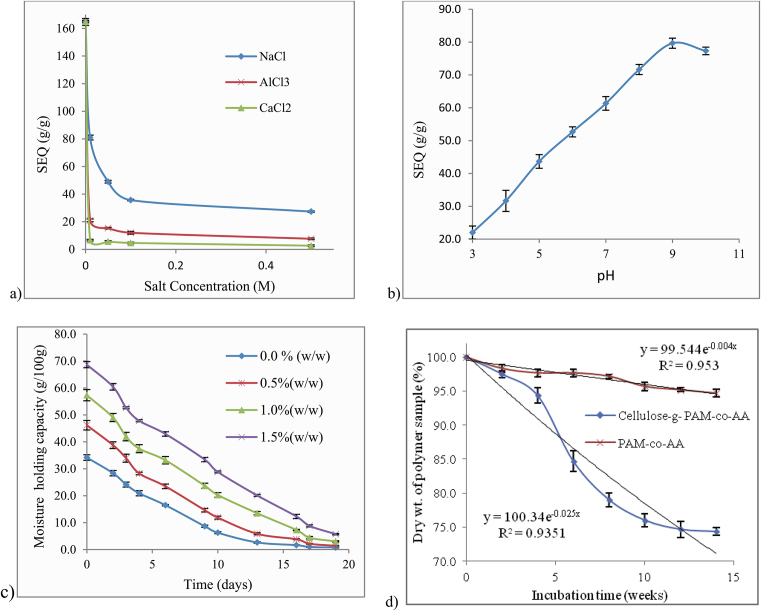
Swollen cellulose fibres isolated from water hyacinth were utilized in the synthesis of water hyacinth cellulose-graft-poly(ammonium acrylate-co-acrylic acid) polymer hydrogel (PHG). Acrylic acid (AA) partially neutralized with NH was heterogeneously grafted onto swollen cellulose by radical polymerization reaction using -methylene--acrylamide (MBA) as the cross-linker and ammonium persulphate (APS) as the initiator. The reaction conditions were optimized through assessment of grafting parameters such as grafting cross-linking percentage (GCP), percentage grafting cross-linking efficiency (%GCE) and water absorption tests. Characterization of the copolymer by Fourier Transform Infra-red (FTIR) spectroscopy revealed successful grafting of the monomer onto cellulose. Transmission electron microscopy (TEM) image of acetone-extracted PHG displayed micro-porous structure. The optimized product swelled in distilled water up to 165 times its own dry weight. The swelling was influenced by the pH and presence, nature and concentration of ions. The hydrogel had the capacity to retain moisture in soil, and degradation testing revealed a higher mass loss in cellulose grafted copolymer compared to the copolymer without cellulose. Degradation by soil microbial isolates showed significantly higher (P ≤ 0.05) accumulation of NH in the cellulose grafted copolymer up to 0.05% (w/v) from 40 to 100 h, relative to similar amounts of copolymer without cellulose. The use of water hyacinth, a notorious weed in Kenyan waters, to produce cellulose-based polymer hydrogels has not been explored and yet, it could form an effective and beneficial way of utilizing this plant. A mechanism of graft polymerization reaction has also been proposed. The synthesized product can be applied in agriculture and other fields where biodegradability and effective utilization of water is essential.
从水葫芦中分离出的膨胀纤维素纤维被用于合成水葫芦纤维素接枝聚(丙烯酸铵 - 共 - 丙烯酸)聚合物水凝胶(PHG)。用NH部分中和的丙烯酸通过自由基聚合反应以 - 亚甲基 - - 丙烯酰胺(MBA)作为交联剂和过硫酸铵(APS)作为引发剂非均相接枝到膨胀的纤维素上。通过评估接枝参数如接枝交联百分比(GCP)、接枝交联效率百分比(%GCE)和吸水测试来优化反应条件。通过傅里叶变换红外(FTIR)光谱对共聚物进行表征,表明单体成功接枝到纤维素上。丙酮萃取的PHG的透射电子显微镜(TEM)图像显示出微孔结构。优化后的产品在蒸馏水中膨胀至其自身干重的165倍。膨胀受到pH值以及离子的存在、性质和浓度的影响。该水凝胶具有在土壤中保持水分的能力,降解测试表明,与不含纤维素的共聚物相比,纤维素接枝共聚物的质量损失更高。土壤微生物分离物的降解显示,在40至100小时内,纤维素接枝共聚物中NH的积累量相对于相同量的不含纤维素的共聚物显著更高(P≤0.05),最高可达0.05%(w/v)。利用肯尼亚水域中臭名昭著的杂草水葫芦来生产基于纤维素的聚合物水凝胶尚未得到探索,但它可能形成一种有效且有益的利用这种植物的方式。还提出了接枝聚合反应的机制。合成产品可应用于农业和其他对生物降解性和水的有效利用至关重要的领域。