Centre for Food Safety and Innovation, Tasmanian Institute of Agriculture, University of Tasmania, Launceston, TAS 7250, Australia.
School of Health Sciences, College of Health and Medicine, University of Tasmania, Launceston, TAS 7250, Australia.
Nutrients. 2019 Apr 11;11(4):818. doi: 10.3390/nu11040818.
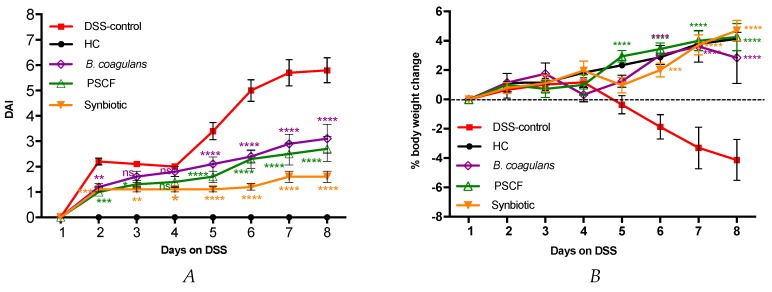
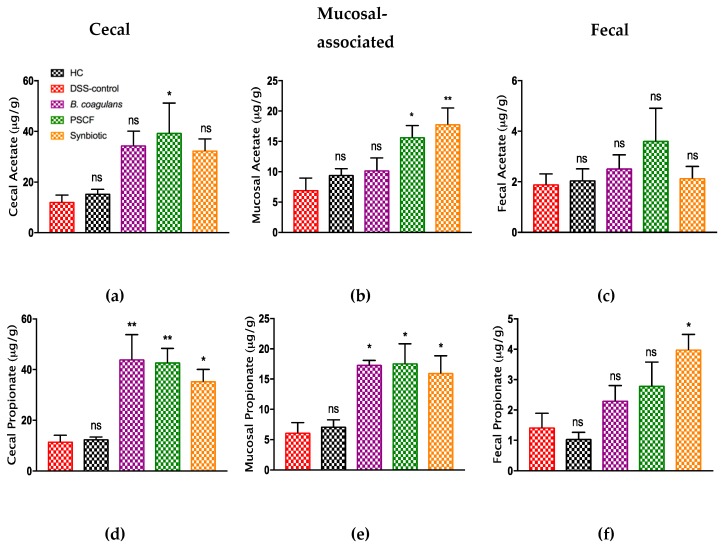
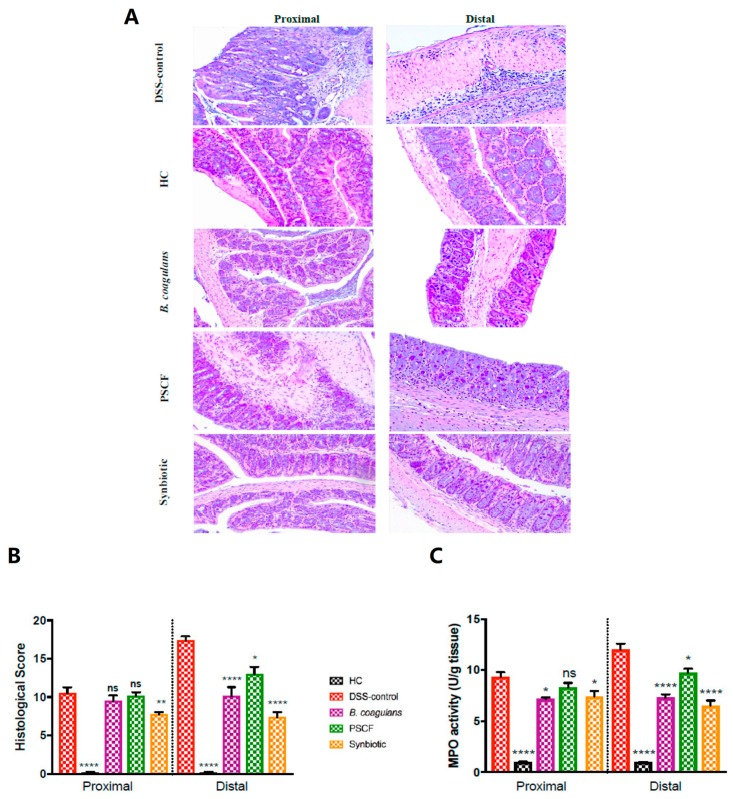
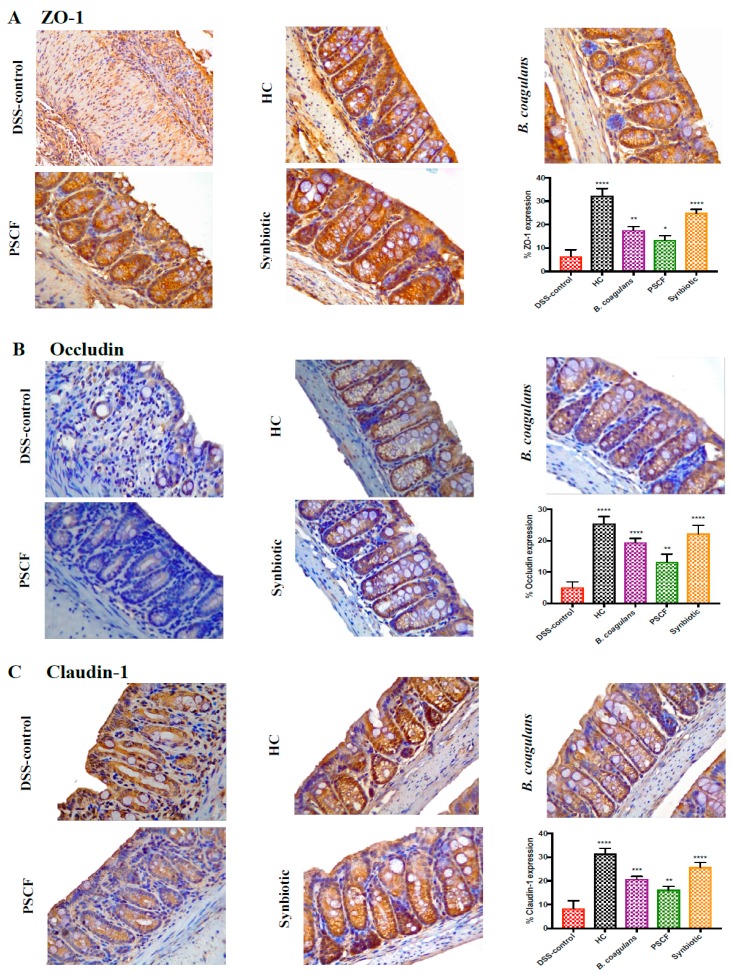
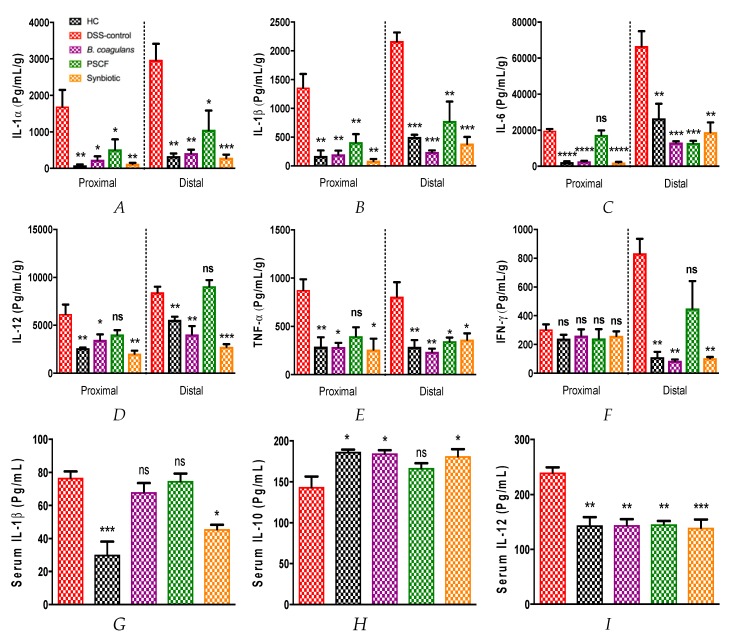
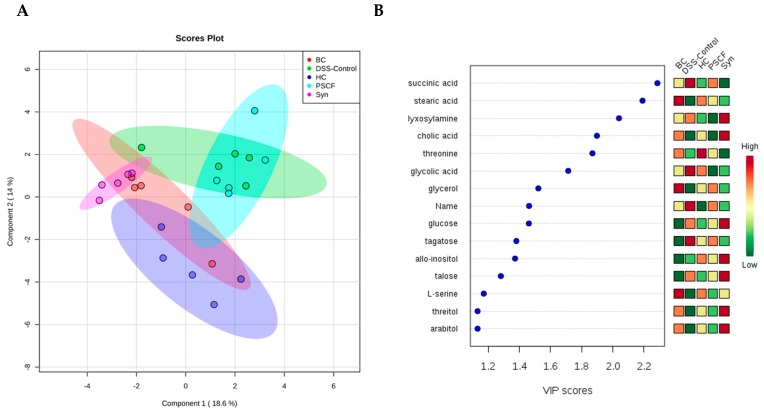
Inflammatory bowel diseases (IBD) are a chronic inflammatory disorders with increasing global incidence. Synbiotic, which is a two-point approach carrying probiotic and prebiotic components in mitigating inflammation in IBD, is thought to be a pragmatic approach owing to the synergistic outcomes. In this study, the impacts of dietary supplementation with probiotic MTCC5856 spores () and prebiotic whole plant sugar cane fibre (PSCF) was assessed using a murine model of IBD. Eight-week-old C57BL/6 mice were fed a normal chow diet supplemented with either , PSCF or its synbiotic combination. After seven days of supplementation, colitis was induced with dextran sulfate sodium (DSS) in drinking water for seven days during the continuation of the supplemented diets. Synbiotic supplementation ameliorated disease activity index and histological score (-72%, 7.38, respectively), more effectively than either (-47%, 10.1) and PSCF (-53%, 13.0) alone. Synbiotic supplementation also significantly ( < 0.0001) prevented the expression of tight junction proteins and modulated the altered serum IL-1β (-40%), IL-10 (+26%), and C-reactive protein (CRP) (-39%) levels. Synbiotic supplementations also raised the short-chain fatty acids (SCFA) profile more extensively compared to the unsupplemented DSS-control. The synbiotic health outcome effect of the probiotic and prebiotic combinations may be associated with a synergistic direct immune-regulating efficacy of the components, their ability to protect epithelial integrity, stimulation of probiotic spores by the prebiotic fibre, and/or with stimulation of greater levels of fermentation of fibres releasing SCFAs that mediate the reduction in colonic inflammation. Our model findings suggest synbiotic supplementation should be tested in clinical trials.
炎症性肠病(IBD)是一种慢性炎症性疾病,其全球发病率呈上升趋势。共生元,即携带益生菌和益生元成分的两点式方法,被认为是一种务实的方法,因为它具有协同作用。在这项研究中,使用 IBD 小鼠模型评估了益生菌 MTCC5856 孢子()和全植物甘蔗纤维(PSCF)的饮食补充对炎症的影响。将 8 周龄的 C57BL/6 小鼠用正常的 chow 饮食喂养,并用、PSCF 或其共生元组合补充。补充 7 天后,在继续补充饮食的同时,在饮用水中添加葡聚糖硫酸钠(DSS)诱导结肠炎 7 天。与单独使用(-47%,10.1)和 PSCF(-53%,13.0)相比,共生元补充更有效地改善了疾病活动指数和组织学评分(-72%,7.38)。共生元补充还显著(<0.0001)预防了紧密连接蛋白的表达,并调节了改变的血清 IL-1β(-40%)、IL-10(+26%)和 C 反应蛋白(CRP)(-39%)水平。与未补充 DSS 对照相比,共生元补充还更广泛地提高了短链脂肪酸(SCFA)谱。益生菌和益生元组合的共生元健康效果可能与成分的协同直接免疫调节功效、它们保护上皮完整性的能力、益生元纤维对益生菌孢子的刺激以及/或刺激纤维发酵释放介导结肠炎症减少的 SCFAs 的水平增加有关。我们的模型研究结果表明,应在临床试验中测试共生元补充。