Bonito Gregory, Benucci Gian Maria Niccolò, Hameed Khalid, Weighill Deborah, Jones Piet, Chen Ko-Hsuan, Jacobson Daniel, Schadt Christopher, Vilgalys Rytas
Department of Plant Soil and Microbial Sciences, Michigan State University, East Lansing, MI, United States.
Great Lakes Bioenergy Research Center, East Lansing, MI, United States.
Front Microbiol. 2019 Mar 29;10:481. doi: 10.3389/fmicb.2019.00481. eCollection 2019.
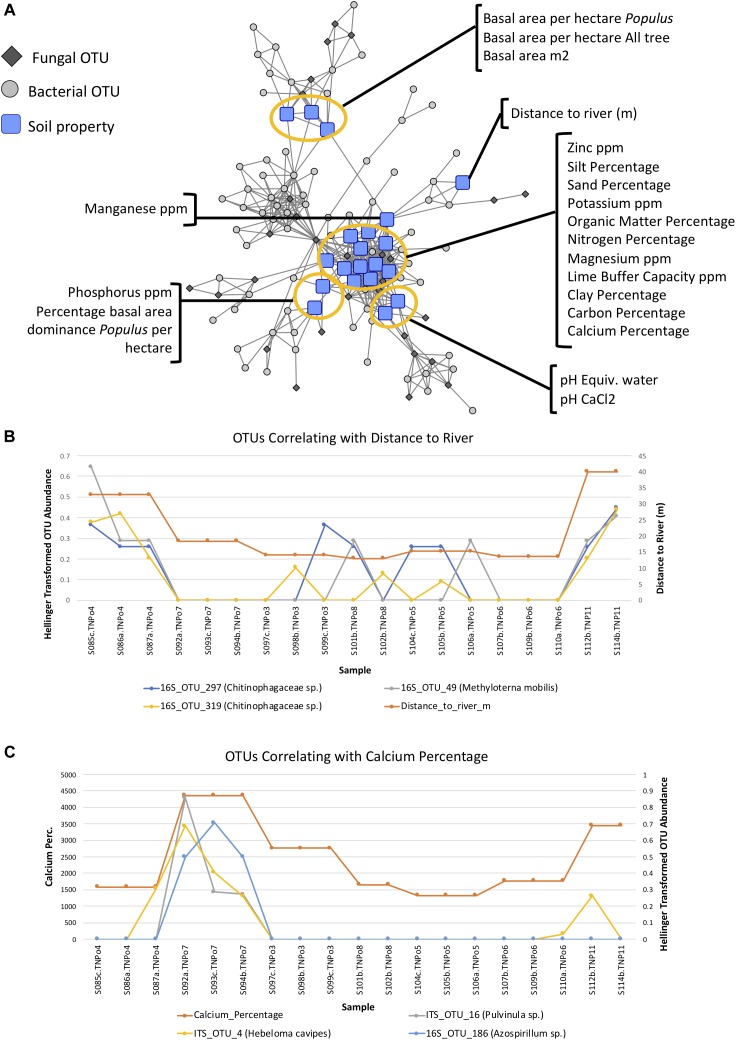
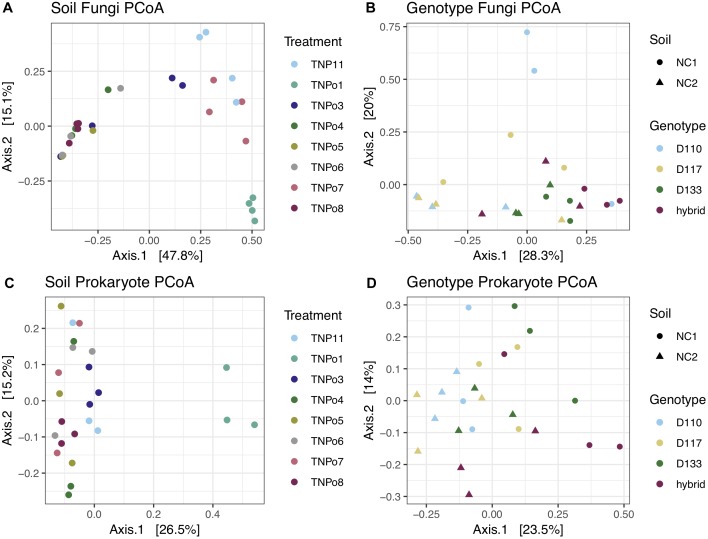
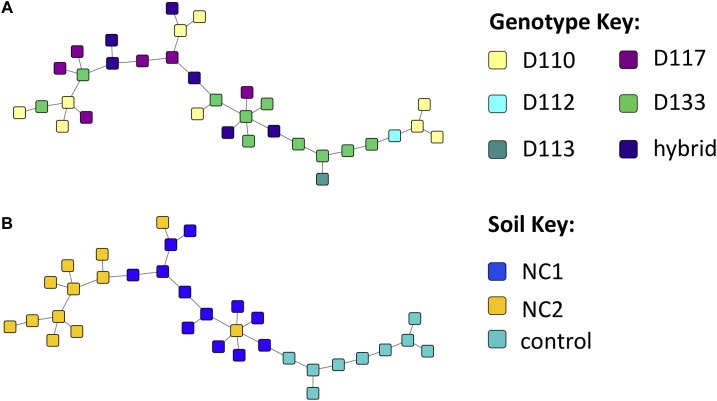
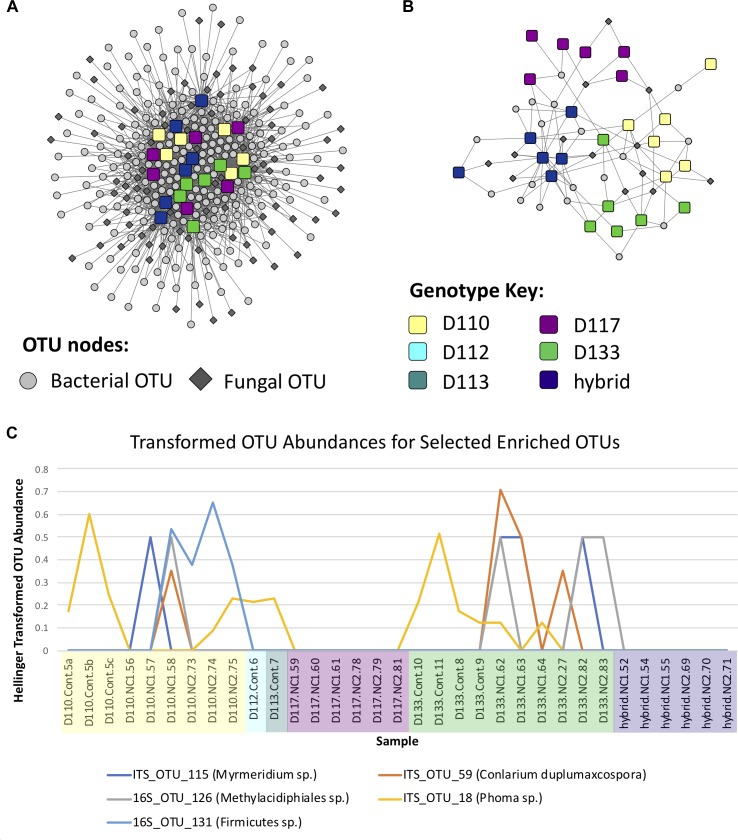
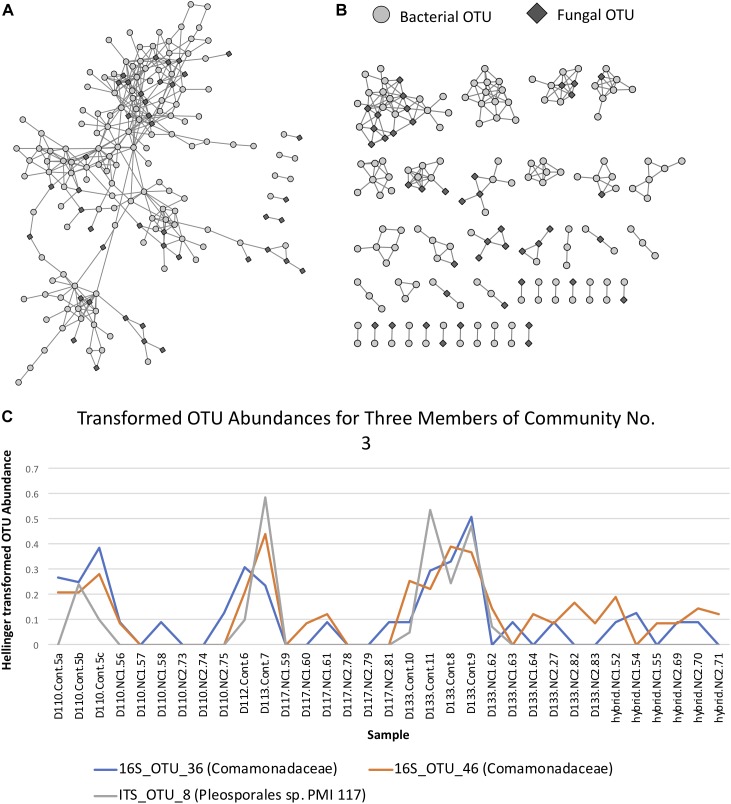
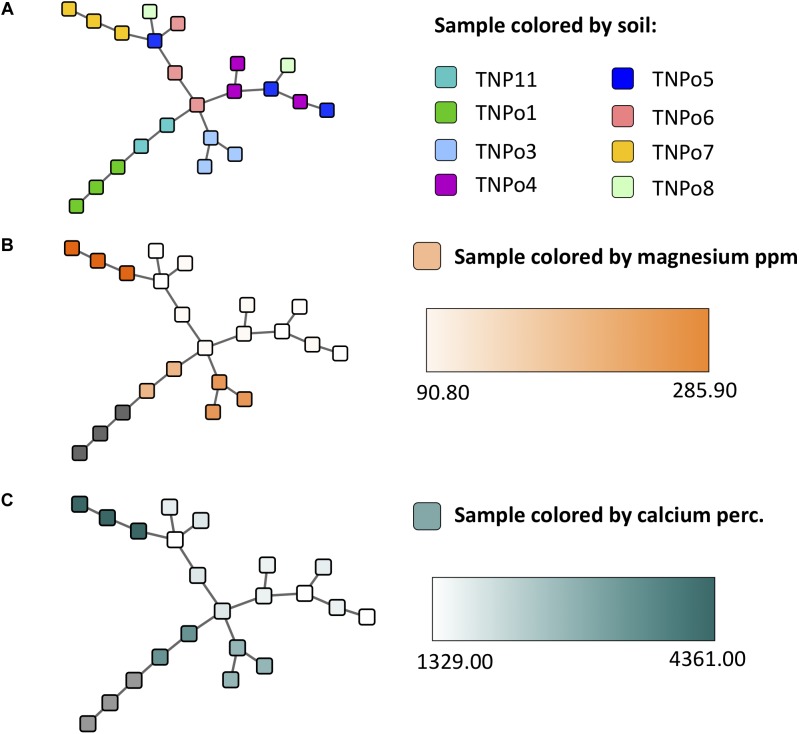
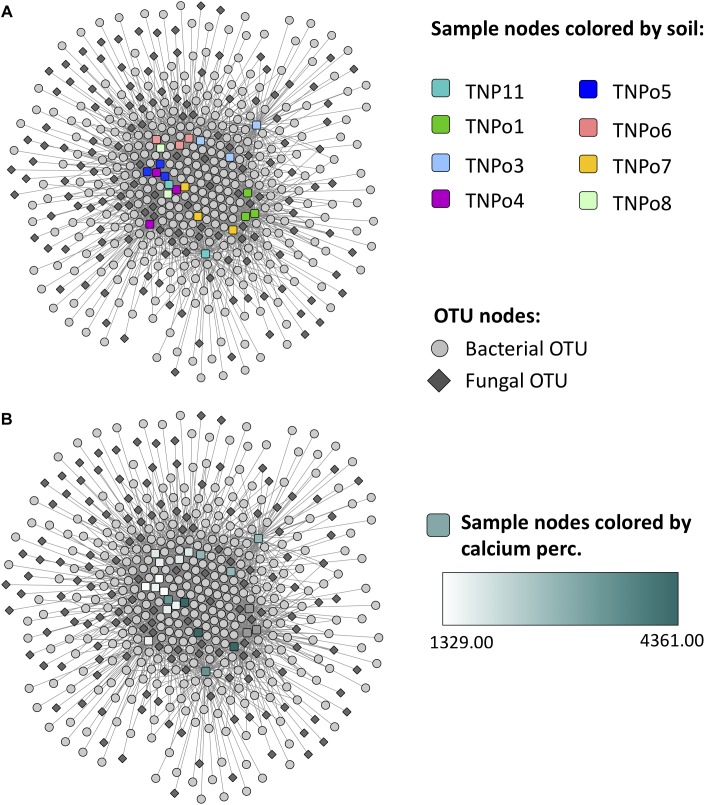
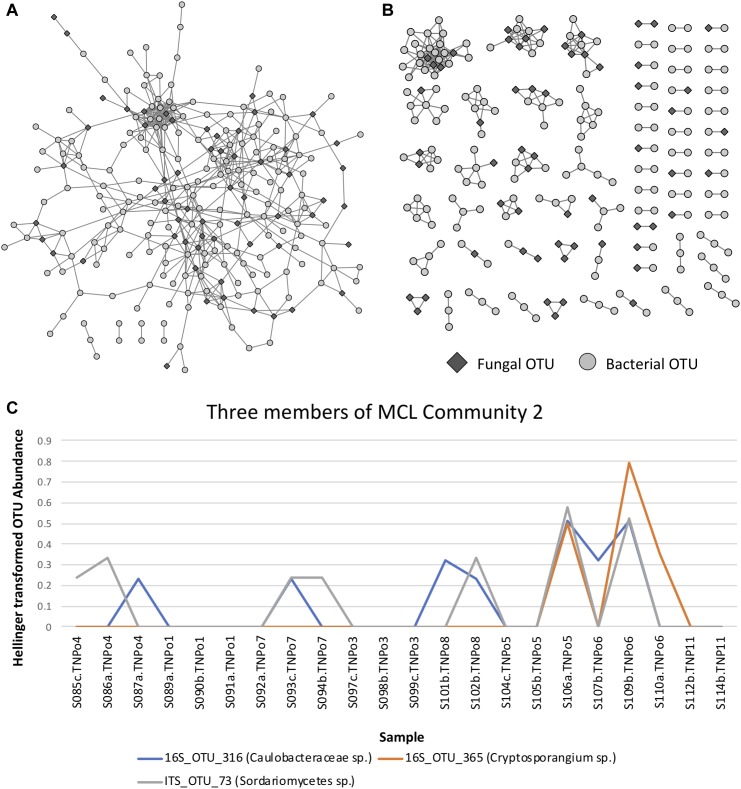
Plant root-associated microbial symbionts comprise the plant rhizobiome. These microbes function in provisioning nutrients and water to their hosts, impacting plant health and disease. The plant microbiome is shaped by plant species, plant genotype, soil and environmental conditions, but the contributions of these variables are hard to disentangle from each other in natural systems. We used bioassay common garden experiments to decouple plant genotype and soil property impacts on fungal and bacterial community structure in the rhizobiome. High throughput amplification and sequencing of 16S, ITS, 28S and 18S rDNA was accomplished through 454 pyrosequencing. Co-association patterns of fungal and bacterial taxa were assessed with 16S and ITS datasets. Community bipartite fungal-bacterial networks and PERMANOVA results attribute significant difference in fungal or bacterial communities to soil origin, soil chemical properties and plant genotype. Indicator species analysis identified a common set of root bacteria as well as endophytic and ectomycorrhizal fungi associated with in different soils. However, no single taxon, or consortium of microbes, was indicative of a particular genotype. Fungal-bacterial networks were over-represented in arbuscular mycorrhizal, endophytic, and ectomycorrhizal fungi, as well as bacteria belonging to the orders Rhizobiales, Chitinophagales, Cytophagales, and Burkholderiales. These results demonstrate the importance of soil and plant genotype on fungal-bacterial networks in the belowground plant microbiome.
与植物根系相关的微生物共生体构成了植物根际微生物群。这些微生物为宿主提供养分和水分,影响植物的健康与疾病状况。植物微生物群受植物物种、植物基因型、土壤和环境条件的影响,但在自然系统中,这些变量的作用很难相互区分。我们利用生物测定共同园实验来分离植物基因型和土壤性质对根际微生物群中真菌和细菌群落结构的影响。通过454焦磷酸测序完成了16S、ITS、28S和18S rDNA的高通量扩增和测序。利用16S和ITS数据集评估真菌和细菌类群的共关联模式。群落二分真菌-细菌网络和PERMANOVA结果将真菌或细菌群落的显著差异归因于土壤来源、土壤化学性质和植物基因型。指示物种分析确定了一组常见的根际细菌以及与不同土壤相关的内生真菌和外生菌根真菌。然而,没有单一的分类群或微生物组合能够指示特定的基因型。丛枝菌根真菌、内生真菌和外生菌根真菌以及属于根瘤菌目、噬几丁质菌目、噬纤维菌目和伯克霍尔德菌目的细菌在真菌-细菌网络中占比过高。这些结果证明了土壤和植物基因型对地下植物微生物群中真菌-细菌网络的重要性。