Soltanian Sara, Mohamadi Neda, Rajaei Peyman, Khodami Mojtaba, Mohammadi Mehdi
Department of Biology, Faculty of Science, Shahid Bahonar University of Kerman, Kerman, Iran.
Student Research Committee, Kerman University of Medical Sciences, Kerman, Iran.
Avicenna J Phytomed. 2019 Mar-Apr;9(2):143-152.
In this study, our aim was to extract, and identify and quantify the chemical composition of essential oils of grown in Kerman, Iran. Moreover, cytotoxic, antioxidant and antimicrobial activity of the essential oil and methanol extract of aerial parts of were reported.
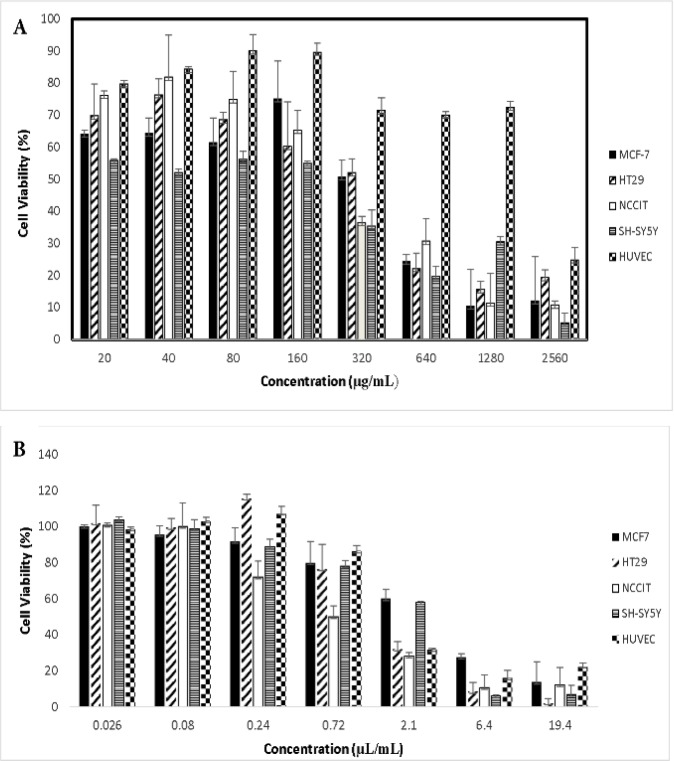
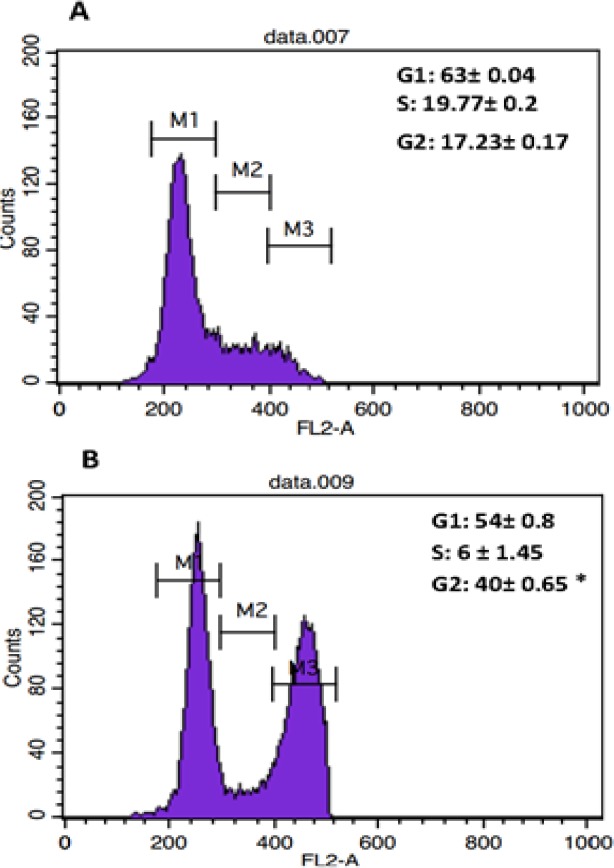
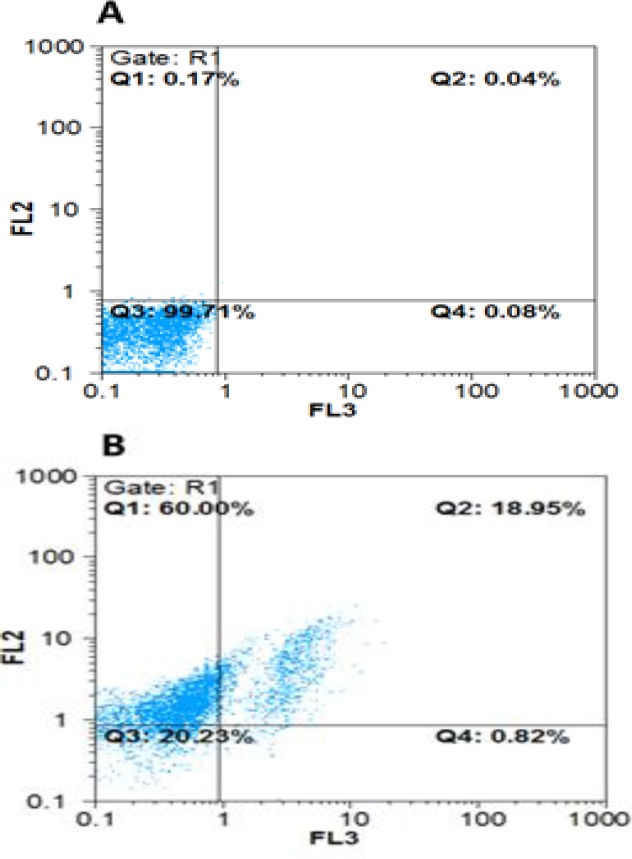
GC and GC/MS analysis were used for identifying and quantifying the essential oil components. Antioxidant and antibacterial activity were tested by 2, 2-diphenyl-1-picrylhydrazyl (DPPH) and agar disc diffusion methods, respectively and MTT assay was used to determine the anti-proliferative potential of the oil against breast (MCF-7), colon (HT-29), neuroblastoma (SH-SY5Y), embryonal carcinoma (NCCIT) cancer cell relative to human umbilical vein endothelial cell (HUVEC) as a normal cell. Apoptosis induction was monitored by flow cytometry using PE annexin V apoptosis detection kit and cell cycle arrest was by with propidium iodide.
Z-β-ocimene (25.1%), linalool (17.8%) and β-bisabolol (13.3%) were recognized as major components of the essential oil. Our study demonstrated apoptosis-inducing potential of essential oil on normal and cancer cells. However, methanol extract exerted cytotoxicity against a number of cancer cells and arrested cancer cells in G2/M phase; nevertheless, it did not exert strong cytotoxicity against normal cells. Furthermore, DPPH and disc diffusion results showed that while essential oil has considerable antiradical activity, methanol extract did not exert promising antioxidant and antimicrobial activity.
Methanol extract of shows tumor-cell-specific cytotoxic properties and the essential oil demonstrated a strong antioxidant activity.
在本研究中,我们的目的是提取、鉴定和定量伊朗克尔曼种植的[植物名称]精油的化学成分。此外,还报道了该植物地上部分精油和甲醇提取物的细胞毒性、抗氧化和抗菌活性。
采用气相色谱(GC)和气相色谱-质谱联用(GC/MS)分析来鉴定和定量精油成分。分别通过2,2-二苯基-1-苦基肼自由基(DPPH)法和琼脂平板扩散法测试抗氧化和抗菌活性,并使用MTT法测定该精油相对于作为正常细胞的人脐静脉内皮细胞(HUVEC)对乳腺癌(MCF-7)、结肠癌(HT-29)、神经母细胞瘤(SH-SY5Y)、胚胎癌(NCCIT)癌细胞的抗增殖潜力。使用PE膜联蛋白V凋亡检测试剂盒通过流式细胞术监测凋亡诱导情况,并用碘化丙啶检测细胞周期阻滞。
Z-β-罗勒烯(25.1%)、芳樟醇(17.8%)和β-红没药醇(13.3%)被认为是精油的主要成分。我们的研究证明了精油对正常细胞和癌细胞的凋亡诱导潜力。然而,甲醇提取物对多种癌细胞具有细胞毒性,并使癌细胞停滞在G2/M期;尽管如此,它对正常细胞没有很强的细胞毒性。此外,DPPH和平板扩散结果表明,虽然精油具有相当强的抗自由基活性,但甲醇提取物没有表现出有前景的抗氧化和抗菌活性。
[植物名称]的甲醇提取物显示出肿瘤细胞特异性的细胞毒性特性,而精油表现出很强的抗氧化活性。