Department of Biology, Faculty of Science, Yazd University, Yazd, Iran.
Department of Biology, Faculty of Science, Shahid Bahonar University of Kerman, P.O. Box 7616913439, Kerman, Iran.
BMC Complement Med Ther. 2022 Jun 25;22(1):173. doi: 10.1186/s12906-022-03642-w.
Conventional cancer treatments, such as chemotherapy, radiation therapy, and surgery, often affect the patients' quality of life due to their serious side effects, indicating the urgent need to develop less toxic and more effective alternative treatments. Medicinal plants and their derivatives are invaluable sources for such remedies. The present study aimed to determine the chemical composition, anticancer and antibacterial activities of Nepeta mahanesis essential oil (EO).
The chemical composition of EO was analyzed by gas chromatography-mass spectrometry (GC-MS). Cytotoxicity and apoptosis/necrosis induction of EO was analyzed by MTT assay and Flow cytometry. Real-time PCR was performed to evaluate the Bax/Bcl2 gene expression. Also, the effect of the EO on the cells' mitochondrial membrane potential (MMP) and ROS level was assessed. DPPH assay was done to assess the free radical scavenging activity of the EO. The Antimicrobial activity, MIC, and MBC of the oil were determined via well-diffusion and broth microdilution methods.
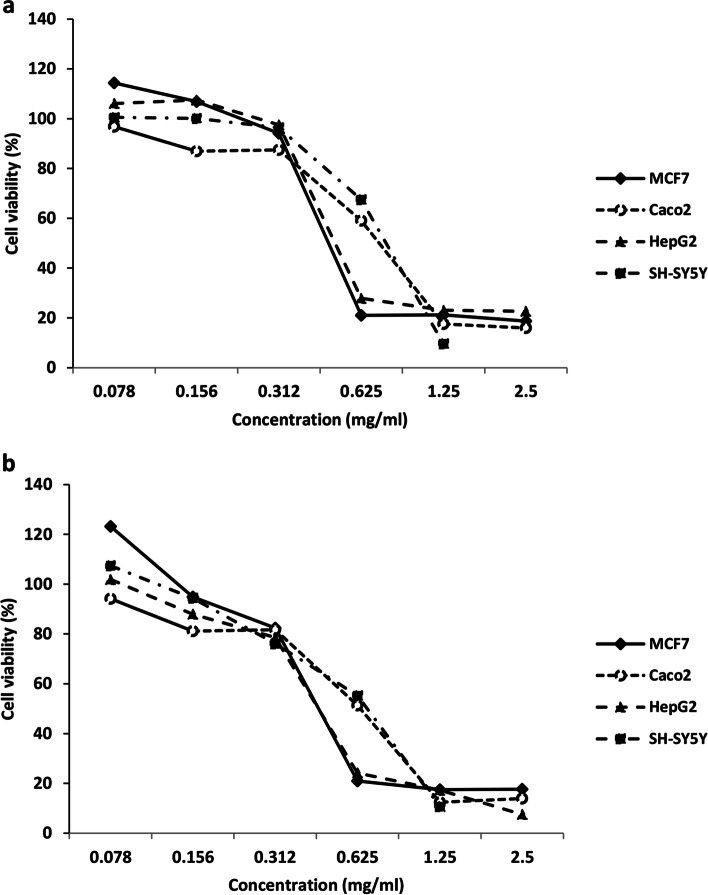
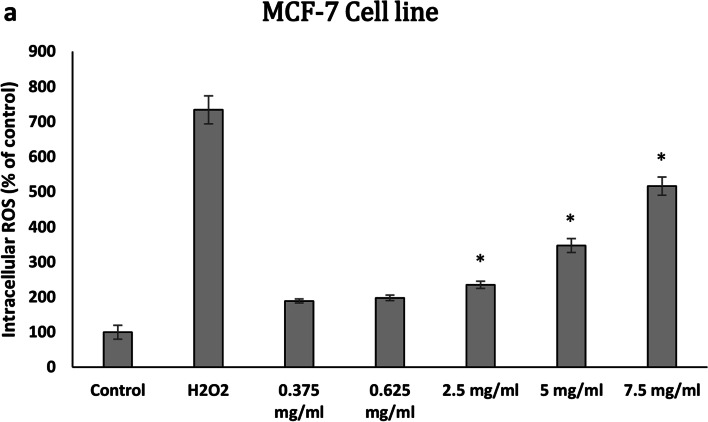
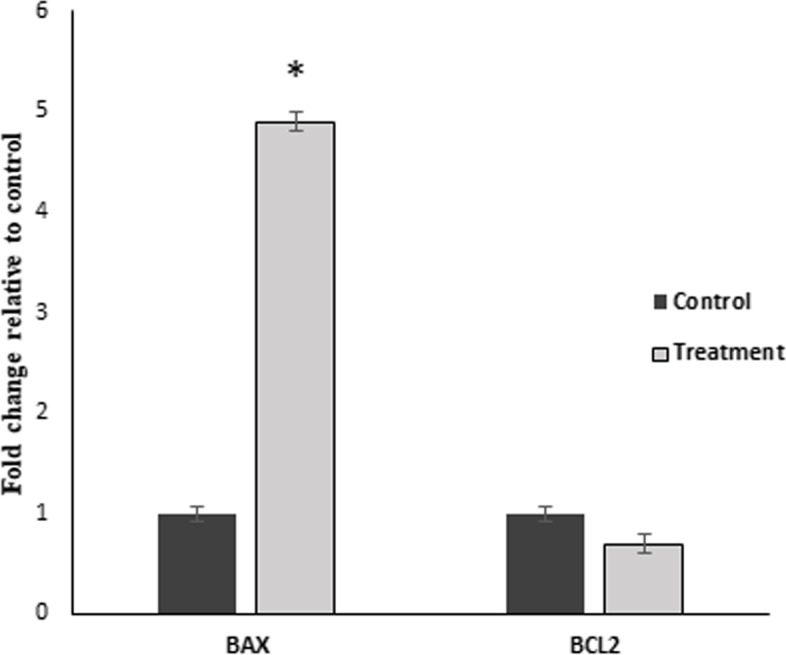
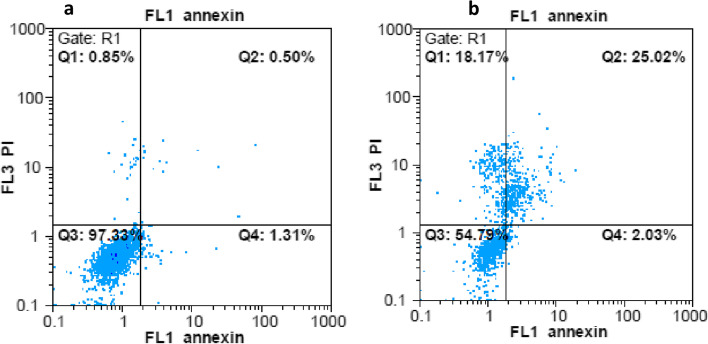
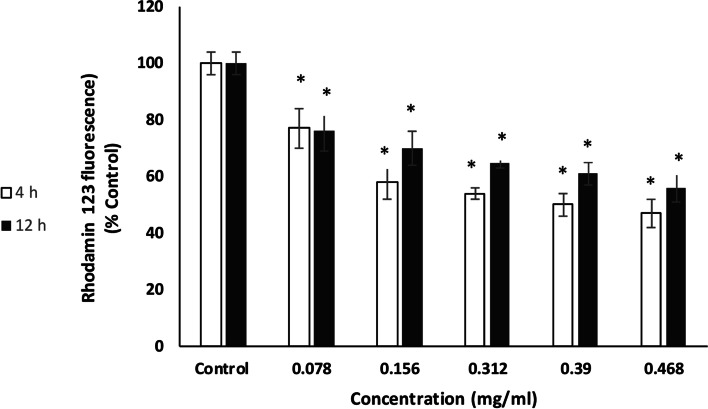
Based on the GC-MS analysis, 24 compounds were identified in the EO, of which 1,8-cineole (28.5%), Nepetalactone (18.8%), germacrene D (8.1%), and β-pinene (7.2%), were the major compounds. Also, the EO showed considerable cytotoxicity against MCF-7, Caco-2, SH-SY5Y, and HepG2 after 24 and 48 h treatment with IC values between 0.0.47 to 0.81 mg/mL. It was revealed that this compound increased the Bax/Bcl2 ratio in the MCF-7 cells and induced apoptosis (27%) and necrosis (18%) in the cells. Moreover, the EO treatment led to a substantial decrease in MMP, which is indicative of apoptosis induction. A significant increase in ROS level was also detected in the cells following exposure to the EO. This compound showed strong DPPH radical scavenging activity (IC: 30). It was also effective against Gram-positive E. faecalis (ATCC 29,212) and Gram-negative E. coli (ATCC 11,333) bacteria.
The results of this study demonstrated that the EO of N. mahanesis could be considered a bioactive product with biomedical applications that can be used as an alternative cancer treatment and applied in the biomedical industries.
化疗、放疗和手术等传统癌症治疗方法由于其严重的副作用,往往会影响患者的生活质量,这表明迫切需要开发毒性更小、更有效的替代治疗方法。药用植物及其衍生物是此类药物的宝贵来源。本研究旨在确定荆芥精油(EO)的化学成分、抗癌和抗菌活性。
采用气相色谱-质谱联用仪(GC-MS)分析 EO 的化学成分。通过 MTT 法和流式细胞术分析 EO 的细胞毒性和诱导细胞凋亡/坏死作用。实时 PCR 用于评估 Bax/Bcl2 基因表达。还评估了 EO 对细胞线粒体膜电位(MMP)和 ROS 水平的影响。DPPH 法评估 EO 的自由基清除活性。采用平板扩散法和肉汤微量稀释法测定油的抗菌活性、最低抑菌浓度(MIC)和最低杀菌浓度(MBC)。
根据 GC-MS 分析,在 EO 中鉴定出 24 种化合物,其中 1,8-桉叶油醇(28.5%)、荆芥内酯(18.8%)、大根香叶烯 D(8.1%)和β-蒎烯(7.2%)为主要成分。此外,EO 在 24 和 48 小时处理后对 MCF-7、Caco-2、SH-SY5Y 和 HepG2 表现出相当大的细胞毒性,IC 值在 0.047 至 0.81 mg/mL 之间。结果表明,该化合物增加 MCF-7 细胞中的 Bax/Bcl2 比值,并诱导细胞凋亡(27%)和坏死(18%)。此外,EO 处理导致 MMP 显著下降,表明诱导细胞凋亡。还检测到细胞暴露于 EO 后 ROS 水平显著升高。该化合物对革兰氏阳性菌粪肠球菌(ATCC 29,212)和革兰氏阴性菌大肠杆菌(ATCC 11,333)均具有较强的 DPPH 自由基清除活性(IC:30)。它对革兰氏阳性菌粪肠球菌(ATCC 29,212)和革兰氏阴性菌大肠杆菌(ATCC 11,333)均具有较强的 DPPH 自由基清除活性(IC:30)。
本研究结果表明,荆芥精油可作为一种具有生物医学应用的生物活性产物,可用于癌症替代治疗,并应用于生物医学产业。