a ICAR-Indian Veterinary Research Institute , Bareilly , India.
b Division of Pathology , ICAR-Indian Veterinary Research Institute , Bareilly , India.
Vet Q. 2019 Dec;39(1):26-55. doi: 10.1080/01652176.2019.1580827.
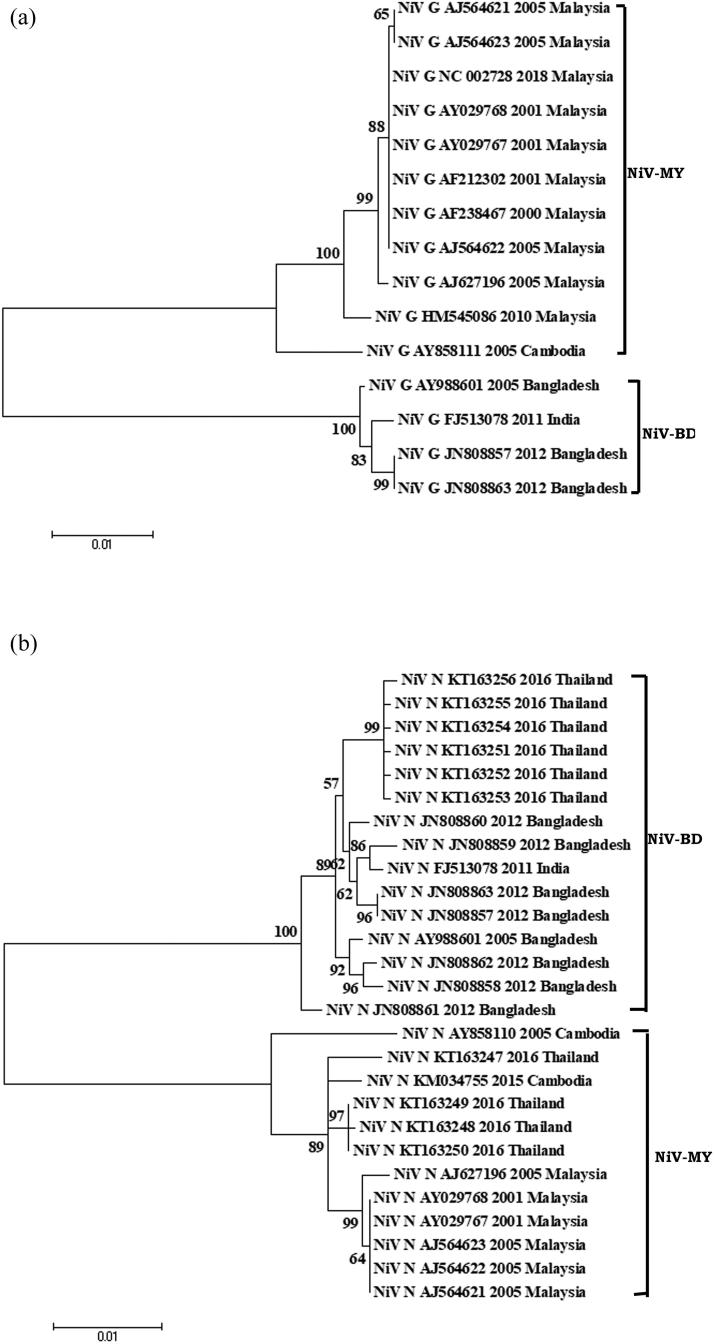
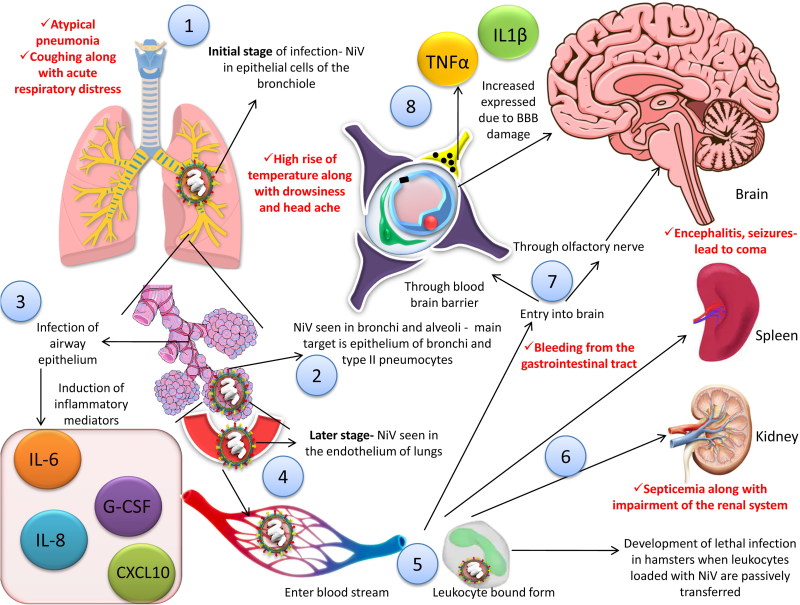
Nipah (Nee-pa) viral disease is a zoonotic infection caused by Nipah virus (NiV), a paramyxovirus belonging to the genus Henipavirus of the family Paramyxoviridae. It is a biosafety level-4 pathogen, which is transmitted by specific types of fruit bats, mainly Pteropus spp. which are natural reservoir host. The disease was reported for the first time from the Kampung Sungai Nipah village of Malaysia in 1998. Human-to-human transmission also occurs. Outbreaks have been reported also from other countries in South and Southeast Asia. Phylogenetic analysis affirmed the circulation of two major clades of NiV as based on currently available complete N and G gene sequences. NiV isolates from Malaysia and Cambodia clustered together in NiV-MY clade, whereas isolates from Bangladesh and India clusterered within NiV-BD clade. NiV isolates from Thailand harboured mixed population of sequences. In humans, the virus is responsible for causing rapidly progressing severe illness which might be characterized by severe respiratory illness and/or deadly encephalitis. In pigs below six months of age, respiratory illness along with nervous symptoms may develop. Different types of enzyme-linked immunosorbent assays along with molecular methods based on polymerase chain reaction have been developed for diagnostic purposes. Due to the expensive nature of the antibody drugs, identification of broad-spectrum antivirals is essential along with focusing on small interfering RNAs (siRNAs). High pathogenicity of NiV in humans, and lack of vaccines or therapeutics to counter this disease have attracted attention of researchers worldwide for developing effective NiV vaccine and treatment regimens.
尼帕病毒(Nee-pa)病是由尼帕病毒(NiV)引起的人畜共患病感染,尼帕病毒是副黏病毒科亨尼帕病毒属的一种副黏病毒。它是一种生物安全等级 4 的病原体,通过特定类型的果蝠传播,主要是 Pteropus spp. 这是其自然储主。该疾病于 1998 年首次在马来西亚的 Kampung Sungai Nipah 村报告。也发生了人与人之间的传播。也有来自南亚和东南亚其他国家的暴发报告。系统发育分析证实,根据目前可用的完整 N 和 G 基因序列,NiV 存在两个主要的分支。来自马来西亚和柬埔寨的 NiV 分离株聚集在 NiV-MY 分支中,而来自孟加拉国和印度的分离株聚集在 NiV-BD 分支中。来自泰国的 NiV 分离株携带混合种群的序列。在人类中,该病毒会导致迅速进展的严重疾病,其特征可能是严重的呼吸道疾病和/或致命的脑炎。在六个月以下的猪中,可能会出现呼吸道疾病和神经症状。已经开发了不同类型的酶联免疫吸附测定法以及基于聚合酶链反应的分子方法用于诊断目的。由于抗体药物价格昂贵,因此必须确定广谱抗病毒药物,同时专注于小干扰 RNA(siRNAs)。NiV 在人类中的高致病性,以及缺乏针对这种疾病的疫苗或疗法,引起了全世界研究人员的关注,以开发有效的 NiV 疫苗和治疗方案。