González-Lavado Eloisa, Valdivia Lourdes, García-Castaño Almudena, González Fernando, Pesquera Carmen, Valiente Rafael, Fanarraga Mónica L
Grupo de Nanomedicina, IDIVAL-Universidad de Cantabria, 39011, Santander, Spain.
Unidad De Ensayos Clínicos, Oncología Médica y Medicina Paliativa, Hospital Valdecilla-IDIVAL 39011, Santander, Spain.
Oncotarget. 2019 Mar 12;10(21):2022-2029. doi: 10.18632/oncotarget.26770.
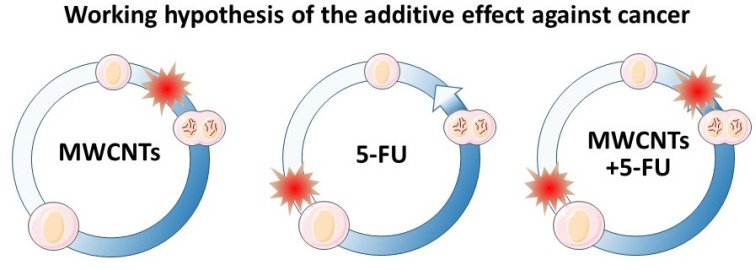
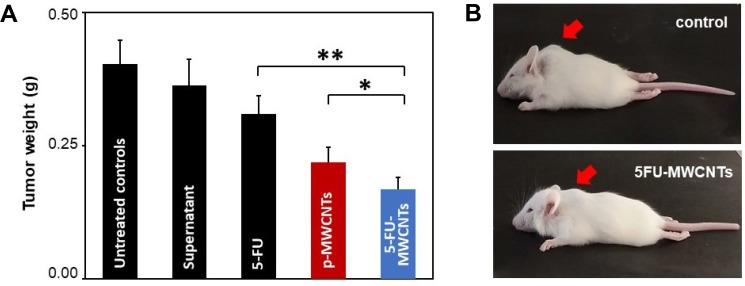
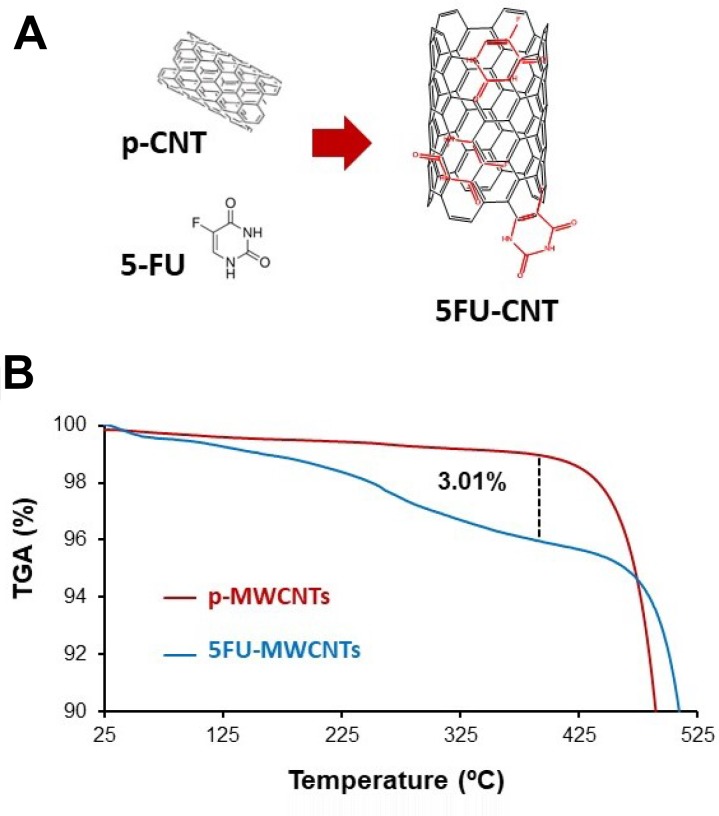
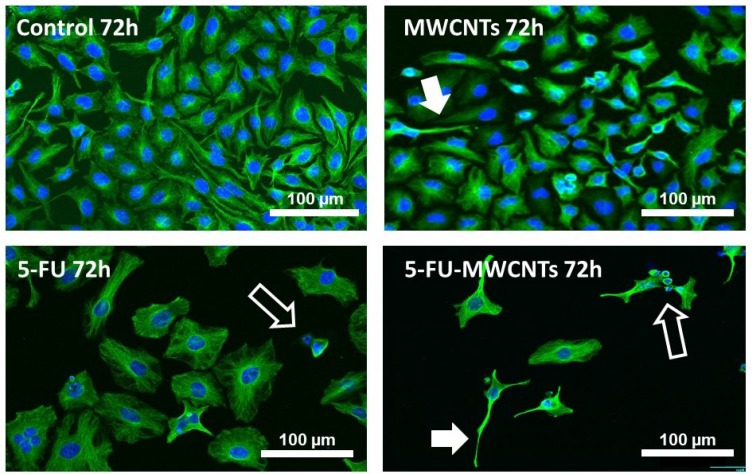
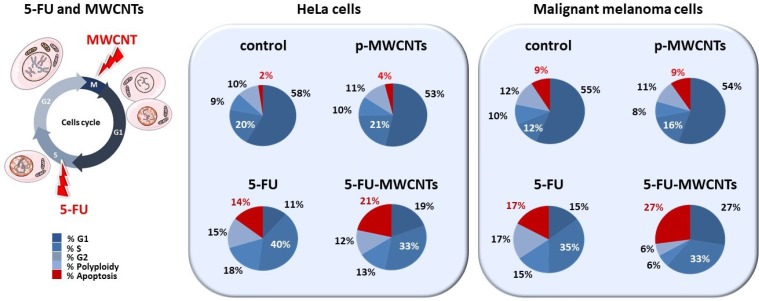
Multiple-drug resistance in human cancer is a major problem. To circumvent this issue, clinicians combine several drugs. However, this strategy could backfire resulting in more toxic or ineffective treatments. Carbon nanotubes (CNTs), and particularly multi-walled nanotubes (MWCNTs), display intrinsic properties against cancer interfering with microtubule dynamics and triggering anti-proliferative, anti-migratory and cytotoxic effects that result in tumor growth inhibition . Remarkably, these effects are maintained in tumors resistant to traditional microtubule-binding chemotherapies such as Taxol. In the view of these properties, we investigate the use of MWCNTs in the development of nanocarriers, attempting to enhance the effect of broadly-used chemotherapies. We compare the cytotoxic and the anti-tumoral effect of 5-Fluorouracil (5-FU) -an antimetabolite treatment of various forms of cancer- with that of the drug physisorbed onto MWCNTs. Our results demonstrate how the total effect of the drug 5-FU is remarkably improved (50% more effective) when delivered intratumorally coupled to MWCNTs both and in solid tumoral models. Our results demonstrate how using MWCNTs as anti-cancer drug delivery platforms is a promising approach to boost the efficacy of traditional chemotherapies, while considerably reducing the chances of resistance in cancer cells.
人类癌症中的多药耐药性是一个主要问题。为了规避这个问题,临床医生联合使用几种药物。然而,这种策略可能会适得其反,导致治疗毒性更大或无效。碳纳米管(CNTs),特别是多壁纳米管(MWCNTs),具有抗癌症的内在特性,可干扰微管动力学并触发抗增殖、抗迁移和细胞毒性作用,从而抑制肿瘤生长。值得注意的是,这些作用在对传统微管结合化疗(如紫杉醇)耐药的肿瘤中依然存在。鉴于这些特性,我们研究了MWCNTs在纳米载体开发中的应用,试图增强广泛使用的化疗药物的效果。我们比较了5-氟尿嘧啶(5-FU)(一种用于治疗各种癌症的抗代谢药物)与物理吸附在MWCNTs上的该药物的细胞毒性和抗肿瘤作用。我们的结果表明,在实体肿瘤模型中,当5-FU与MWCNTs瘤内联合给药时,该药物的总体效果显著提高(有效性提高50%)。我们的结果表明,使用MWCNTs作为抗癌药物递送平台是一种很有前景的方法,可提高传统化疗的疗效,同时大大降低癌细胞产生耐药性的几率。