Department of Psychiatry, Geisel School of Medicine at Dartmouth, Dartmouth College, Hanover, New Hampshire, United States of America.
The Dartmouth Clinical and Translational Science Institute, Dartmouth College, Hanover, New Hampshire, United States of America.
PLoS Comput Biol. 2019 Apr 22;15(4):e1006838. doi: 10.1371/journal.pcbi.1006838. eCollection 2019 Apr.
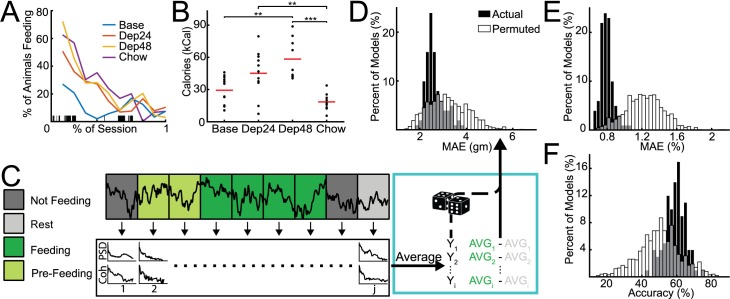
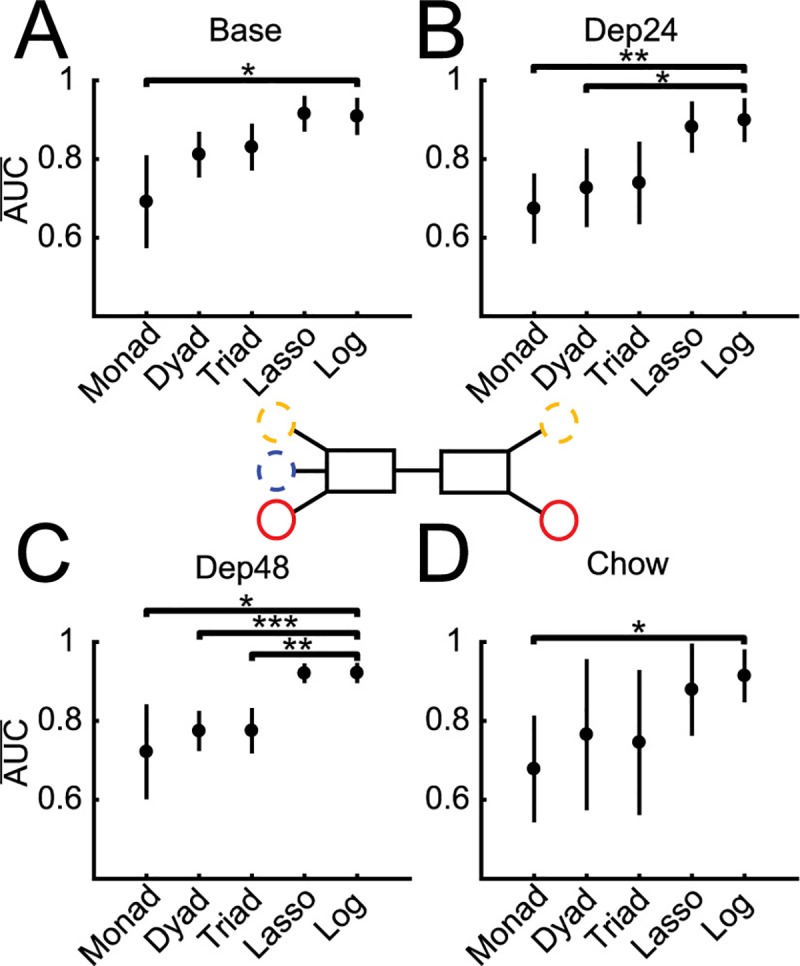
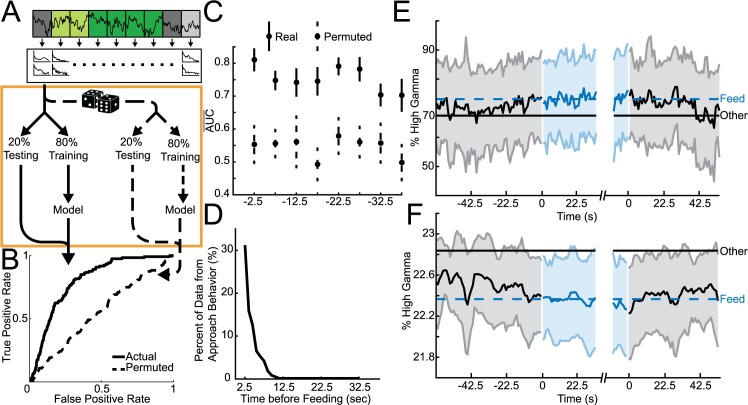
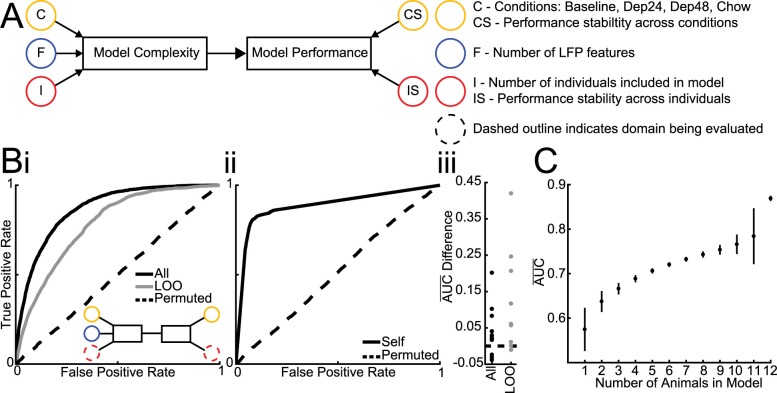
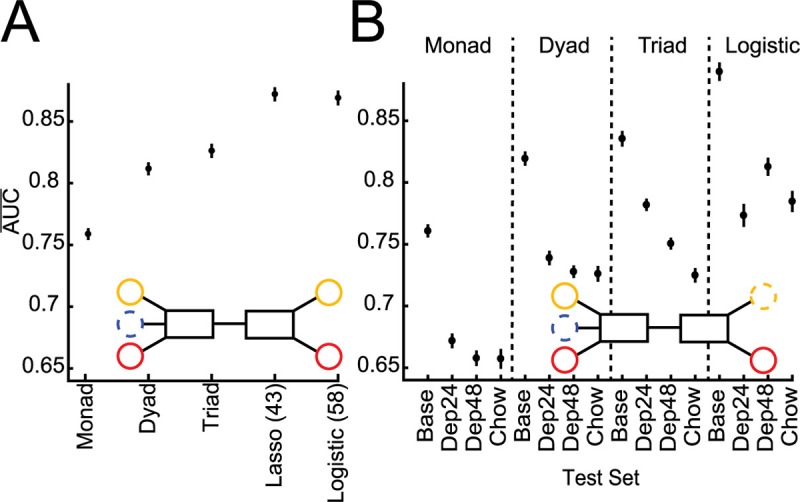
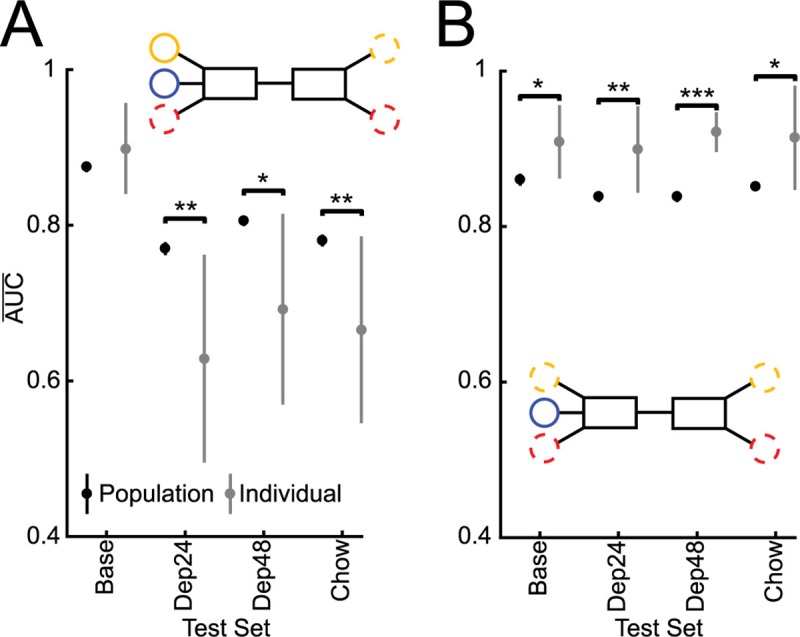
The ventral striatum (VS) is a central node within a distributed network that controls appetitive behavior, and neuromodulation of the VS has demonstrated therapeutic potential for appetitive disorders. Local field potential (LFP) oscillations recorded from deep brain stimulation (DBS) electrodes within the VS are a pragmatic source of neural systems-level information about appetitive behavior that could be used in responsive neuromodulation systems. Here, we recorded LFPs from the bilateral nucleus accumbens core and shell (subregions of the VS) during limited access to palatable food across varying conditions of hunger and food palatability in male rats. We used standard statistical methods (logistic regression) as well as the machine learning algorithm lasso to predict aspects of feeding behavior using VS LFPs. We were able to predict the amount of food eaten, the increase in consumption following food deprivation, and the type of food eaten. Further, we were able to predict whether the initiation of feeding was imminent up to 42.5 seconds before feeding began and classify current behavior as either feeding or not-feeding. In classifying feeding behavior, we found an optimal balance between model complexity and performance with models using 3 LFP features primarily from the alpha and high gamma frequencies. As shown here, unbiased methods can identify systems-level neural activity linked to domains of mental illness with potential application to the development and personalization of novel treatments.
腹侧纹状体(VS)是控制食欲行为的分布式网络中的一个核心节点,VS 的神经调制已被证明对食欲障碍具有治疗潜力。从 VS 内的深部脑刺激(DBS)电极记录的局部场电位(LFP)振荡是有关食欲行为的神经系统水平信息的实用来源,可用于反应性神经调制系统。在这里,我们在雄性大鼠在饥饿和食物美味性不同的条件下进行有限的美味食物摄取期间,记录了双侧伏隔核核心和壳(VS 的亚区)的 LFPs。我们使用了标准的统计方法(逻辑回归)以及机器学习算法 lasso 来使用 VS LFPs 预测进食行为的各个方面。我们能够预测进食的食物量、饥饿后消费的增加量以及进食的食物类型。此外,我们能够预测进食的开始是否迫在眉睫,提前 42.5 秒开始,并将当前行为分类为进食或不进食。在对进食行为进行分类时,我们发现使用 3 个 LFP 特征(主要来自 alpha 和高 gamma 频率)的模型在模型复杂性和性能之间达到了最佳平衡。如这里所示,无偏方法可以识别与精神疾病领域相关的系统水平神经活动,这可能有助于开发和个性化新型治疗方法。