Endocrinology and Nutrition Service, Miguel Servet Hospital, 50009 Zaragoza, Spain.
Food Technology & Nutrition Dept., Catholic University of Murcia, 30107 Murcia, Spain.
Nutrients. 2019 Apr 24;11(4):925. doi: 10.3390/nu11040925.
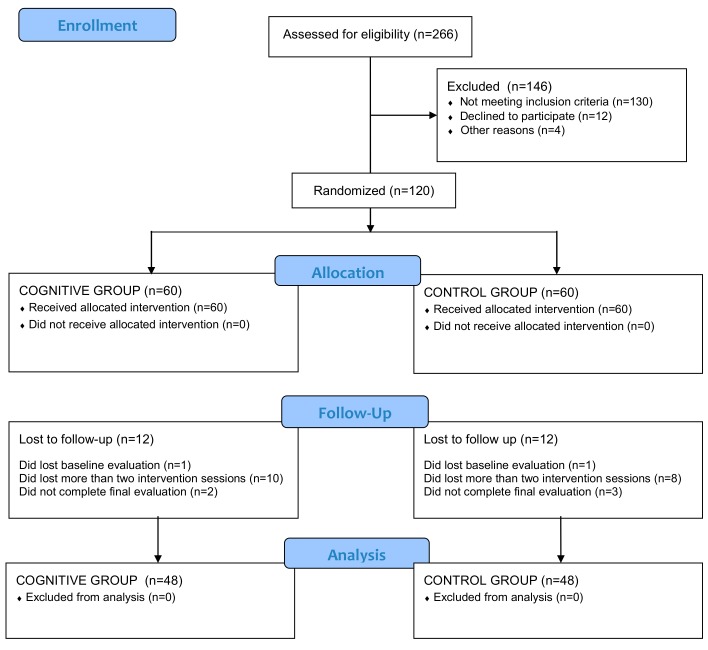
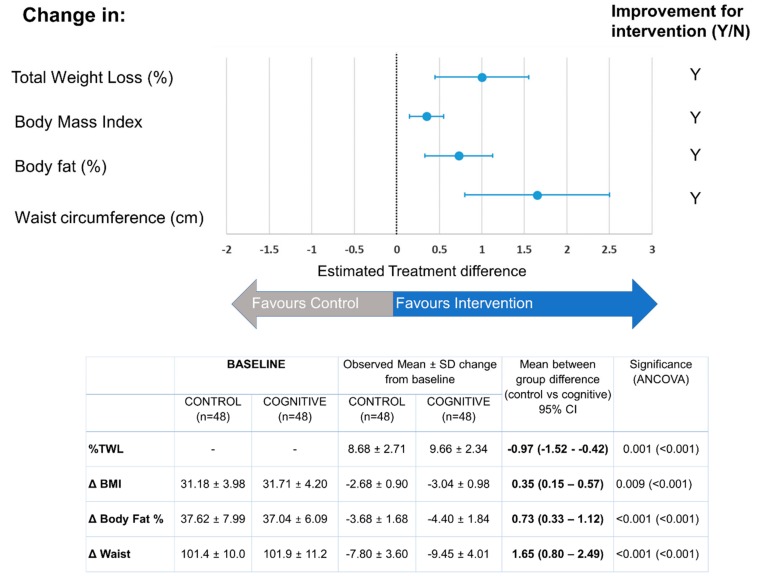
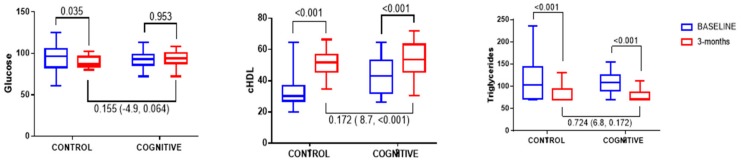
Obesity has been associated with impaired cognitive performance. This study aimed to determine whether improvements in cognitive function may contribute to higher weight loss in patients with obesity. In this randomised, 12-week trial, participants with overweight/obesity were randomised into a cognitive training intervention (Cognitive) group or a cognitive-behavioural (Control) group. In addition, both groups followed a hypocaloric dietary treatment. Cognitive functioning measurements and anthropometrical parameters were evaluated. All cognitive measures improved in the intervention group ( < 0.005 in all contrasts). In controls, significant improvements in attention, flexibility and task planning were also observed. Regarding anthropometrical parameters, the effect of the intervention in the cognitive group was higher for the total percentage of weight loss, body mass index (BMI), body fat and waist circumference. Biochemical parameters improved in both groups. Attending to our data, cognitive training was more effective that the hypocaloric intervention alone, partly related to an improvement in the working memory. Despite the shortage of training interventions for executive functions in the context of weight control, this type of combined intervention could establish the first steps towards a more appropriate intervention for patients with obesity.
肥胖与认知表现受损有关。本研究旨在确定认知功能的改善是否有助于肥胖患者的体重减轻更多。在这项随机的、为期 12 周的试验中,超重/肥胖参与者被随机分为认知训练干预(认知)组或认知行为(对照)组。此外,两组都遵循低热量饮食治疗。评估认知功能测量和人体测量参数。干预组的所有认知测量都有所改善(所有对比均<0.005)。在对照组中,注意力、灵活性和任务规划也有显著改善。关于人体测量参数,认知组的干预效果在体重减轻的总百分比、体重指数(BMI)、体脂肪和腰围方面更高。生化参数在两组均有改善。根据我们的数据,认知训练比单独的低热量干预更有效,这部分与工作记忆的改善有关。尽管在体重控制的背景下,针对执行功能的训练干预措施不足,但这种联合干预可能为肥胖患者的更适当干预措施奠定基础。