Berde Éva, Rigó Mariann
Corvinus University of Budapest, Fővám tér 8, 1093, Budapest, Hungary.
Institute of Medical Sociology, Medical Faculty, University of Düsseldorf, Universitätsstraße 1, 40225, Düsseldorf, Germany.
Z Gerontol Geriatr. 2020 Feb;53(1):44-50. doi: 10.1007/s00391-019-01547-x. Epub 2019 Apr 26.
As a response to population aging, reforms to increase the statutory retirement age and closing options for early retirement have been introduced in many European countries. This study analyzed the job satisfaction of employees in two countries with markedly different speeds of pension reforms. The German reform started in 1992 and abolished almost all options of early retirement. The Hungarian reforms started later and were completed only by 2011. Therefore, it is expected that older Hungarian workers were initially more satisfied with their jobs than similarly aged German workers.
The hypothesis was tested that older workers in a regulatory environment with accessible pathways to early retirement are on average relatively more satisfied with their job than older workers in a country with few and financially less advantageous options for early retirement.
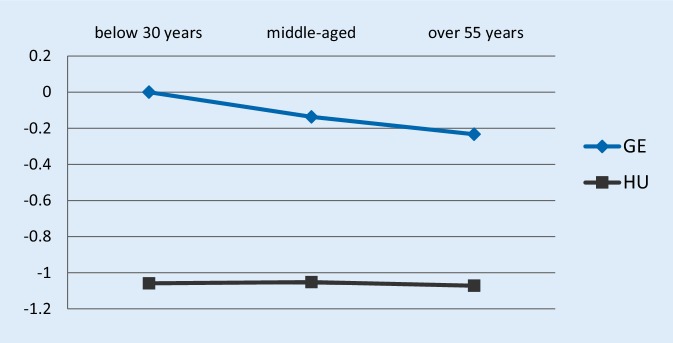
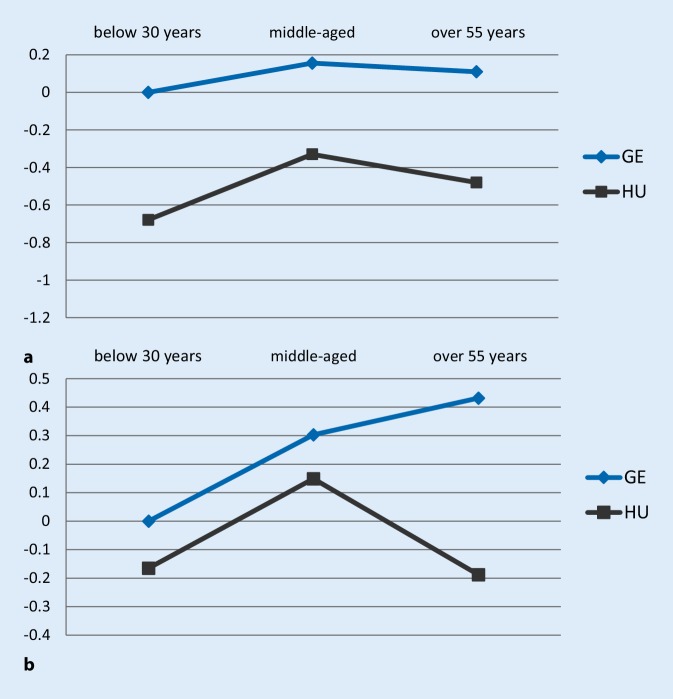
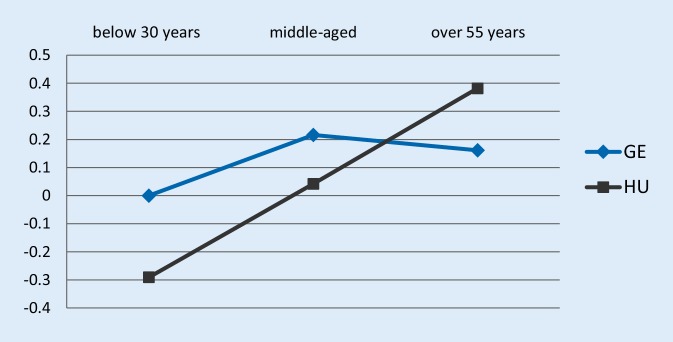
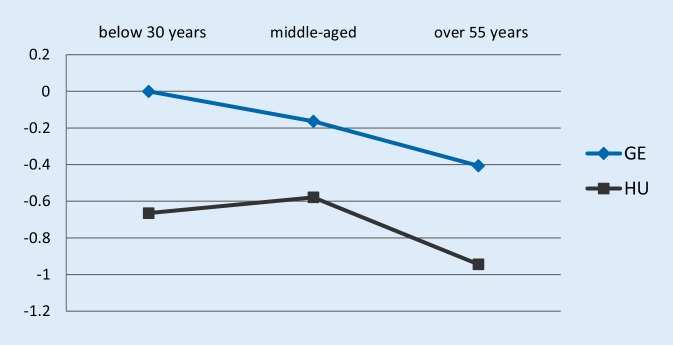
This study used data from the European Working Conditions Surveys. Waves 2005 and 2010 represent years when early retirement pathways were abolished in Germany, while the Hungarian system offered a variety of pathways for early retirement. This is not the case in 2015 having tight regulations in both countries. Logit regressions were estimated using job satisfaction as an dependent variable and a variety of control variables were introduced step by step.
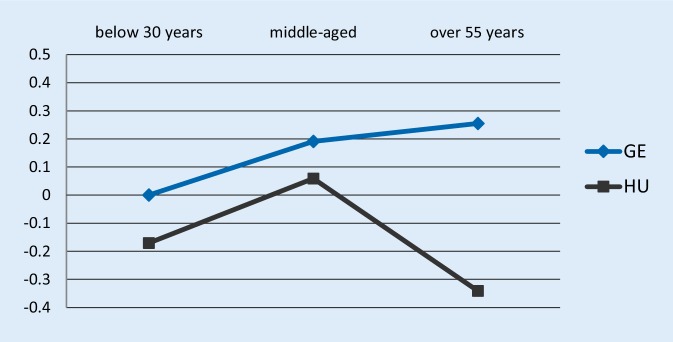
The results from 2005 and 2010 indicate that older Hungarian employees are relatively more content with their job than similarly aged German workers. In 2015 this trend was reversed.
It would be crucial to provide the opportunity and appropriate working conditions for older employees to work if they voluntarily opt for working longer. They seem to be an especially motivated pool of employees, and could productively contribute to decreasing the financial burdens caused by the demographic changes.
作为应对人口老龄化的举措,许多欧洲国家已推行改革,提高法定退休年龄并减少提前退休的选择。本研究分析了两个养老金改革速度明显不同的国家中员工的工作满意度。德国的改革始于1992年,几乎取消了所有提前退休的选择。匈牙利的改革起步较晚,直到2011年才完成。因此,预计匈牙利老年工人最初比同龄的德国工人对工作更满意。
检验这样一个假设,即在有便捷提前退休途径的监管环境中,老年工人平均而言比在提前退休选择少且经济上不那么有利的国家的老年工人对工作相对更满意。
本研究使用了欧洲工作条件调查的数据。2005年和2010年的数据代表德国取消提前退休途径的年份,而匈牙利的体系提供了多种提前退休途径。2015年情况并非如此,两国都有严格的规定。以工作满意度为因变量进行逻辑回归估计,并逐步引入各种控制变量。
2005年和2010年的结果表明,匈牙利老年员工比同龄的德国工人对工作相对更满意。2015年这一趋势发生了逆转。
如果老年员工自愿选择延长工作时间,为他们提供工作的机会和适当的工作条件至关重要。他们似乎是一群特别有积极性的员工,可以为减轻人口结构变化带来的财政负担做出有益贡献。