Robertson Julia, McGoverin Cushla, Vanholsbeeck Frédérique, Swift Simon
Department of Molecular Medicine and Pathology, The University of Auckland, Auckland, New Zealand.
The Dodd-Walls Centre for Photonic and Quantum Technologies, Auckland, New Zealand.
Front Microbiol. 2019 Apr 12;10:801. doi: 10.3389/fmicb.2019.00801. eCollection 2019.
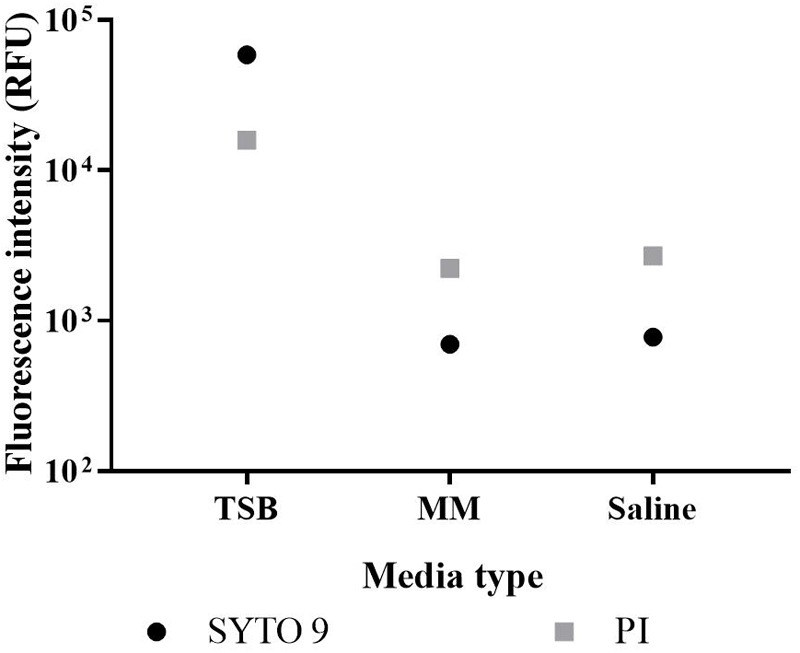
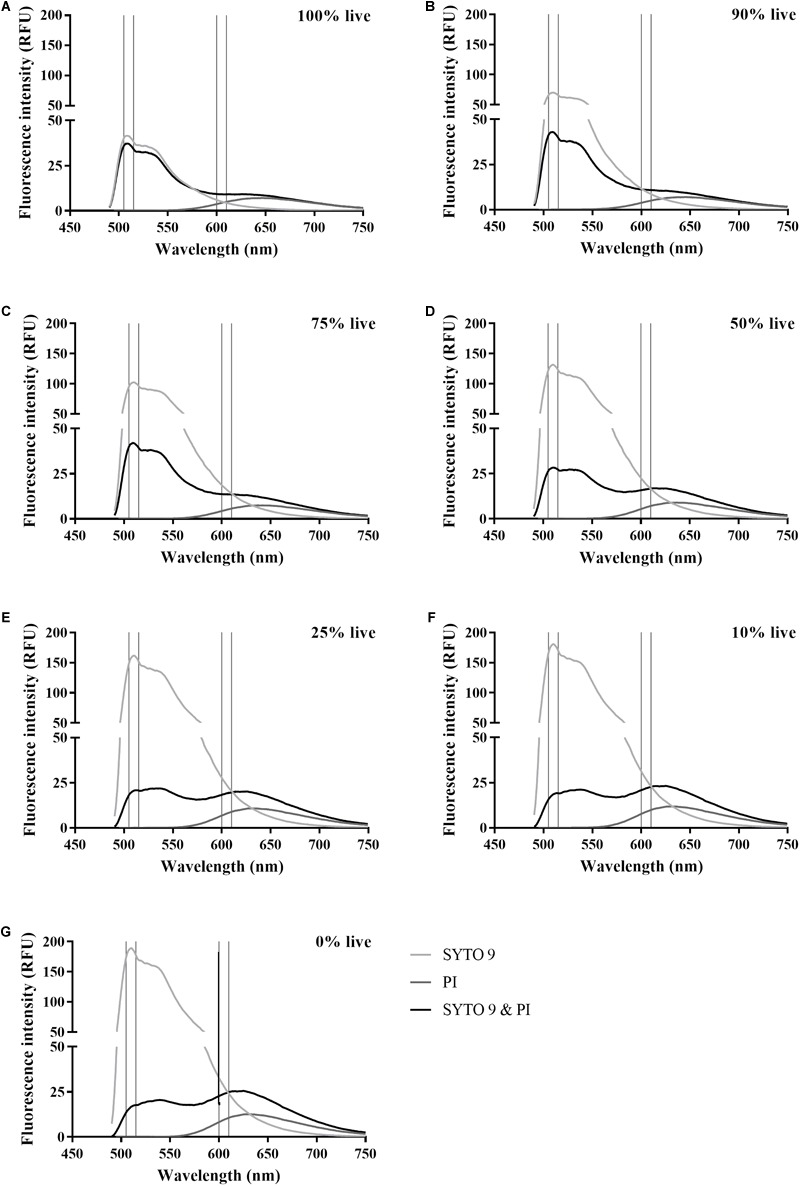
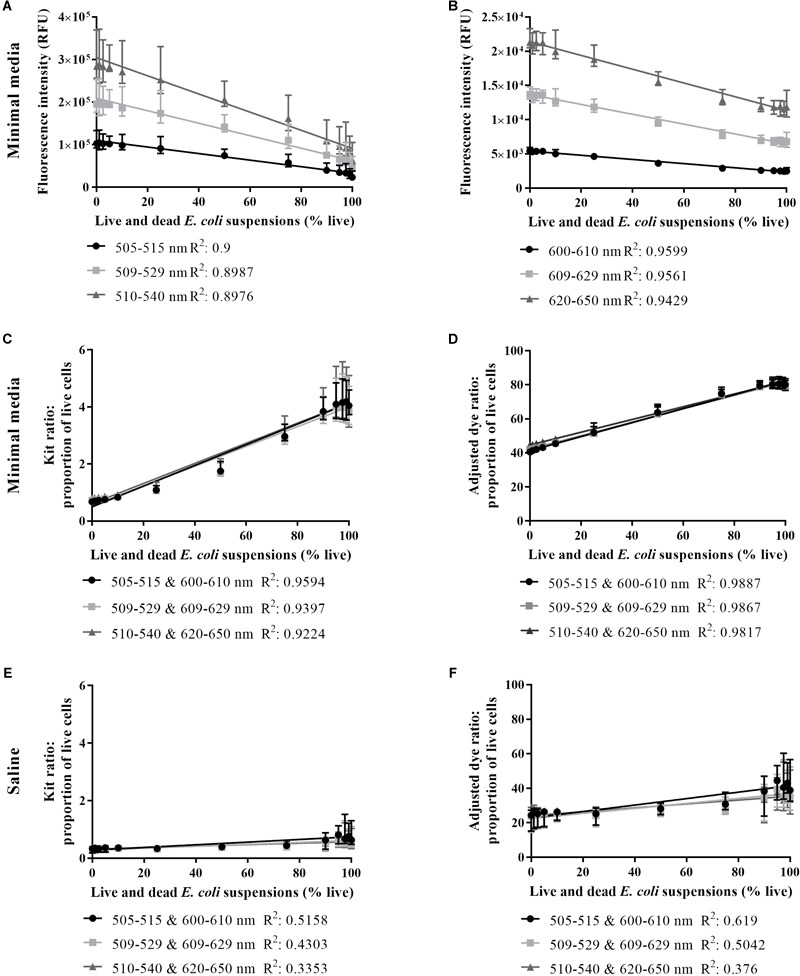
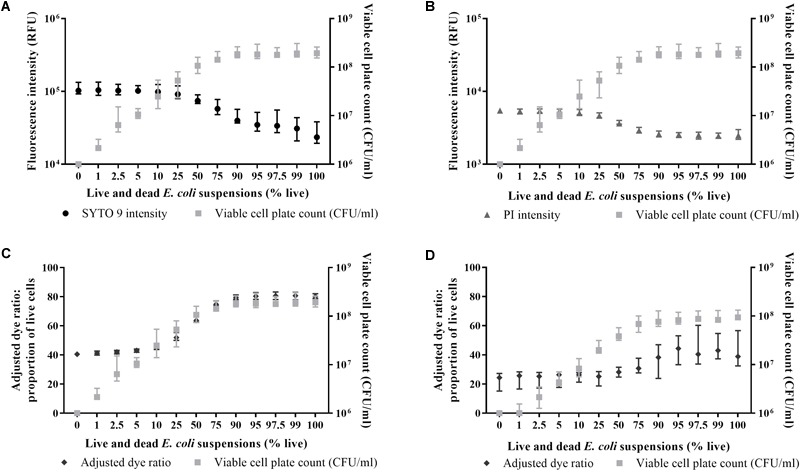
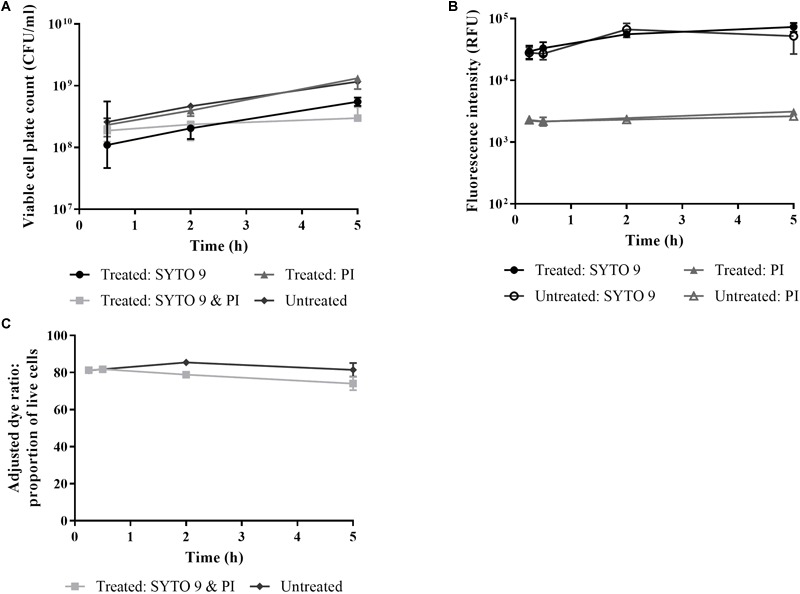
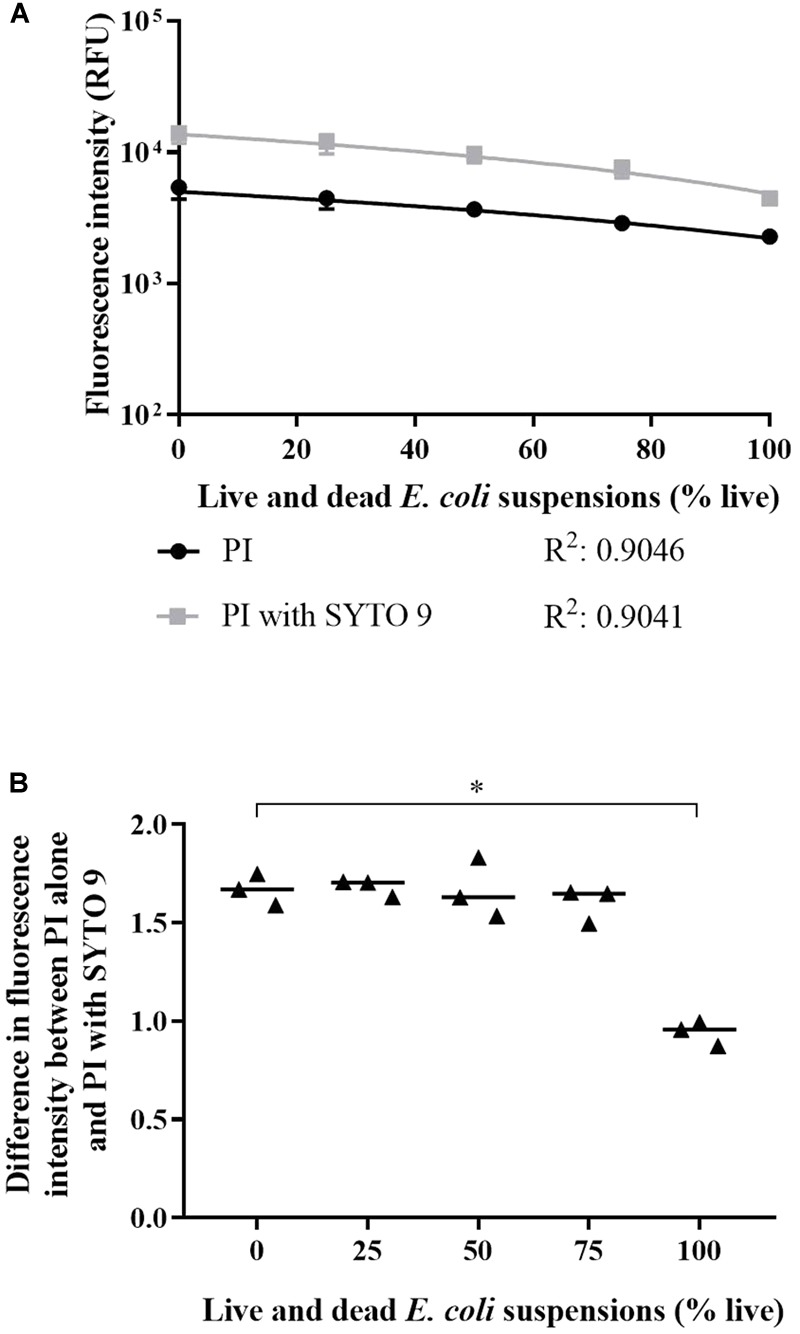
Rapid antimicrobial susceptibility testing is needed to reduce prescription of inappropriate antibiotics. A rapid alternative to standard culture-based testing is to determine reductions in cell viability using the LIVE/DEAD BacLight Bacterial Viability Kit. We optimised the kit protocol for this application, focusing on simplifying the process by minimising the steps involved and on determining the optimal analytical parameters for fluorescence measurements from the dyes SYTO 9 and propidium iodide (PI). We demonstrate that for our experimental system, the intensity of emissions should be integrated from 505-515 nm for SYTO 9 and 600-610 nm for PI, and the proportion of live cells calculated from a new dye ratio formula, termed the adjusted dye ratio. We show that the pre-staining washing step is not necessary if a non-fluorescent growth media is used; however, staining must be done for each sampling as prolonged exposure to the dyes negatively impacts cell viability. The optimised methodology was able to reproducibly detect reductions in culture viability when the proportion of live cells in a sample of 1 × 10 cells/ml fell below ∼50% live in a media that supports the growth required for detecting antibiotic killing. Finally, we show that the interaction of fluorescence emission spectra from SYTO 9 and PI stained cells is influenced by the proportion of dead cells in a sample. The excitation of PI by SYTO 9 was found to occur in populations containing sufficient numbers of dead cells (>25%), whereas in populations with low numbers of dead cells the dye interaction was additive in regard to red emissions, indicating that these dye interactions may offer another dimension to live/dead analysis. Fluorescence measurements from samples established according to the optimised protocol can be taken using a flow cytometer, spectrofluorometer, microplate reader, and the Optrode, a fibre-based spectroscopic system developed at the University of Auckland.
为减少不适当抗生素的处方,需要进行快速抗菌药敏试验。一种快速替代基于标准培养的检测方法是使用LIVE/DEAD BacLight细菌活力试剂盒来测定细胞活力的降低情况。我们针对此应用优化了试剂盒方案,重点是通过尽量减少步骤来简化流程,并确定用于染料SYTO 9和碘化丙啶(PI)荧光测量的最佳分析参数。我们证明,对于我们的实验系统,SYTO 9的发射强度应在505 - 515 nm范围内积分,PI的发射强度应在600 - 610 nm范围内积分,并且活细胞比例应根据一个新的染料比例公式(称为调整后的染料比例)来计算。我们表明,如果使用无荧光的生长培养基,则预染色洗涤步骤并非必要;然而,每次采样都必须进行染色,因为长时间暴露于染料会对细胞活力产生负面影响。当在支持检测抗生素杀伤所需生长的培养基中,1×10个细胞/ml样品中的活细胞比例降至约50%以下时,优化后的方法能够可重复地检测培养物活力的降低情况。最后,我们表明SYTO 9和PI染色细胞的荧光发射光谱相互作用受样品中死细胞比例的影响。发现SYTO 9对PI的激发发生在含有足够数量死细胞(>25%)的群体中,而在死细胞数量较少的群体中,染料相互作用在红色发射方面是相加的,这表明这些染料相互作用可能为活/死分析提供另一个维度。根据优化方案建立的样品的荧光测量可以使用流式细胞仪、荧光分光光度计、微孔板读数器以及奥克兰大学开发的基于光纤的光谱系统Optrode进行。