Department of Experimental Psychology, University of Oxford.
Department of Psychology, Yale University.
Top Cogn Sci. 2019 Apr;11(2):409-432. doi: 10.1111/tops.12382. Epub 2018 Sep 14.
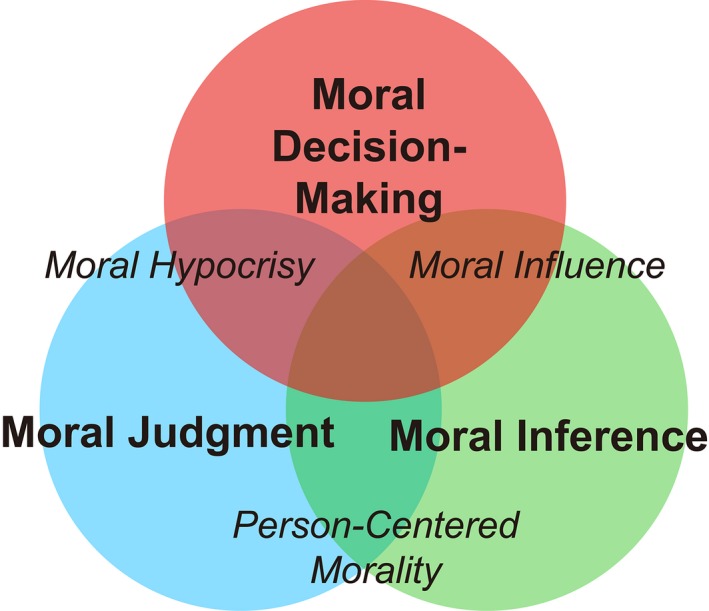
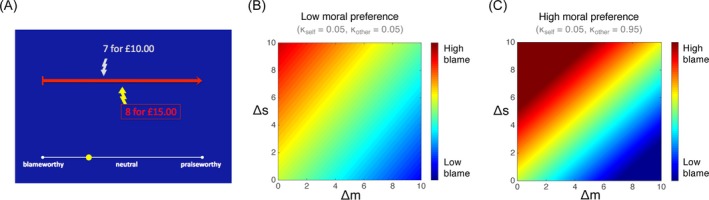
Humans face a fundamental challenge of how to balance selfish interests against moral considerations. Such trade-offs are implicit in moral decisions about what to do; judgments of whether an action is morally right or wrong; and inferences about the moral character of others. To date, these three dimensions of moral cognition-decision-making, judgment, and inference-have been studied largely independently, using very different experimental paradigms. However, important aspects of moral cognition occur at the intersection of multiple dimensions; for instance, moral hypocrisy can be conceived as a disconnect between moral decisions and moral judgments. Here we describe the advantages of investigating these three dimensions of moral cognition within a single computational framework. A core component of this framework is harm aversion, a moral sentiment defined as a distaste for harming others. The framework integrates economic utility models of harm aversion with Bayesian reinforcement learning models describing beliefs about others' harm aversion. We show how this framework can provide novel insights into the mechanisms of moral decision-making, judgment, and inference.
人类面临着一个基本的挑战,即如何在自身利益和道德考虑之间取得平衡。这种权衡隐含在关于该做什么的道德决策中;在判断一个行为是否在道德上是正确还是错误;以及在推断他人的道德品质时。迄今为止,道德认知的这三个维度——决策、判断和推断——主要是使用非常不同的实验范式独立研究的。然而,道德认知的重要方面发生在多个维度的交叉点上;例如,道德虚伪可以被视为道德决策和道德判断之间的脱节。在这里,我们描述了在单个计算框架内研究这三个道德认知维度的优势。该框架的核心组成部分是回避伤害,这是一种被定义为厌恶伤害他人的道德情感。该框架将回避伤害的经济效用模型与描述他人回避伤害信念的贝叶斯强化学习模型相结合。我们展示了这个框架如何为道德决策、判断和推断的机制提供新的见解。