1Channing Division of Network Medicine, Brigham and Women's Hospital, Harvard Medical School, Boston, MA 02115 USA.
2Departament d'Enginyeria Informàtica i Matemàtiques, Universitat Rovira i Virgili, 43007 Tarragona, Spain.
NPJ Syst Biol Appl. 2019 Apr 23;5:15. doi: 10.1038/s41540-019-0092-5. eCollection 2019.
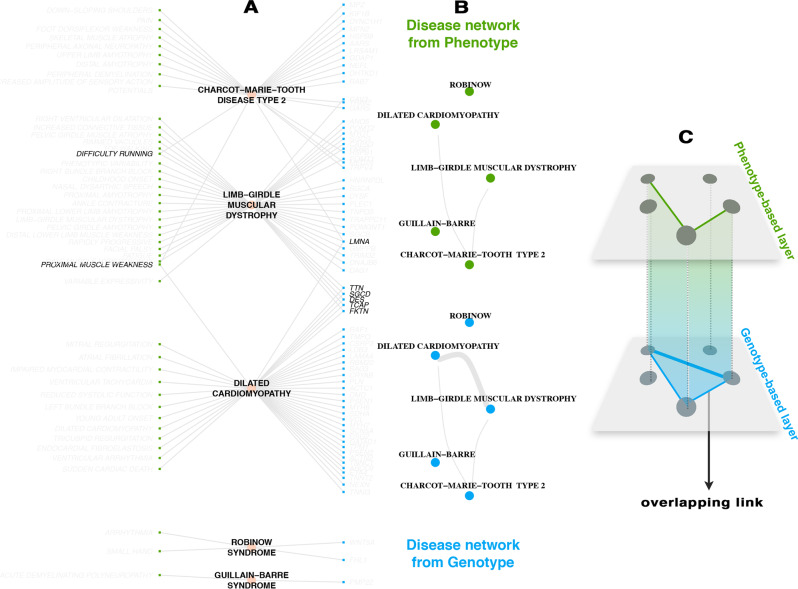
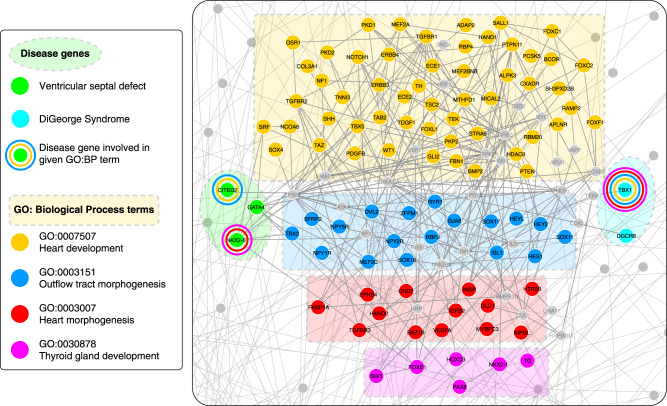
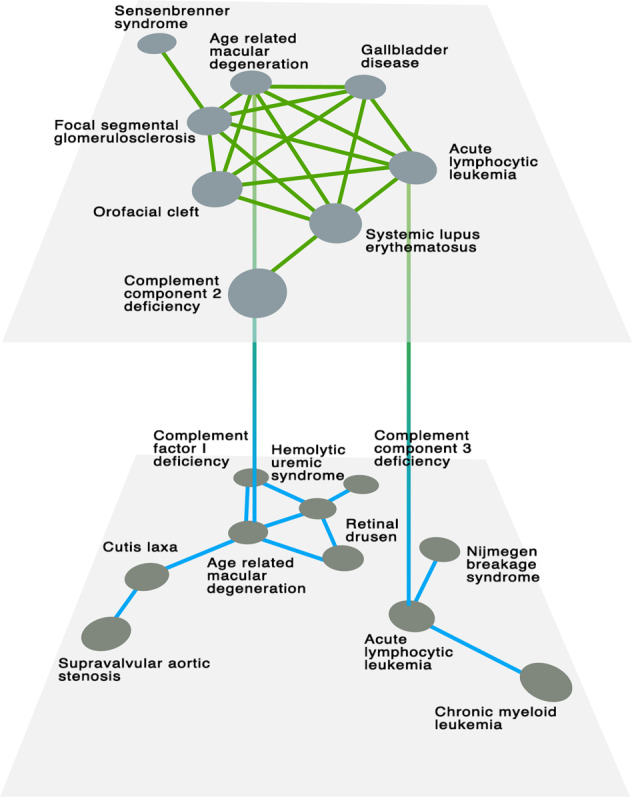
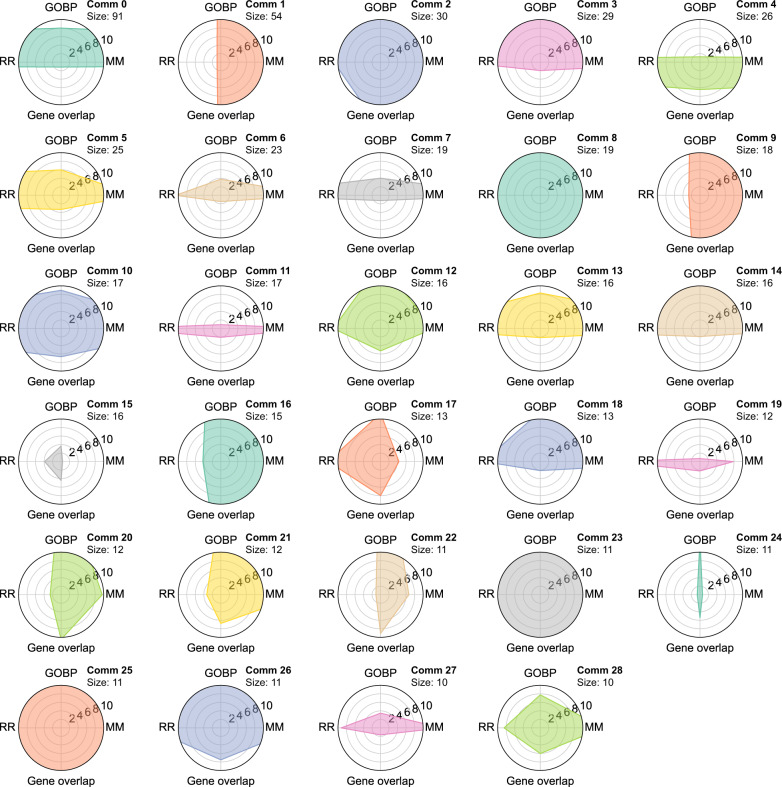
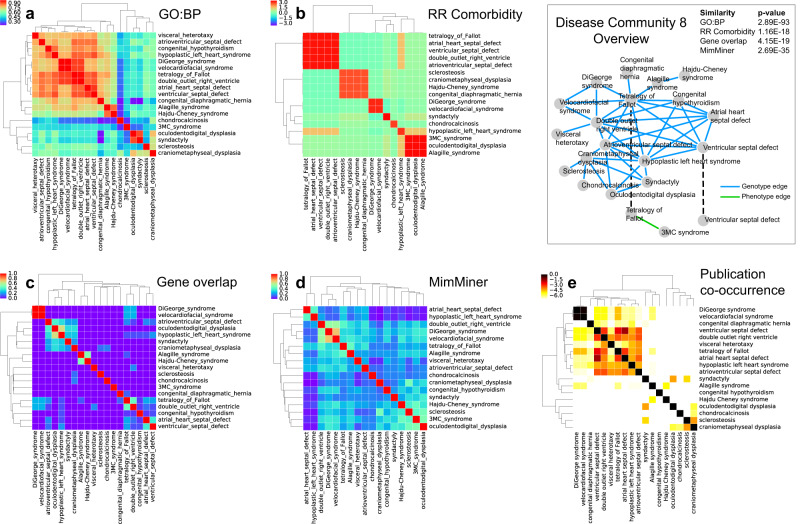
Untangling the complex interplay between phenotype and genotype is crucial to the effective characterization and subtyping of diseases. Here we build and analyze the multiplex network of 779 human diseases, which consists of a genotype-based layer and a phenotype-based layer. We show that diseases with common genetic constituents tend to share symptoms, and uncover how phenotype information helps boost genotype information. Moreover, we offer a flexible classification of diseases that considers their molecular underpinnings alongside their clinical manifestations. We detect cohesive groups of diseases that have high intra-group similarity at both the molecular and the phenotypic level. Inspecting these disease communities, we demonstrate the underlying pathways that connect diseases mechanistically. We observe monogenic disorders grouped together with complex diseases for which they increase the risk factor. We propose potentially new disease associations that arise as a unique feature of the information flow within and across the two layers.
理清表型和基因型之间的复杂相互作用对于有效地描述和细分疾病至关重要。在这里,我们构建和分析了 779 种人类疾病的多重网络,该网络由基于基因型的层和基于表型的层组成。我们表明,具有共同遗传成分的疾病往往具有共同的症状,并揭示了表型信息如何有助于增强基因型信息。此外,我们提供了一种灵活的疾病分类方法,既考虑了疾病的分子基础,也考虑了其临床表现。我们检测到疾病的凝聚群,这些疾病在分子和表型水平上具有很高的组内相似性。检查这些疾病社区,我们展示了连接疾病的潜在途径。我们观察到单基因疾病与复杂疾病一起分组,因为它们增加了风险因素。我们提出了一些潜在的新的疾病关联,这些关联是两个层面内和层面间信息流的独特特征。