Otto-Meyer Sebastian, Lumibao Jan, Kim Eugene, Ladomersky Erik, Zhai Lijie, Lauing Kristen L, Scholtens Denise M, Penedo Frank, Amidei Christina, Lukas Rimas V, Wainwright Derek A
Department of Neurological Surgery, Northwestern University Feinberg School of Medicine, Chicago, IL 60611, United States.
Department of Preventative Medicine-Biostatistics, Northwestern University Feinberg School of Medicine, Chicago, IL 60611, United States.
Curr Opin Behav Sci. 2019 Aug;28:44-50. doi: 10.1016/j.cobeha.2019.01.009. Epub 2019 Feb 26.
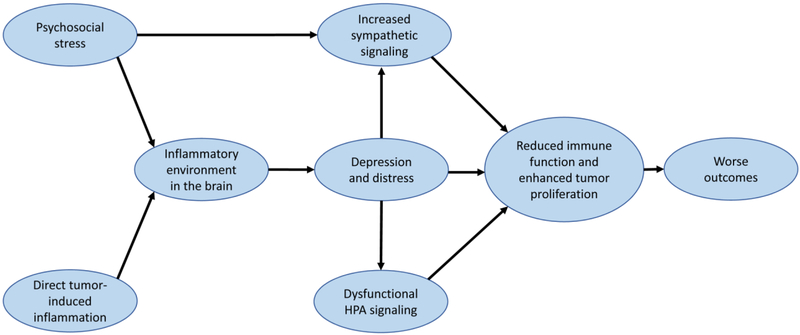
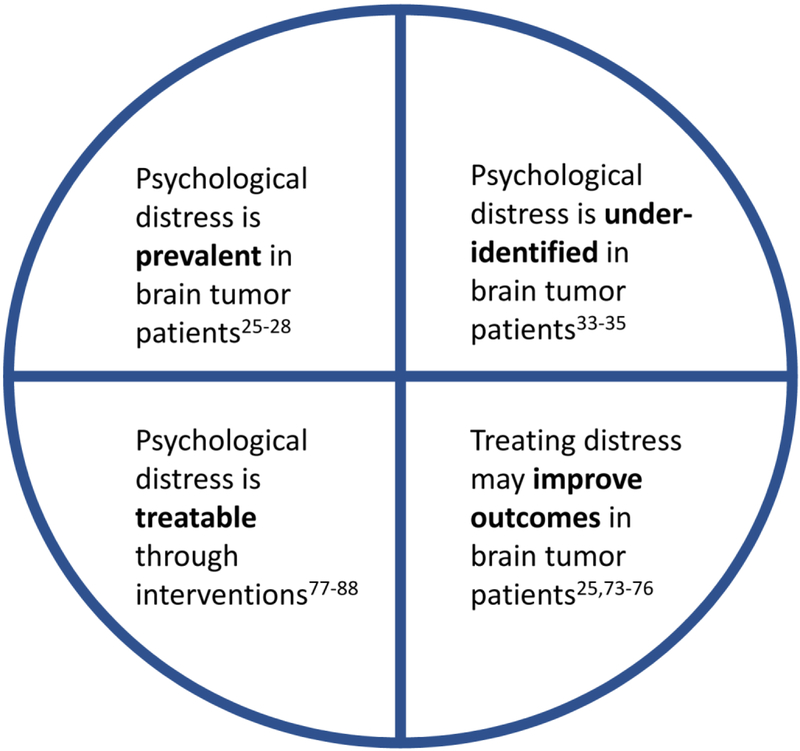
A malignant brain tumor diagnosis is often accompanied with intense feelings and can be associated with psychosocial conditions including depression, anxiety, and/or increased distress levels. Previous work has highlighted the impact of uncontrolled psychological distress among brain tumor patients. Given the negative impact of maladaptive psychosocial and biobehavioral factors on normal immune system functions, the question remains as to how psychological conditions potentially affect the brain tumor patient anti-tumor immune response. Since immunotherapy has yet to show efficacy at increasing malignant glioma patient survival in all randomized, phase III clinical trials to-date, this review provides new insights into the potential negative effects of chronic distress on brain tumor patient immune functions and outcomes.
恶性脑肿瘤的诊断常常伴随着强烈的情绪,并且可能与包括抑郁、焦虑和/或更高的痛苦水平在内的心理社会状况相关。先前的研究强调了脑肿瘤患者中未得到控制的心理痛苦所产生的影响。鉴于适应不良的心理社会和生物行为因素对正常免疫系统功能有负面影响,心理状况如何潜在地影响脑肿瘤患者的抗肿瘤免疫反应仍是一个问题。由于在迄今为止所有的随机III期临床试验中,免疫疗法尚未显示出能提高恶性胶质瘤患者的生存率,本综述为慢性痛苦对脑肿瘤患者免疫功能和预后的潜在负面影响提供了新的见解。