CAS Key Laboratory of Environmental Biotechnology, Research Center for Eco-Environmental Sciences, Chinese Academy of Sciences, 18 Shuangqing Rd, Haidian, Beijing, 100085, China.
College of Resources and Environment, University of Chinese Academy of Sciences, Beijing, 100049, China.
Microbiome. 2019 May 4;7(1):71. doi: 10.1186/s40168-019-0688-4.
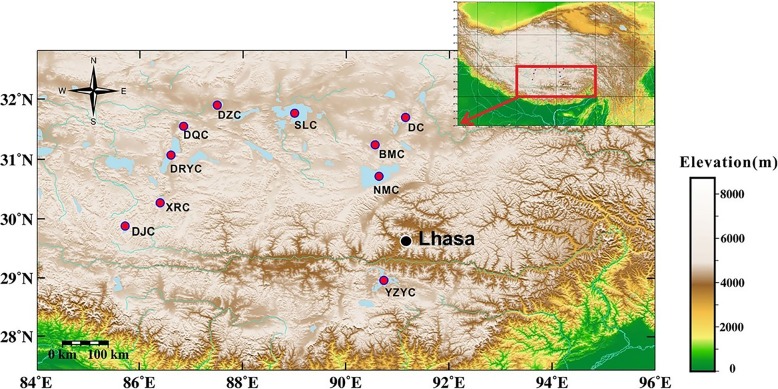
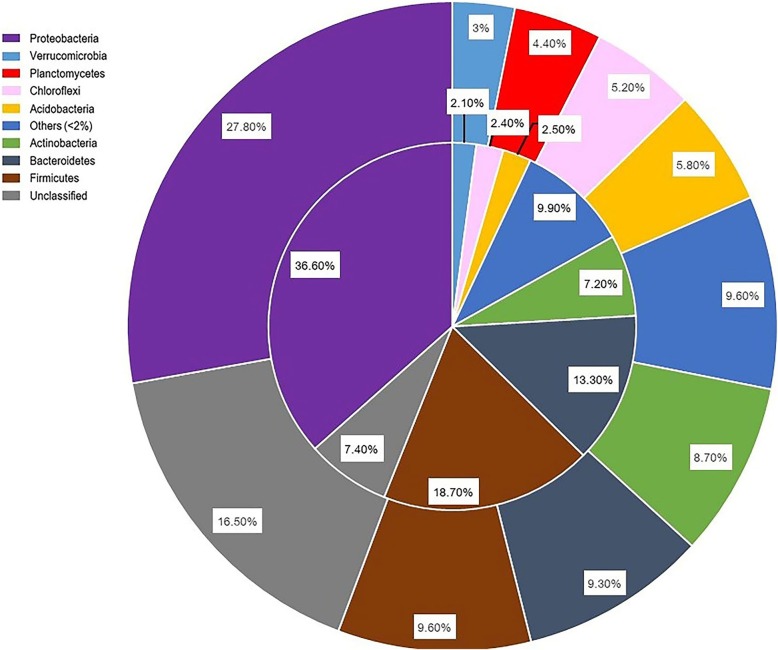
Sulfate reduction is an important biogeochemical process in the ecosphere; however, the major taxa of sulfate reducers have not been fully identified. Here, we used epicPCR (Emulsion, Paired Isolation, and Concatenation PCR) technology to identify the phylogeny of sulfate-reducing prokaryotes (SRP) in sediments from Tibetan Plateau saline lakes. A total of 12,519 OTUs and 883 SRP-OTUs were detected in ten lakes by sequencing of 16S rRNA gene PCR amplicons and epicPCR products of fused 16S rRNA plus dsrB gene, respectively, with Proteobacteria, Firmicutes, and Bacteroidetes being the dominant phyla in both datasets. The 120 highly abundant SRP-OTUs (> 1% in at least one sample) were affiliated with 17 described phyla, only 7 of which are widely recognized as SRP phyla. The majority of OTUs from both the whole microbial communities and the SRPs were not detected in more than one specific lake, suggesting high levels of endemism. The α-diversity of the entire microbial community and SRP sub-community showed significant positive correlations. The pH value and mean water temperature of the month prior to sampling were the environmental determinants for the whole microbial community, while the mean water temperature and total nitrogen were the major environmental drivers for the SRP sub-community. This study revealed there are still many undocumented SRP in Tibetan saline lakes, many of which could be endemic and adapted to specific environmental conditions.
硫酸盐还原是生态系统中重要的生物地球化学过程;然而,硫酸盐还原菌的主要类群尚未被完全鉴定。在这里,我们使用 epicPCR(乳液、配对分离和连接 PCR)技术来鉴定青藏高原盐湖沉积物中硫酸盐还原菌(SRP)的系统发育。通过对 16S rRNA 基因 PCR 扩增子和融合 16S rRNA 加 dsrB 基因的 epicPCR 产物进行测序,在十个湖泊中分别检测到了 12519 个 OTU 和 883 个 SRP-OTU,两个数据集的优势门均为变形菌门、厚壁菌门和拟杆菌门。120 个高度丰富的 SRP-OTU(至少在一个样本中占比>1%)归属于 17 个描述的门,其中只有 7 个被广泛认为是 SRP 门。来自整个微生物群落和 SRP 的大多数 OTU 在一个以上的特定湖泊中都没有被检测到,这表明存在高水平的特有性。整个微生物群落和 SRP 亚群落的 α-多样性呈显著正相关。采样前一个月的 pH 值和平均水温是整个微生物群落的环境决定因素,而平均水温和总氮是 SRP 亚群落的主要环境驱动因素。本研究表明,青藏高原盐湖中仍有许多未被记录的 SRP,其中许多可能是特有种,适应特定的环境条件。