Nimonkar Sharayu Vinod, Belkhode Vikram M, Godbole S R, Nimonkar Pranali Vinod, Dahane Trupti, Sathe Seema
Department of Prosthodontics, Sharad Pawar Dental College and Hospital, Sawangi, Wardha, Maharashtra, India.
Trauma Care Centre, Government Dental College and Hospital, Nagpur, Maharashtra, India.
J Int Soc Prev Community Dent. 2019 Mar-Apr;9(2):152-158. doi: 10.4103/jispcd.JISPCD_406_18. Epub 2019 Apr 12.
Infection control is an important concept in the present day practice of dentistry. Disinfection of dental impressions is part of the daily routine in a dental clinics. After disinfection, it is important that impressions remain dimensionally stable.
The purpose of this study was to compare the effect of chemical disinfectants and ultraviolet (UV) disinfection on the dimensional stability of the polyvinyl siloxane impressions.
The objective of the study is (1) To evaluate the effect of chemical disinfectant (2% glutaraldehyde and 1% sodium hypochlorite) and UV disinfectant on the dimensional stability of polyvinyl siloxane impression material. (2) Comparative evaluation of the dimensional discrepancy between the cast poured from the polyvinyl impressions material, that is subjected to chemical disinfectant and UV disinfectant to that of cast poured from impressions that were nondisinfected.
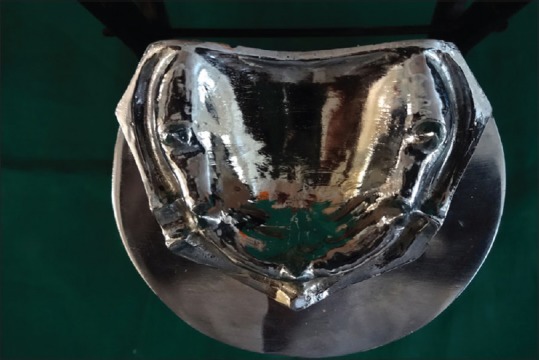
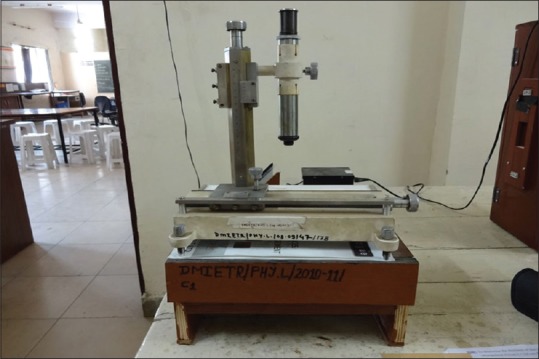
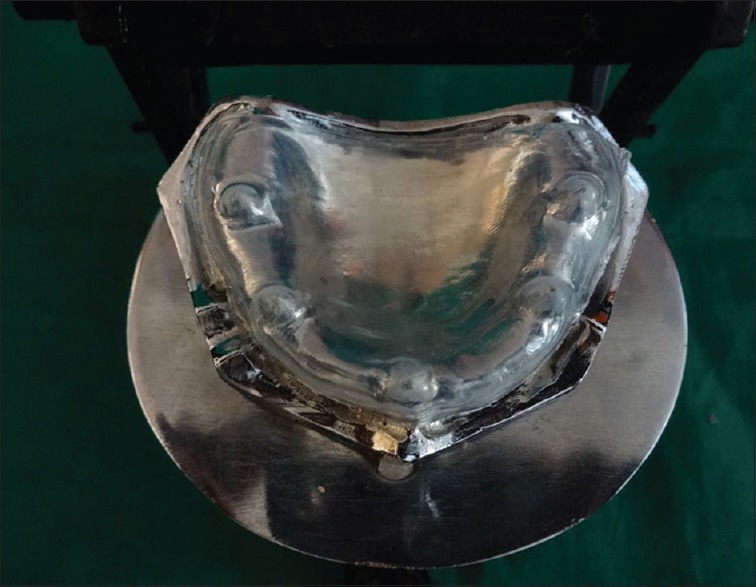
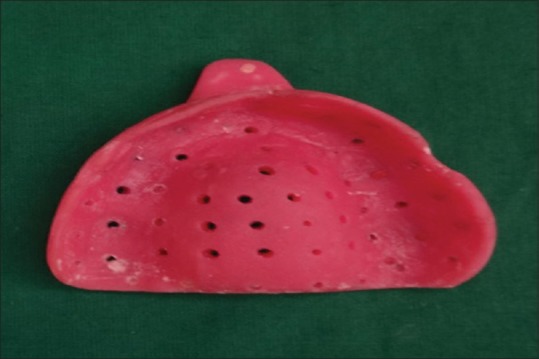
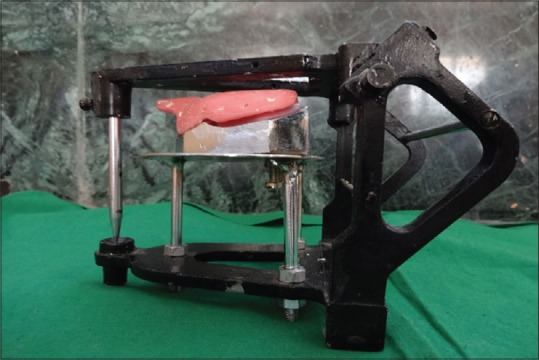
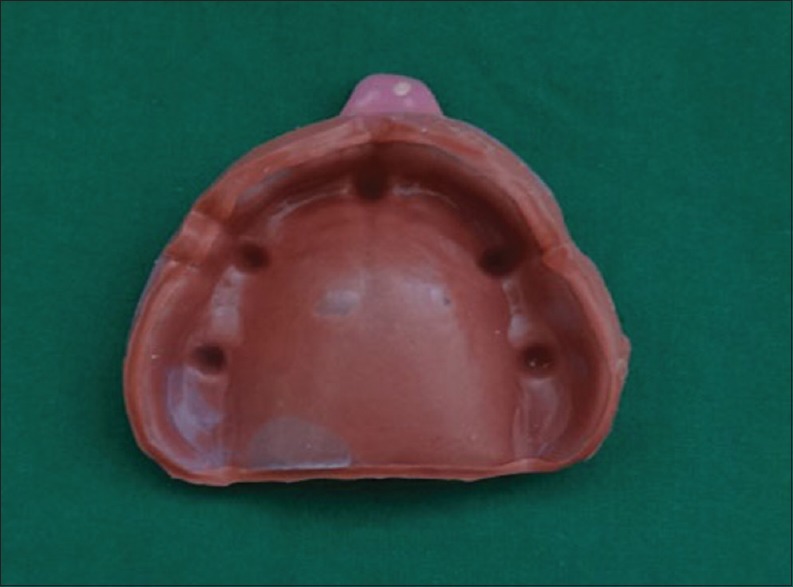
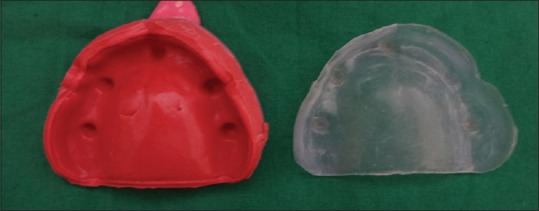
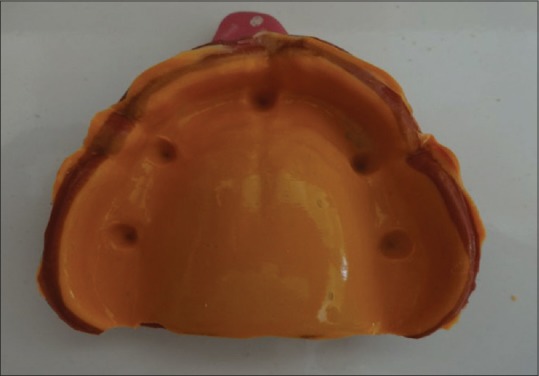
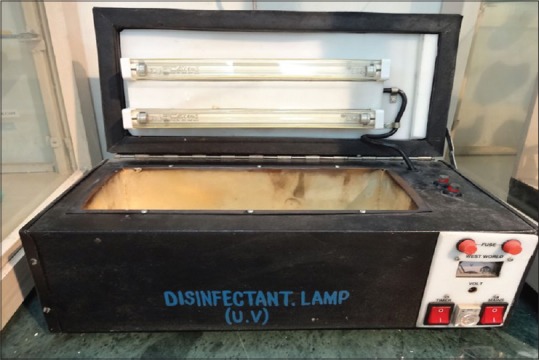
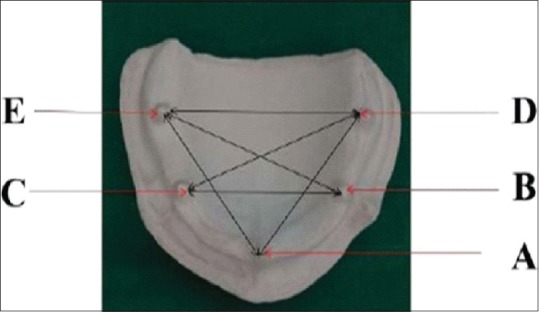
A customized tray was fabricated to make impressions. Impressions were divided into four groups, 10 samples were disinfected with 2% glutaraldehyde for 20 min, 10 samples were disinfected with 1% sodium hypochlorite for 20 min, 10 samples were disinfected with UV light for 20 min, and 10 samples were not subjected to disinfection which served as control group. All the samples were poured after 30 min in die stone. Measurements were recorded using traveling microscope of 0.001 accuracy. Statistical analysis used in this study was the one-way ANOVA test.
The result showed significant dimensional changes in samples disinfected with 2% glutaraldehyde and 1% sodium hypochlorite, whereas samples disinfected with UV disinfectant unit showed no significant dimensional changes when compared with control group samples. Within the chemical groups, impressions disinfected with 1% sodium hypochlorite showed more discrepancy in the dimensions when compared to the 2% glutaraldehyde disinfected group.
UV light disinfectant can be safely used to disinfect impressions as compared to chemical disinfectants in clinical prosthodontic procedures.
感染控制是当今牙科实践中的一个重要概念。牙科印模的消毒是牙科诊所日常工作的一部分。消毒后,印模保持尺寸稳定很重要。
本研究的目的是比较化学消毒剂和紫外线(UV)消毒对聚硅氧烷印模尺寸稳定性的影响。
本研究的目标是(1)评估化学消毒剂(2%戊二醛和1%次氯酸钠)和紫外线消毒剂对聚硅氧烷印模材料尺寸稳定性的影响。(2) 对用化学消毒剂和紫外线消毒剂处理过的聚硅氧烷印模材料灌注的铸型与未消毒印模灌注的铸型之间的尺寸差异进行比较评估。
制作一个定制托盘用于制取印模。印模分为四组,10个样本用2%戊二醛消毒20分钟,10个样本用1%次氯酸钠消毒20分钟,10个样本用紫外线消毒20分钟,10个样本未进行消毒作为对照组。30分钟后所有样本用石膏灌注。使用精度为0.001的移动显微镜记录测量结果。本研究使用的统计分析是单因素方差分析测试。
结果显示,用2%戊二醛和1%次氯酸钠消毒的样本有显著的尺寸变化,而与对照组样本相比,用紫外线消毒装置消毒的样本没有显著的尺寸变化。在化学消毒组中,与2%戊二醛消毒组相比,用1%次氯酸钠消毒的印模尺寸差异更大。
在临床口腔修复程序中,与化学消毒剂相比,紫外线消毒剂可安全用于印模消毒。