Samra Rupandeep Kaur, Bhide Shreenivas Vasant
Dept. of Prosthodontics, Himachal Dental College, Sundarnagar, Himachal Pradesh 175018, India.
Dept. of Prosthodontics, Bharati Vidyapeeth Dental College, Katraj, Dhanakawadi, Pune, India.
Saudi Dent J. 2018 Apr;30(2):125-141. doi: 10.1016/j.sdentj.2017.11.005. Epub 2017 Dec 13.
It was to analyse and compare the effect of different disinfectant systems on the dimensional stability of commonly used irreversible hydrocolloid and addition silicone impression materials from developing countries as compared to materials from developed countries.
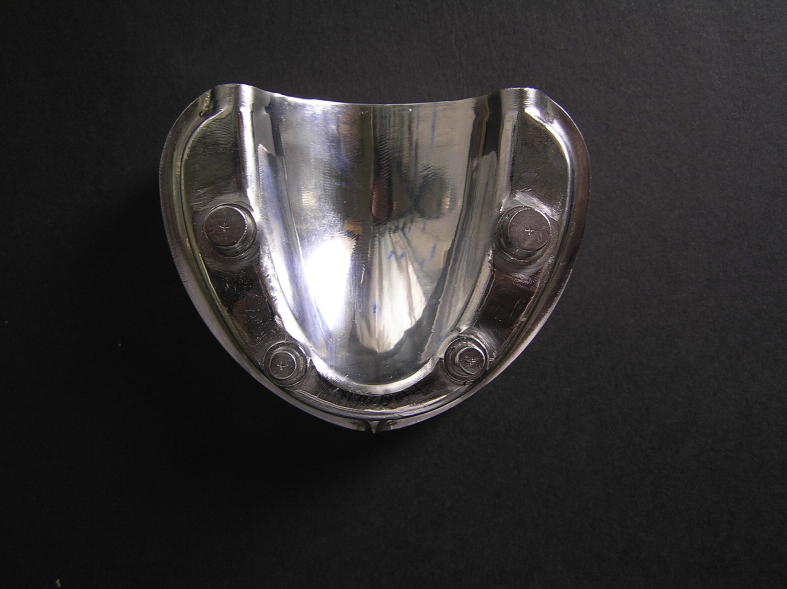
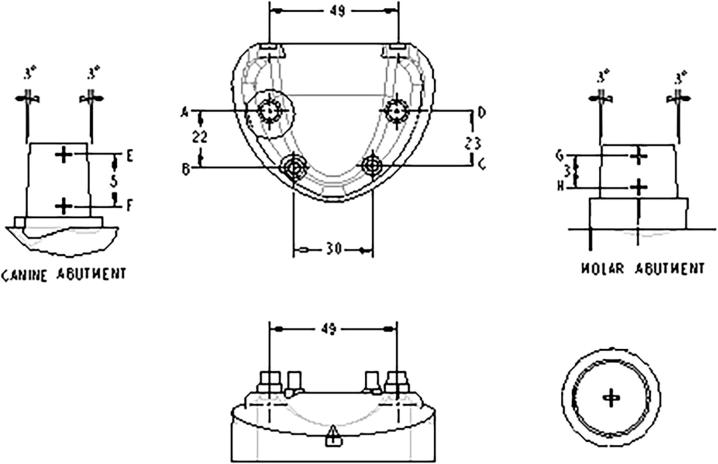
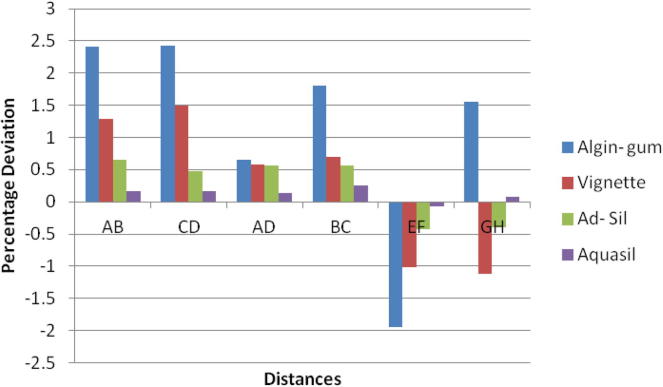
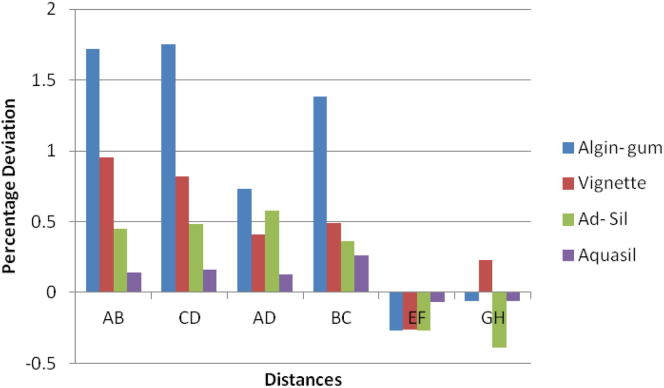
Disinfectant systems used were glutaraldehyde, sodium hypochlorite and ultraviolet chamber. The stability after disinfection of commonly used alginate and addition silicone of native origin (Algin-Gum & Ad-Sil) was compared with similar impression materials from developed countries (Vignette and Aquasil) and results compared. A CAD/CAM manufactured stainless steel die simulating maxilla with four metal studs at canine and molar region was used. Impressions were made and disinfected after rinsing and drying and casts poured. The cross arch distance, interabutment distance and the occluso-gingival length of the studs was measured under traveling microscope and observations were recorded and compared. ANOVA test and Bonferroni test was applied.
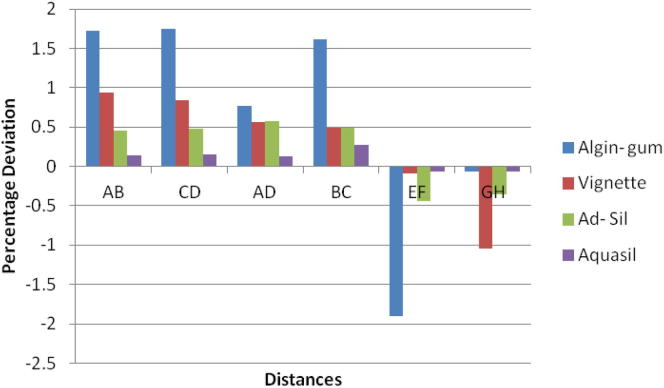
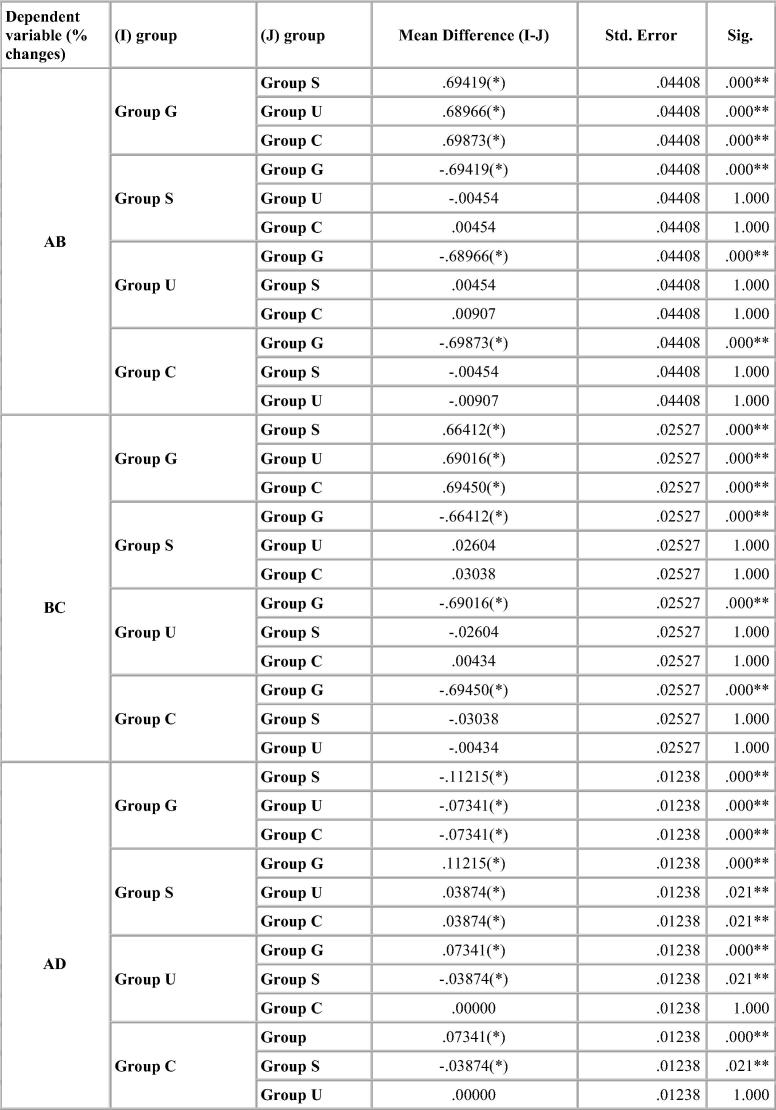
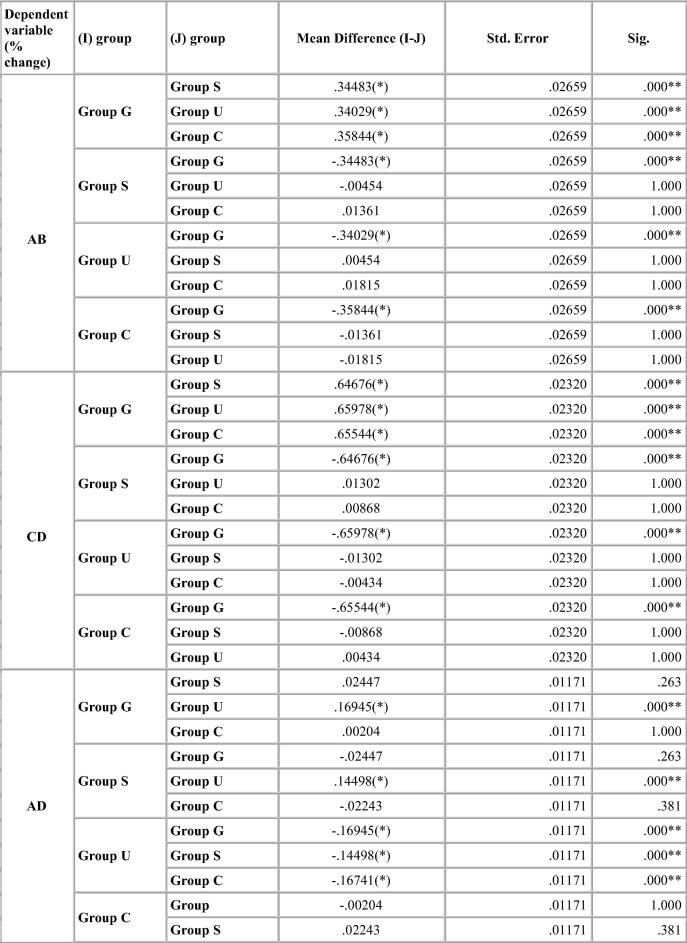
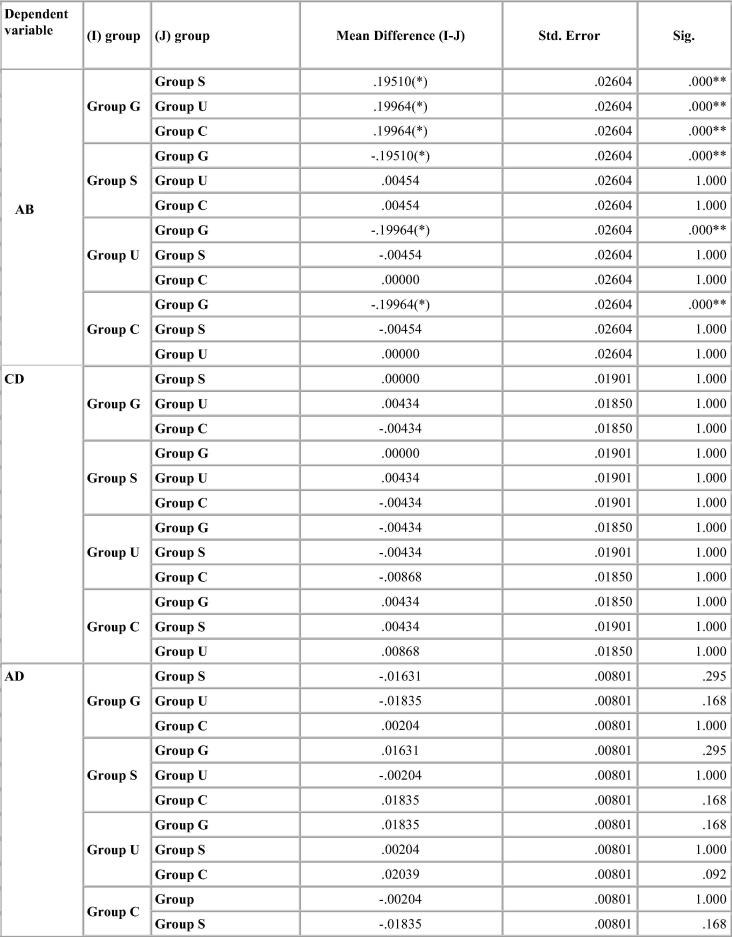
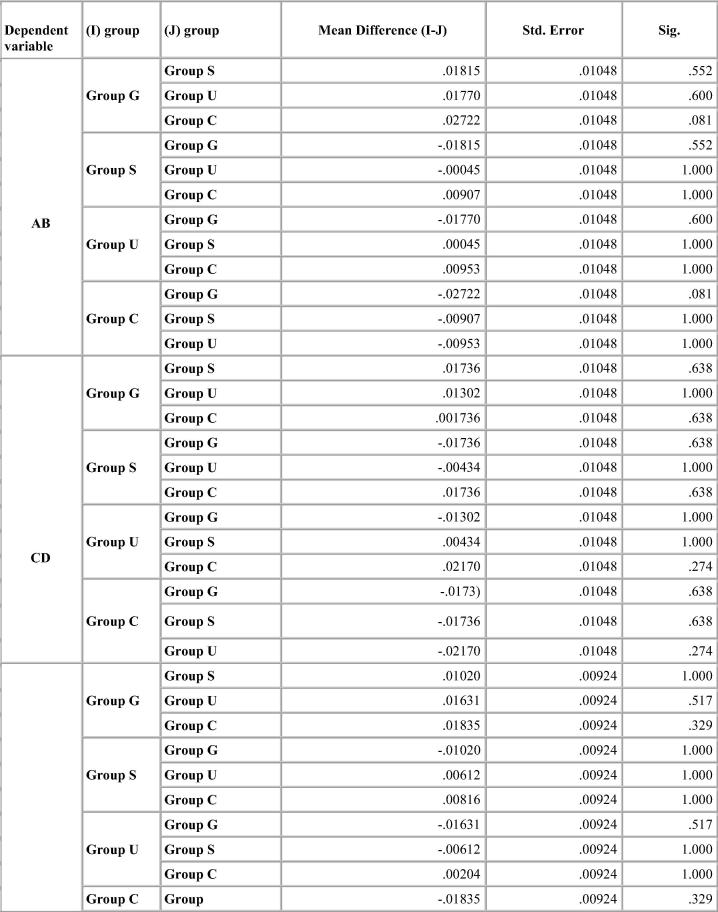
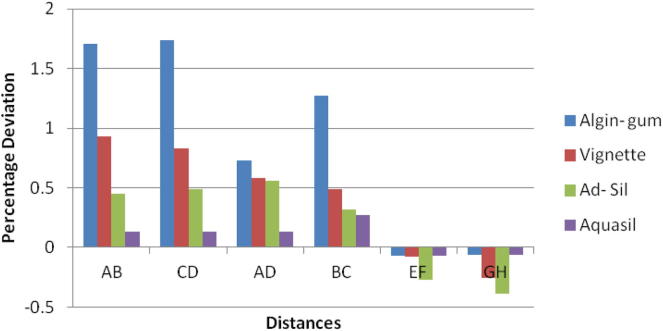
An increase in the interabutment and cross arch distance and decrease in occluso-gingival height was seen in the casts obtained. Glutaraldehyde immersion showed variation in the interabutment and cross arch distance for all materials studied. Ultraviolet chamber and sodium hypochlorite produced best results. Dimensional stability of impression materials like Vignette, Algin-Gum & Aquasil was found to within clinically acceptable limits after disinfection while maximum deviation was seen with Algin-Gum.
Evaluated materials can be safely disinfected with sodium hypochlorite and ultraviolet chamber. Addition silicone of native origin is at par with impression materials from developed countries but same cannot be said about alginate.
分析并比较不同消毒系统对发展中国家常用的不可逆水胶体和加成型硅橡胶印模材料尺寸稳定性的影响,并与发达国家的材料进行对比。
使用的消毒系统有戊二醛、次氯酸钠和紫外线消毒箱。将原产的常用藻酸盐和加成型硅橡胶(藻酸盐胶和加成型硅橡胶)消毒后的稳定性与来自发达国家的类似印模材料(Vignette和Aquasil)进行比较,并对比结果。使用计算机辅助设计/计算机辅助制造(CAD/CAM)制造的模拟上颌的不锈钢模具,在尖牙和磨牙区域有四个金属柱。制作印模,冲洗并干燥后进行消毒,然后灌注模型。在体视显微镜下测量金属柱的跨弓距离、基牙间距离和咬合龈向长度,并记录和比较观察结果。应用方差分析(ANOVA)检验和邦费罗尼(Bonferroni)检验。
在获得的模型中,基牙间距离和跨弓距离增加,咬合龈向高度降低。戊二醛浸泡显示所有研究材料的基牙间距离和跨弓距离均有变化。紫外线消毒箱和次氯酸钠产生了最佳效果。Vignette、藻酸盐胶和Aquasil等印模材料消毒后的尺寸稳定性在临床可接受范围内,而藻酸盐胶的偏差最大。
评估的材料可以用次氯酸钠和紫外线消毒箱安全消毒。原产的加成型硅橡胶与发达国家的印模材料相当,但藻酸盐则不然。