Cole Alexis R, Perry Dorothy A, Raza Ali, Nedder Arthur P, Pollack Elizabeth, Regan William L, van den Bosch Sarah J, Polizzotti Brian D, Yang Edward, Davila Daniel, Afacan Onur, Warfield Simon K, Ou Yangming, Sefton Brenda, Everett Allen D, Neil Jeffrey J, Lidov Hart G W, Mayer John E, Kheir John N
Department of Cardiology, Boston Children's Hospital, Boston, Massachusetts.
Department of Pediatrics, Harvard Medical School, Boston, Massachusetts.
JACC Basic Transl Sci. 2019 Mar 27;4(2):176-187. doi: 10.1016/j.jacbts.2018.11.006. eCollection 2019 Apr.
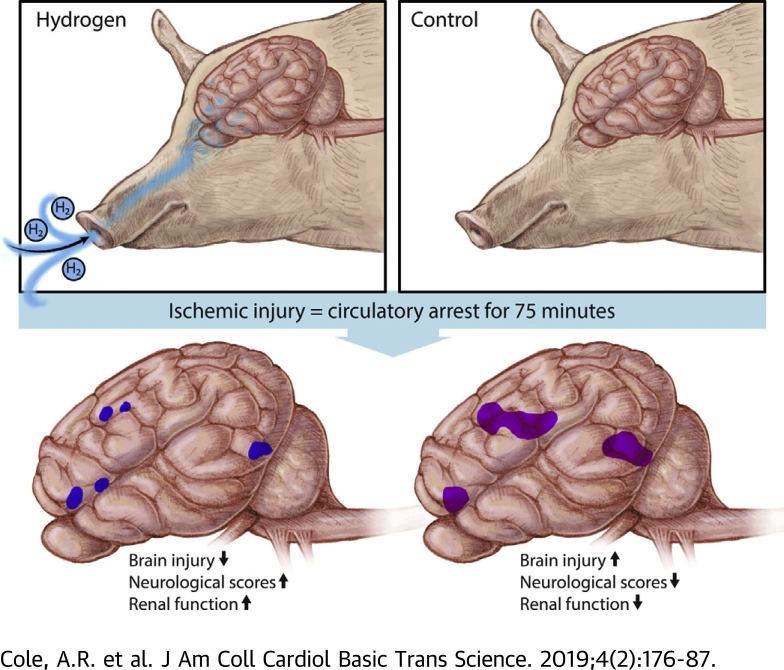
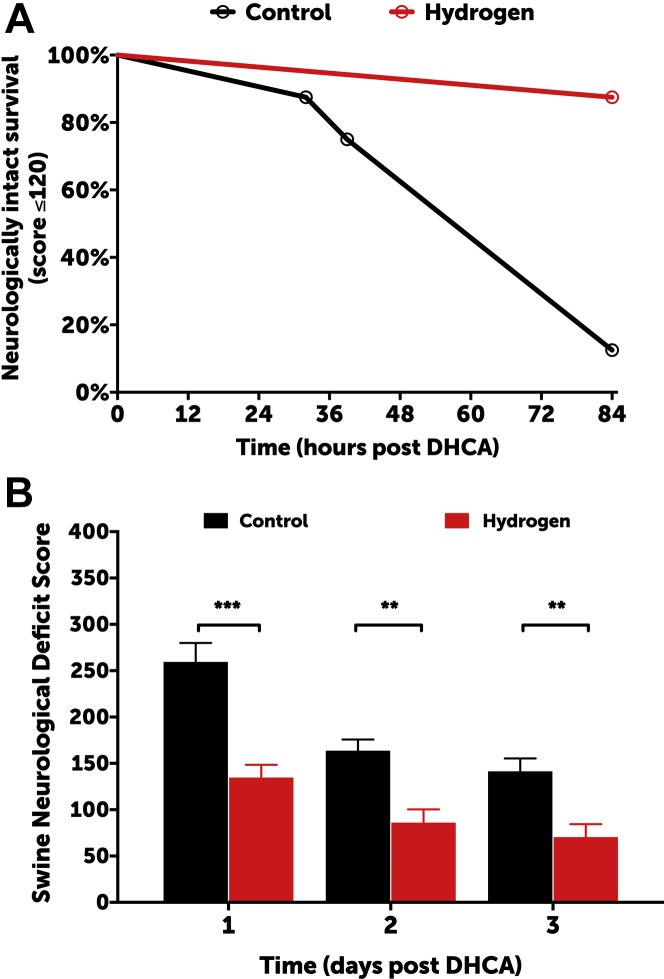
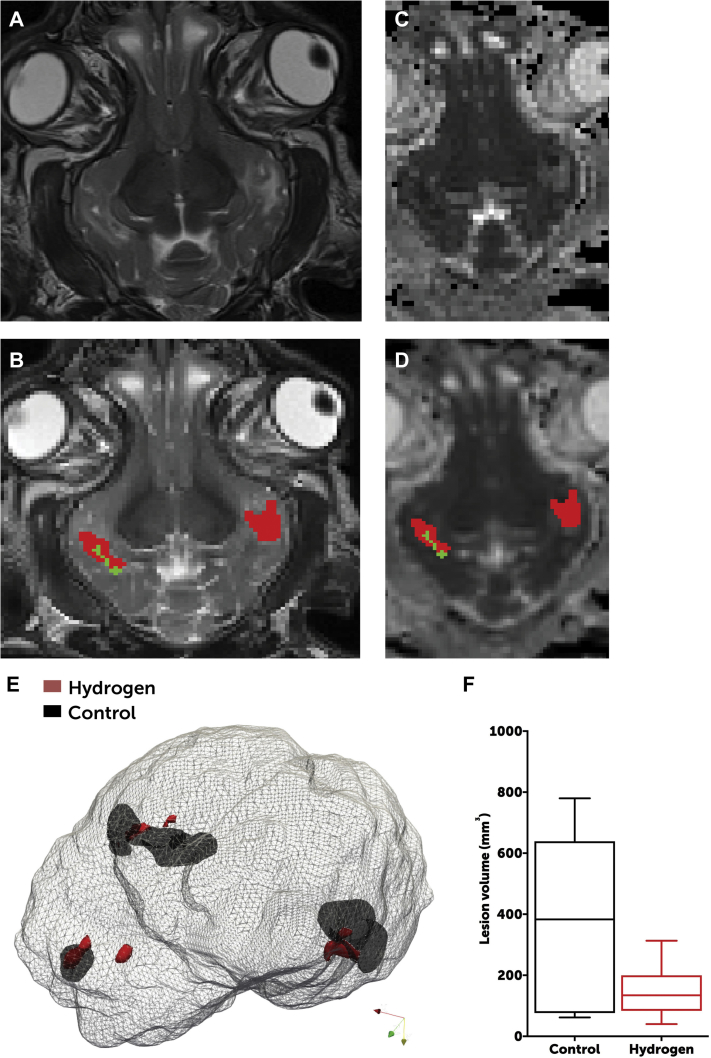
This study used a swine model of mildly hypothermic prolonged circulatory arrest and found that the addition of 2.4% inhaled hydrogen gas to inspiratory gases during and after the ischemic insult significantly decreased neurologic and renal injury compared with controls. With proper precautions, inhalational hydrogen may be administered safely through conventional ventilators and may represent a complementary therapy that can be easily incorporated into current workflows. In the future, inhaled hydrogen may diminish the sequelae of ischemia that occurs in congenital heart surgery, cardiac arrest, extracorporeal life-support events, acute myocardial infarction, stroke, and organ transplantation.
本研究采用轻度低温长时间循环骤停的猪模型,发现与对照组相比,在缺血性损伤期间及之后向吸入气体中添加2.4%的吸入氢气可显著降低神经和肾脏损伤。采取适当的预防措施后,吸入氢气可通过传统呼吸机安全给药,可能是一种易于纳入当前工作流程的辅助治疗方法。未来,吸入氢气可能会减轻先天性心脏病手术、心脏骤停、体外生命支持、急性心肌梗死、中风和器官移植中发生的缺血后遗症。