Department of Bioengineering, School of Engineering & Applied Science, University of Pennsylvania, Philadelphia, PA, 19104 United States of America.
U.S. Army Research Laboratory, Aberdeen Proving Ground, MD 21005 United States of America.
PLoS One. 2019 May 9;14(5):e0215520. doi: 10.1371/journal.pone.0215520. eCollection 2019.
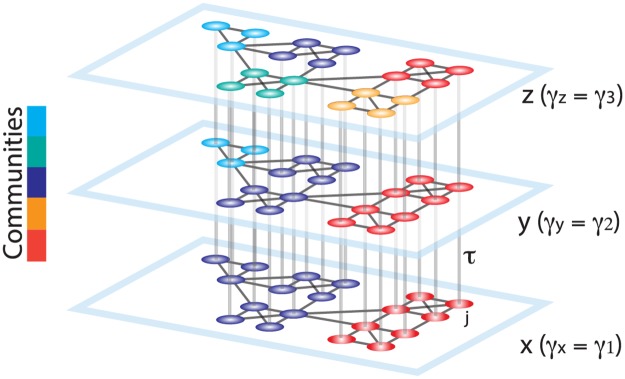
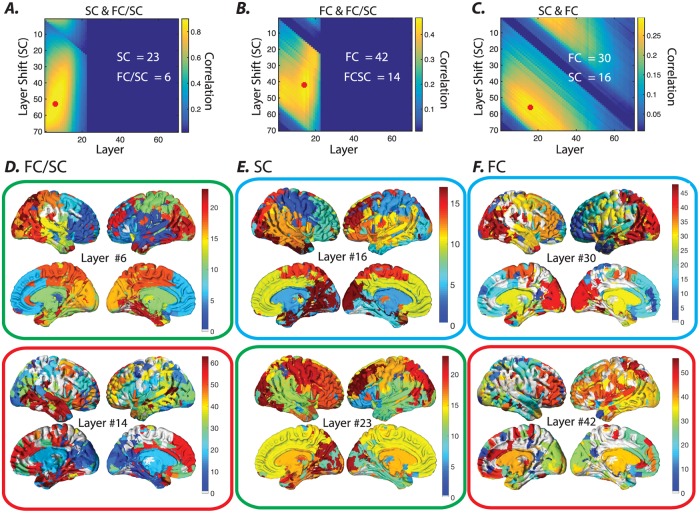
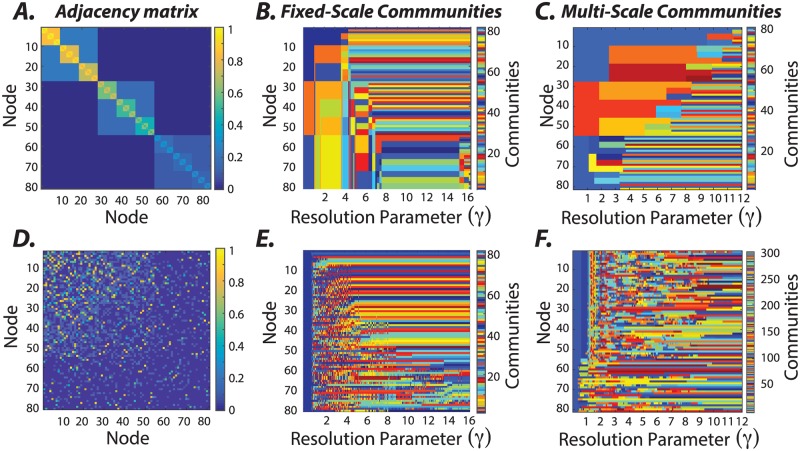
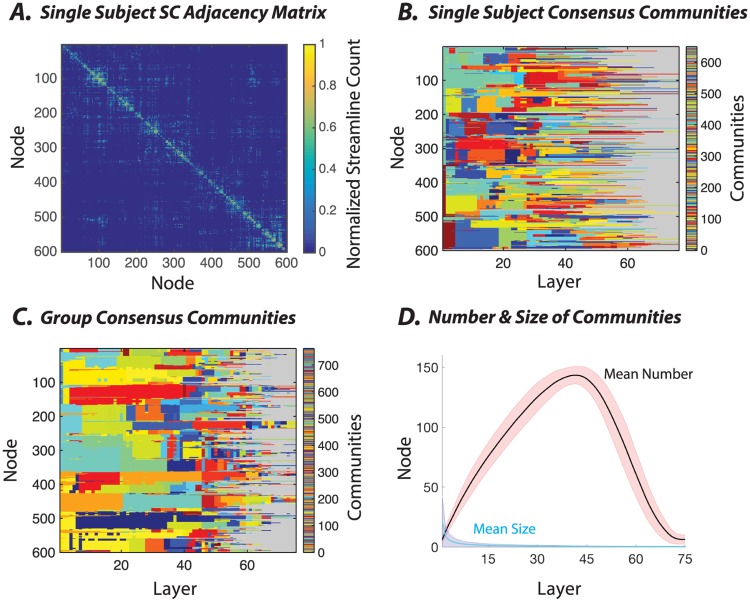
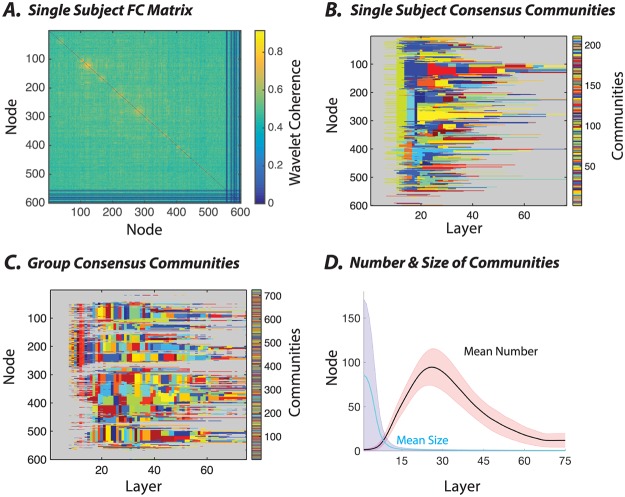
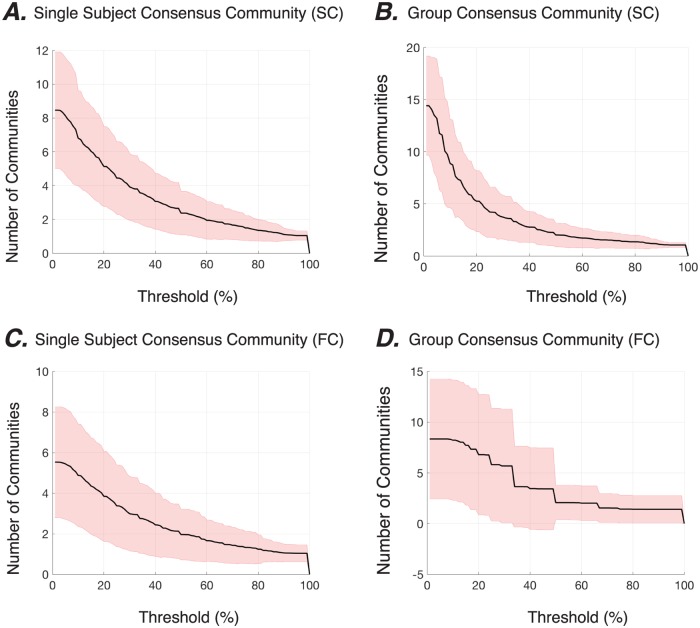
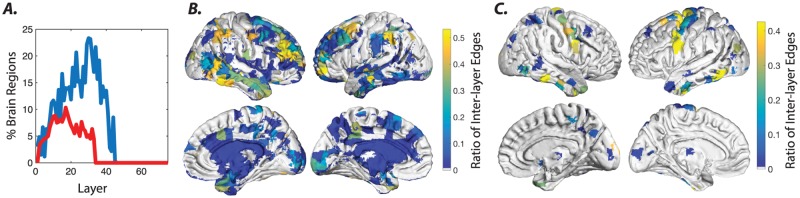
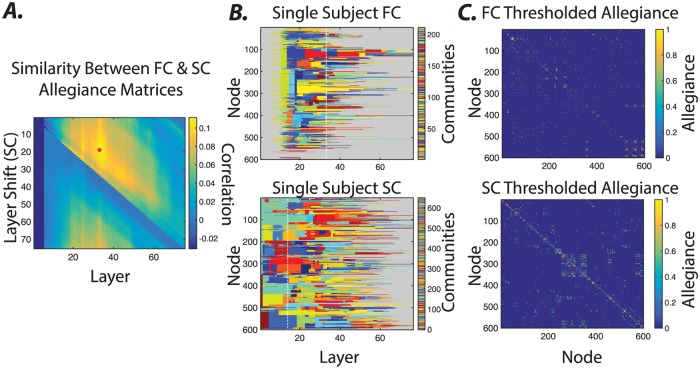
Community detection algorithms have been widely used to study the organization of complex networks like the brain. These techniques provide a partition of brain regions (or nodes) into clusters (or communities), where nodes within a community are densely interconnected with one another. In their simplest application, community detection algorithms are agnostic to the presence of community hierarchies: clusters embedded within clusters of other clusters. To address this limitation, we exercise a multi-scale extension of a common community detection technique, and we apply the tool to synthetic graphs and to graphs derived from human neuroimaging data, including structural and functional imaging data. Our multi-scale community detection algorithm links a graph to copies of itself across neighboring topological scales, thereby becoming sensitive to conserved community organization across levels of the hierarchy. We demonstrate that this method is sensitive to topological inhomogeneities of the graph's hierarchy by providing a local measure of community stability and inter-scale reliability across topological scales. We compare the brain's structural and functional network architectures, and we demonstrate that structural graphs display a more prominent hierarchical community organization than functional graphs. Finally, we build an explicitly multimodal multiplex graph that combines both structural and functional connectivity in a single model, and we identify the topological scales where resting state functional connectivity and underlying structural connectivity show similar versus unique hierarchical community architecture. Together, our results demonstrate the advantages of the multi-scale community detection algorithm in studying hierarchical community structure in brain graphs, and they illustrate its utility in modeling multimodal neuroimaging data.
社区检测算法已被广泛应用于研究大脑等复杂网络的组织。这些技术提供了一种将脑区(或节点)划分为聚类(或社区)的方法,其中社区内的节点彼此之间相互密集连接。在其最简单的应用中,社区检测算法对社区层次结构的存在是不可知的:即簇内嵌入其他簇的簇。为了解决这个限制,我们对一种常见的社区检测技术进行了多尺度扩展,并将该工具应用于合成图和从人类神经影像学数据中提取的图,包括结构和功能成像数据。我们的多尺度社区检测算法将一个图与其在相邻拓扑尺度上的副本相联系,从而能够感知到层次结构中各个层次的社区组织的一致性。我们通过提供社区稳定性的局部度量和跨拓扑尺度的跨尺度可靠性,证明了这种方法对图的层次结构的拓扑不均匀性是敏感的。我们比较了大脑的结构和功能网络架构,并证明了结构图显示出比功能图更突出的层次社区组织。最后,我们构建了一个明确的多模态多路复用图,将结构和功能连接结合在一个单一的模型中,并确定了静息状态功能连接和潜在结构连接在哪些拓扑尺度上表现出相似或独特的层次社区架构。总之,我们的结果表明,多尺度社区检测算法在研究脑图中的层次社区结构方面具有优势,并展示了其在建模多模态神经影像学数据方面的效用。