Authors contributed equally to this work.
Phys Med Biol. 2019 Jul 4;64(13):135013. doi: 10.1088/1361-6560/ab20d9.
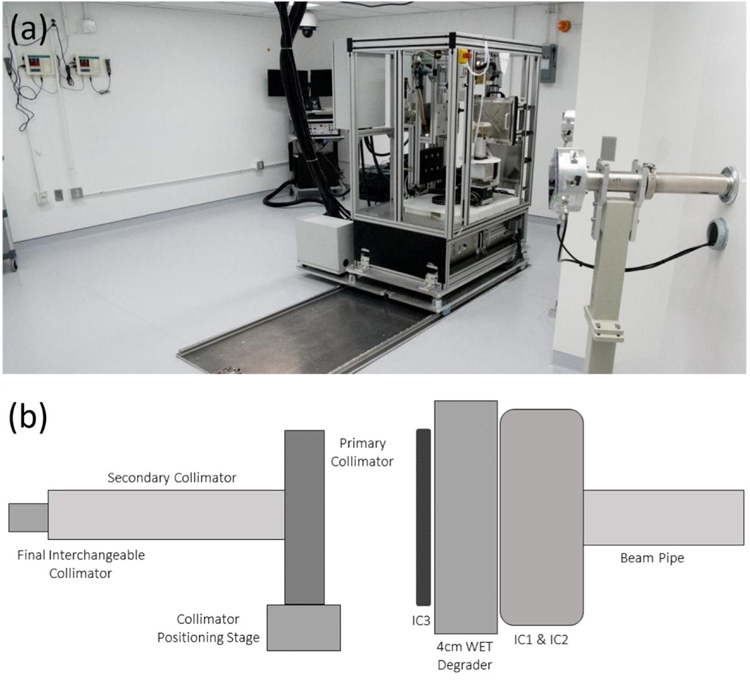
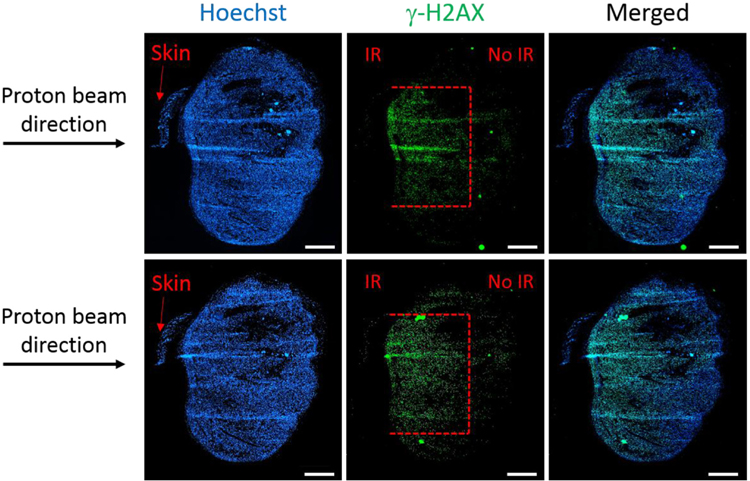
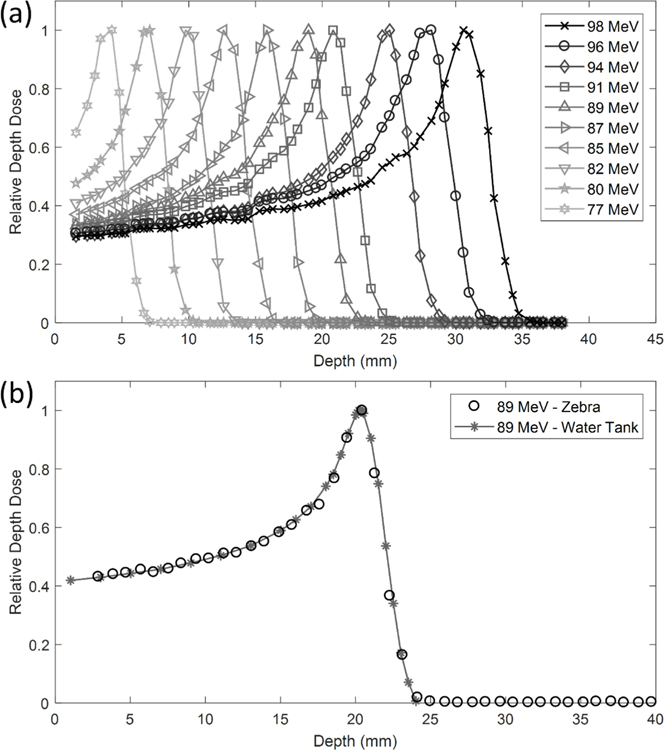
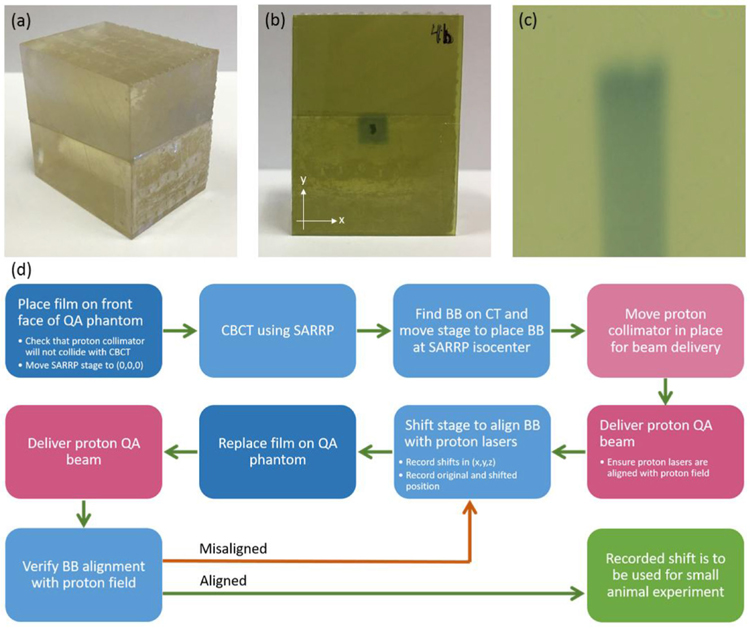
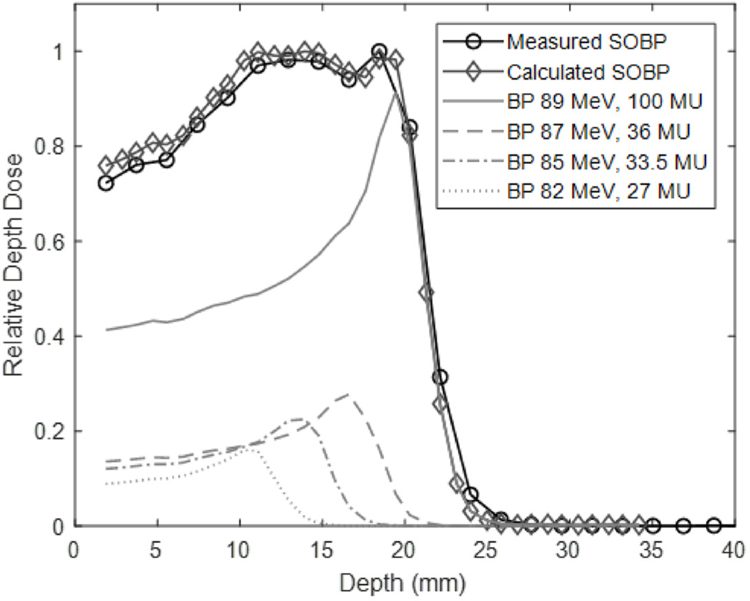
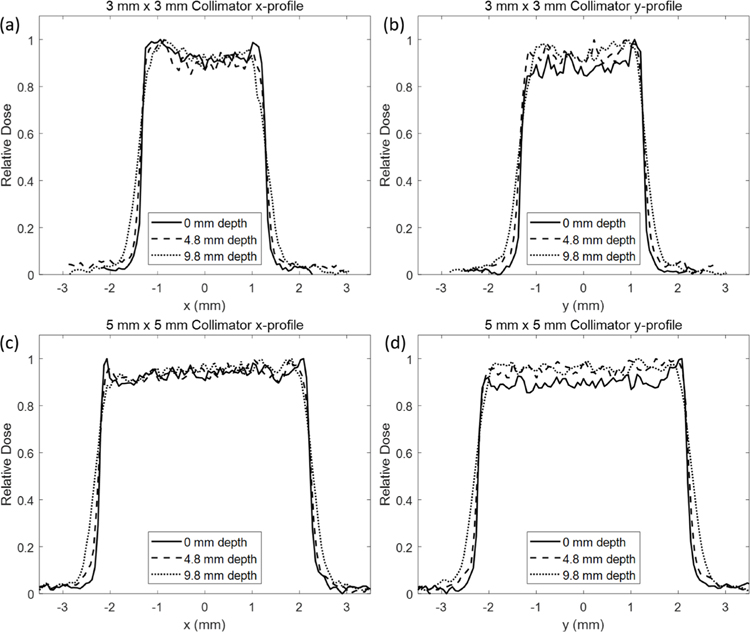
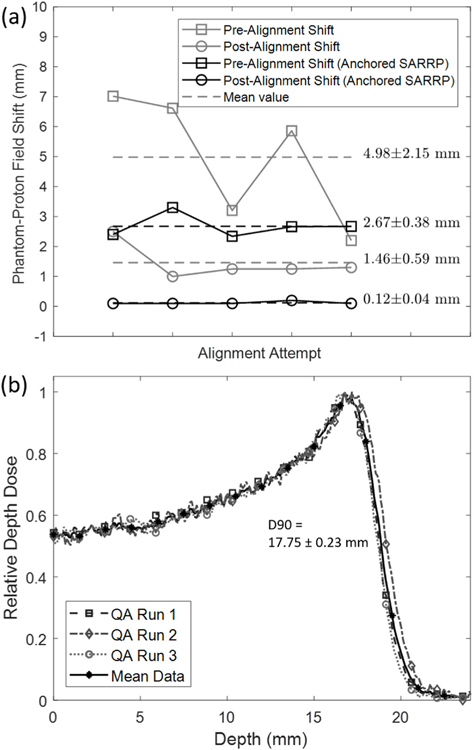
Small animal x-ray irradiation platforms are expanding the capabilities and future pathways for radiobiology research. Meanwhile, proton radiotherapy is transitioning to a standard treatment modality in the clinician's precision radiotherapy toolbox, highlighting a gap between state-of-the-art clinical radiotherapy and small animal radiobiology research. Comparative research of the biological differences between proton and x-ray beams could benefit from an integrated small animal irradiation system for in vivo experiments and corresponding quality assurance (QA) protocols to ensure rigor and reproducibility. The objective of this study is to incorporate a proton beam into a small animal radiotherapy platform while implementing QA modelled after clinical protocols. A 225 kV x-ray small animal radiation research platform (SARRP) was installed on rails to align with a modified proton experimental beamline from a 230 MeV cyclotron-based clinical system. Collimated spread out Bragg peaks (SOBP) were produced with beam parameters compatible with small animal irradiation. Proton beam characteristics were measured and alignment reproducibility with the x-ray system isocenter was evaluated. A QA protocol was designed to ensure consistent proton beam quality and alignment. As a preliminary study, cellular damage via γ-H2AX immunofluorescence staining in an irradiated mouse tumor model was used to verify the beam range in vivo. The beam line was commissioned to deliver Bragg peaks with range 4-30 mm in water at 2 Gy min. SOBPs were delivered with width up to 25 mm. Proton beam alignment with the x-ray system agreed within 0.5 mm. A QA phantom was created to ensure reproducible alignment of the platform and verify beam delivery. γ-H2AX staining verified expected proton range in vivo. An image-guided small animal proton/x-ray research system was developed to enable in vivo investigations of radiobiological effects of proton beams, comparative studies between proton and x-ray beams, and investigations into novel proton treatment methods.
小动物 X 射线辐照平台正在扩展放射生物学研究的能力和未来途径。与此同时,质子放疗正在转变为临床医生精准放疗工具包中的标准治疗方式,这凸显了最先进的临床放射治疗与小动物放射生物学研究之间的差距。质子和 X 射线束之间生物学差异的比较研究可以受益于用于体内实验的集成小动物辐照系统和相应的质量保证 (QA) 协议,以确保严格性和可重复性。本研究的目的是将质子束纳入小动物放射治疗平台,同时实施模拟临床方案的 QA。在轨道上安装了 225 kV X 射线小动物放射研究平台 (SARRP),以与基于 230 MeV 回旋加速器的临床系统的改良质子实验束线对准。使用与小动物辐照兼容的光束参数产生准直扩展布拉格峰 (SOBP)。测量了质子束特性,并评估了与 X 射线系统等中心的对准重复性。设计了 QA 协议以确保质子束质量和对准的一致性。作为初步研究,通过在辐照的小鼠肿瘤模型中进行 γ-H2AX 免疫荧光染色来验证体内的束射程。该束线被委托以在水中以 2 Gy min 的剂量输送范围为 4-30 mm 的布拉格峰。SOBP 的输送宽度可达 25 mm。质子束与 X 射线系统的对准误差在 0.5 mm 以内。创建了 QA 体模以确保平台的可重复性对准并验证光束输送。γ-H2AX 染色验证了体内预期的质子射程。开发了一种图像引导的小动物质子/X 射线研究系统,以能够进行质子束放射生物学效应的体内研究、质子和 X 射线束之间的比较研究以及对新型质子治疗方法的研究。