Department of Nutrition and Food Hygiene, School of Public Health,School of Medicine, Zhejiang University, Hangzhou, Zhejiang Province, China.
Chronic Disease Research Institute, School of Public Health, Zhejiang University, Hangzhou, Zhejiang Province, China.
BMJ Open. 2019 May 9;9(5):e025257. doi: 10.1136/bmjopen-2018-025257.
The Lanxi Cohort was established to systematically investigate the aetiology and interplay of body fat distribution and multiple factors with obesity and obesity-related non-communicable diseases in China.
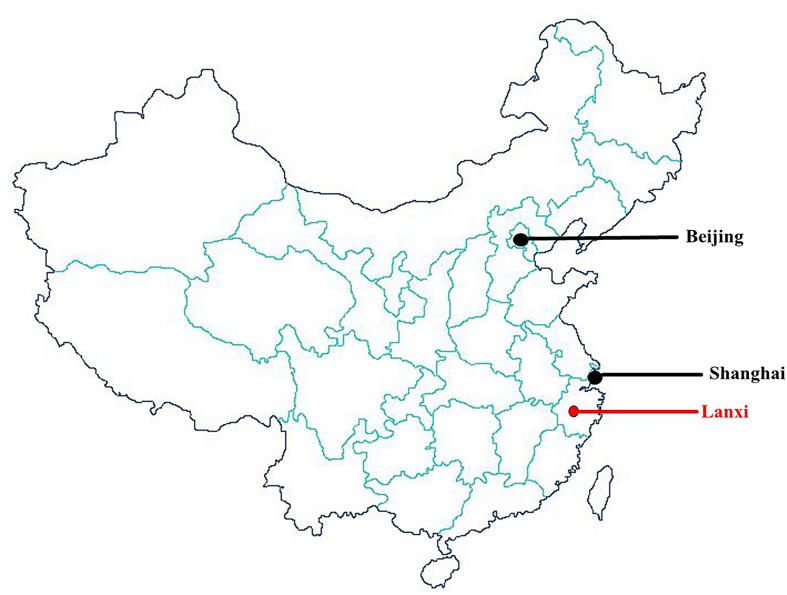
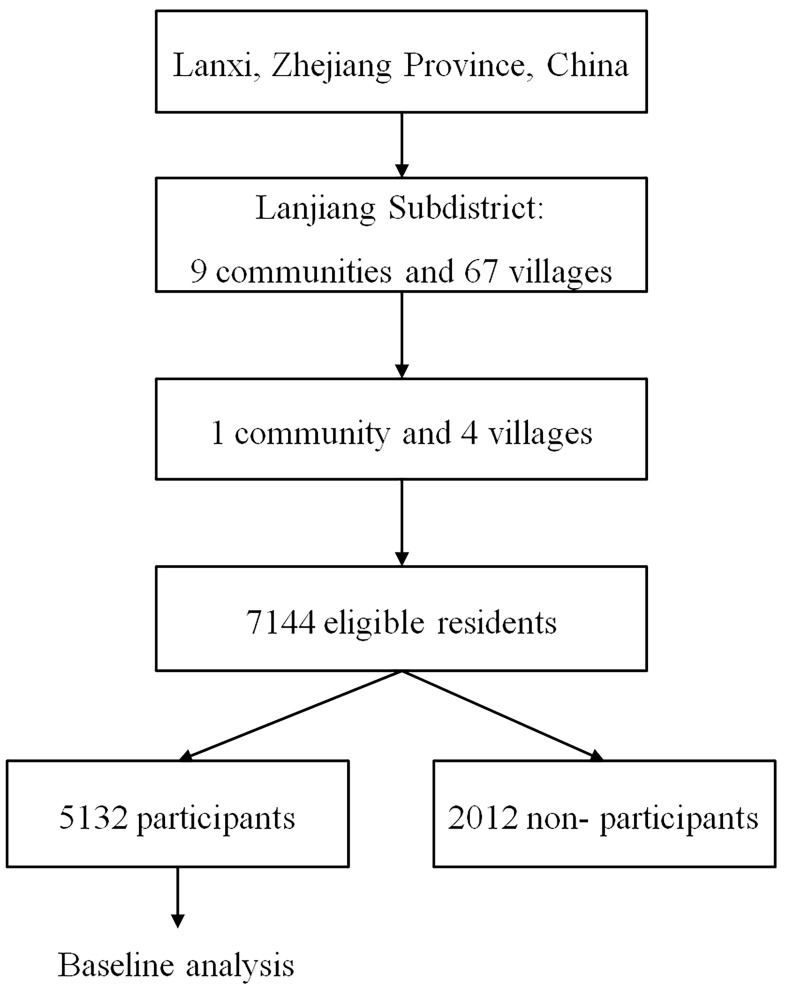
The baseline investigation of the Lanxi Cohort study took place between June 2015 and August 2017 in Lanxi, Zhejiang Province, China. Permanent residents from one urban community and four rural villages were involved in this study. The baseline investigation included questionnaire survey, physical examination, dual-energy X-ray absorptiometry (DXA) scan, blood samples collection and traditional Chinese medicine (TCM) inquiry.
A total of 5132 participants, aged 18 to 80 years, were recruited at baseline; among them, 38.7% were men and 64.8% were from the urban area. The mean age was 53.04±12.77 years. The completion rates of physical examination, DXA scan, blood collection and TCM inquiry were 99.9%, 98.5%, 99.9% and 96.5%, respectively. The mean body mass index (BMI) was 23.42±3.20 kg/m with 8.1% of the study population being obese (BMI ≥28 kg/m). The crude prevalence of hypertension, diabetes and metabolic syndrome were 34.9%, 10.0% and 30.4%, respectively.
All participants will be monitored annually for cause-specific mortality and morbidity and hospital admission and will be followed up by in-person survey every 4 years. The baseline population is considered to expand in the future depending on the availability of funding support.
This study was approved by the Ethical Committee of the School of Public Health, Zhejiang University.
兰溪市队列研究旨在系统地研究中国人体脂肪分布与肥胖和肥胖相关非传染性疾病的多种因素的病因及其相互作用。
兰溪市队列研究的基线调查于 2015 年 6 月至 2017 年 8 月在中国浙江省兰溪市进行。来自一个城市社区和四个农村村庄的常住居民参与了这项研究。基线调查包括问卷调查、体格检查、双能 X 射线吸收法(DXA)扫描、血液样本采集和中医(TCM)查询。
共有 5132 名年龄在 18 至 80 岁的参与者在基线时被招募;其中 38.7%为男性,64.8%来自城市地区。平均年龄为 53.04±12.77 岁。体格检查、DXA 扫描、血液采集和 TCM 查询的完成率分别为 99.9%、98.5%、99.9%和 96.5%。平均体重指数(BMI)为 23.42±3.20kg/m,其中 8.1%的研究人群肥胖(BMI≥28kg/m)。高血压、糖尿病和代谢综合征的粗患病率分别为 34.9%、10.0%和 30.4%。
所有参与者将每年监测特定病因的死亡率和发病率以及住院情况,并每 4 年进行一次面对面调查。根据资金支持情况,未来将考虑扩大基线人群。
本研究得到了浙江大学公共卫生学院伦理委员会的批准。