Institute for Medical Engineering and Science and Department of Biological Engineering, Massachusetts Institute of Technology, Cambridge, MA 02139, USA; Infectious Disease and Microbiome Program, Broad Institute of MIT and Harvard, Cambridge, MA 02142, USA.
Infectious Disease and Microbiome Program, Broad Institute of MIT and Harvard, Cambridge, MA 02142, USA.
Cell. 2019 May 30;177(6):1649-1661.e9. doi: 10.1016/j.cell.2019.04.016. Epub 2019 May 9.
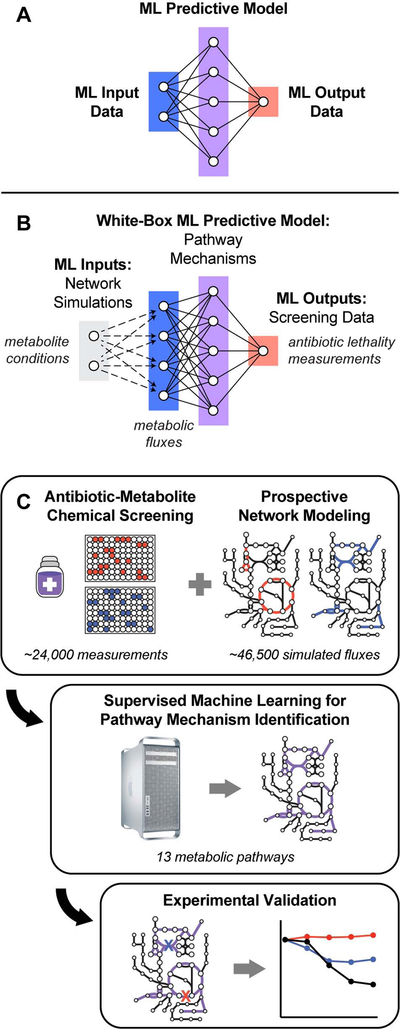
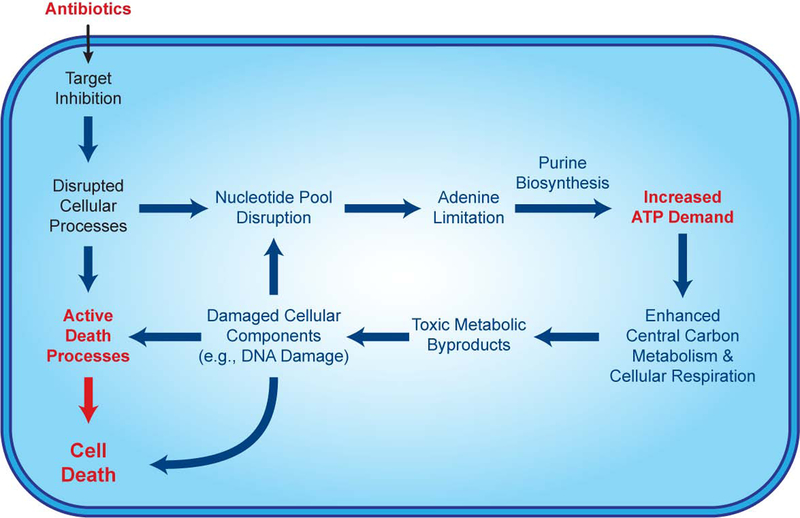
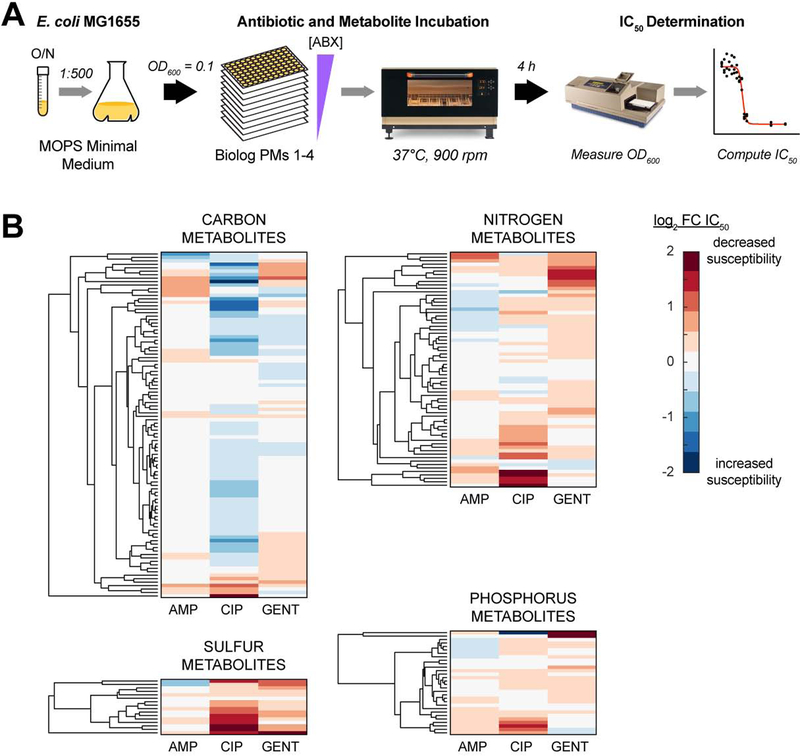
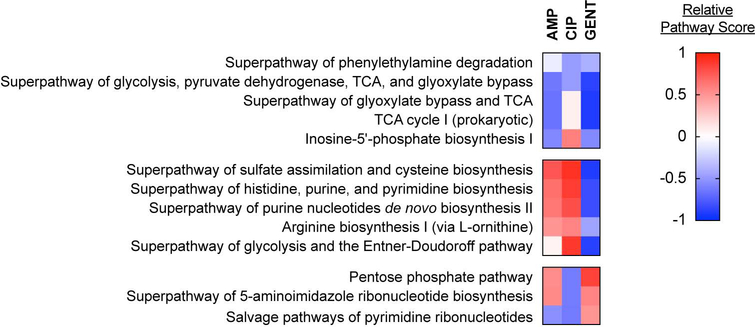
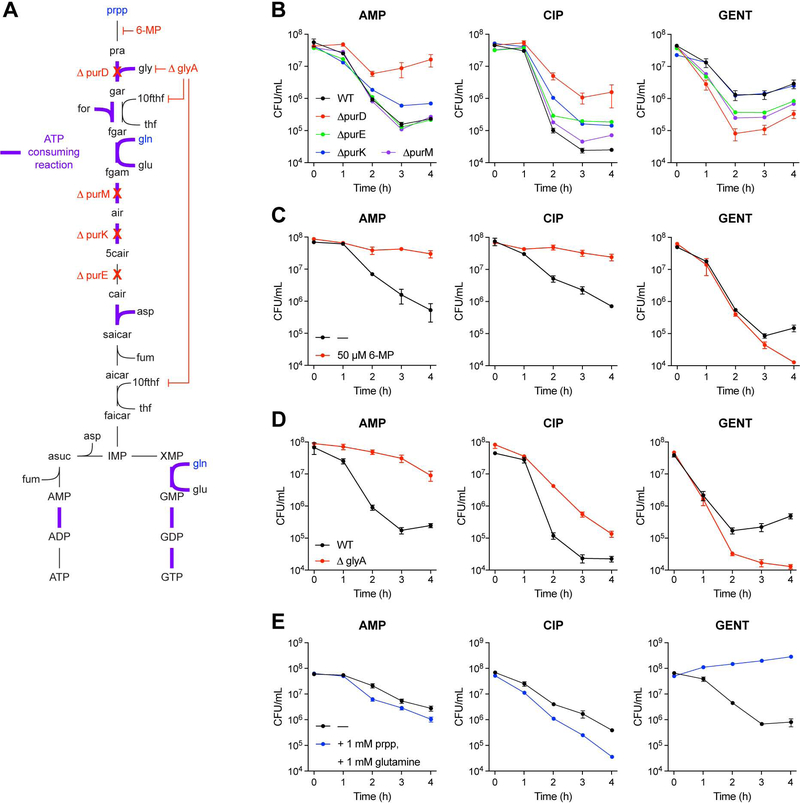
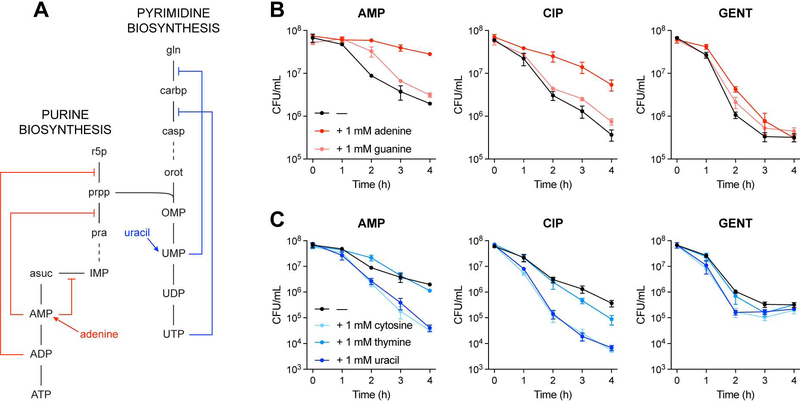
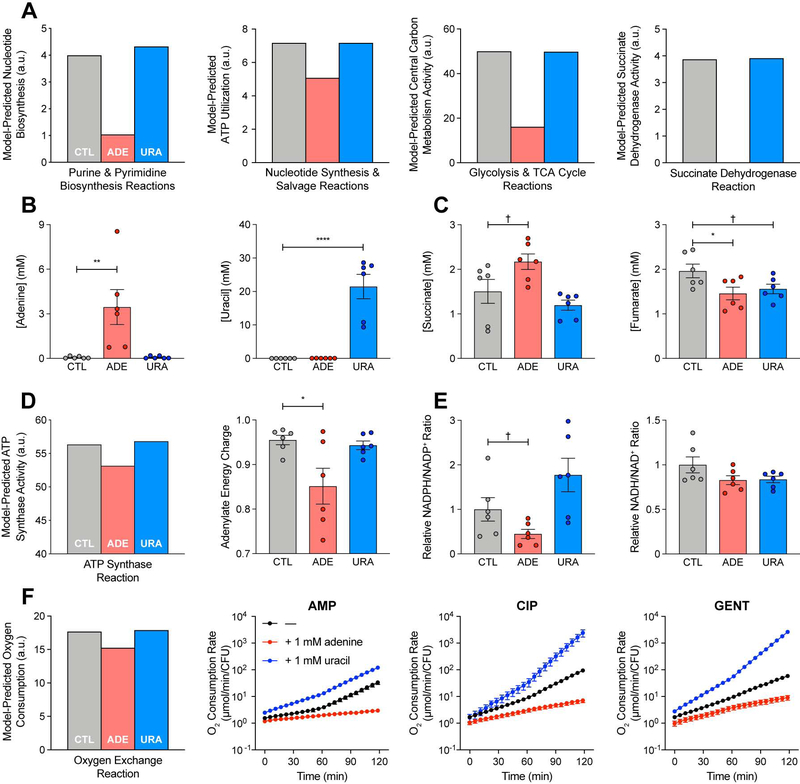
Current machine learning techniques enable robust association of biological signals with measured phenotypes, but these approaches are incapable of identifying causal relationships. Here, we develop an integrated "white-box" biochemical screening, network modeling, and machine learning approach for revealing causal mechanisms and apply this approach to understanding antibiotic efficacy. We counter-screen diverse metabolites against bactericidal antibiotics in Escherichia coli and simulate their corresponding metabolic states using a genome-scale metabolic network model. Regression of the measured screening data on model simulations reveals that purine biosynthesis participates in antibiotic lethality, which we validate experimentally. We show that antibiotic-induced adenine limitation increases ATP demand, which elevates central carbon metabolism activity and oxygen consumption, enhancing the killing effects of antibiotics. This work demonstrates how prospective network modeling can couple with machine learning to identify complex causal mechanisms underlying drug efficacy.
当前的机器学习技术能够实现生物信号与测量表型的稳健关联,但这些方法无法识别因果关系。在这里,我们开发了一种集成的“白盒”生化筛选、网络建模和机器学习方法,用于揭示因果机制,并将其应用于理解抗生素疗效。我们针对杀菌抗生素对不同代谢物进行反向筛选,并使用基因组规模的代谢网络模型模拟它们相应的代谢状态。将测量筛选数据回归到模型模拟中,揭示嘌呤生物合成参与抗生素致死性,我们通过实验验证了这一点。我们表明,抗生素诱导的腺嘌呤限制增加了 ATP 的需求,从而提高了中心碳代谢活性和耗氧量,增强了抗生素的杀菌效果。这项工作展示了前瞻性网络建模如何与机器学习相结合,以识别药物疗效背后复杂的因果机制。