Institute of Biophysics SB RAS, FRC KSC SB RAS, 660036 Krasnoyarsk, Russia.
Institute of Physics SB RAS, FRC KSC SB RAS, 660036 Krasnoyarsk, Russia.
Int J Mol Sci. 2019 May 10;20(9):2324. doi: 10.3390/ijms20092324.
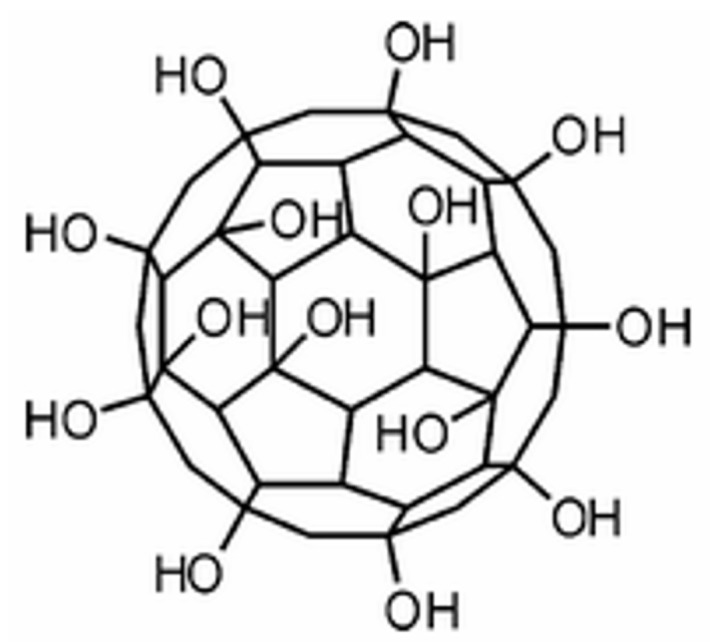
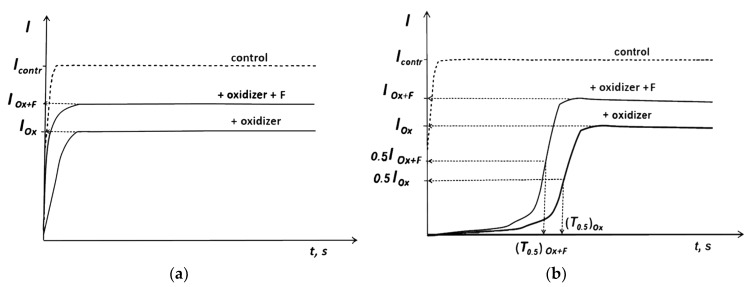
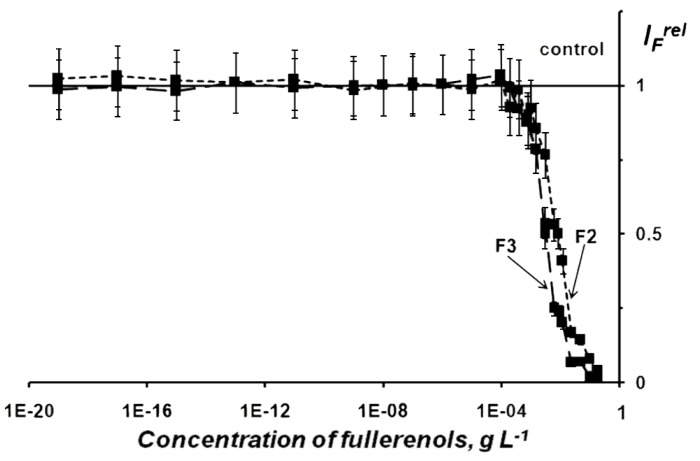
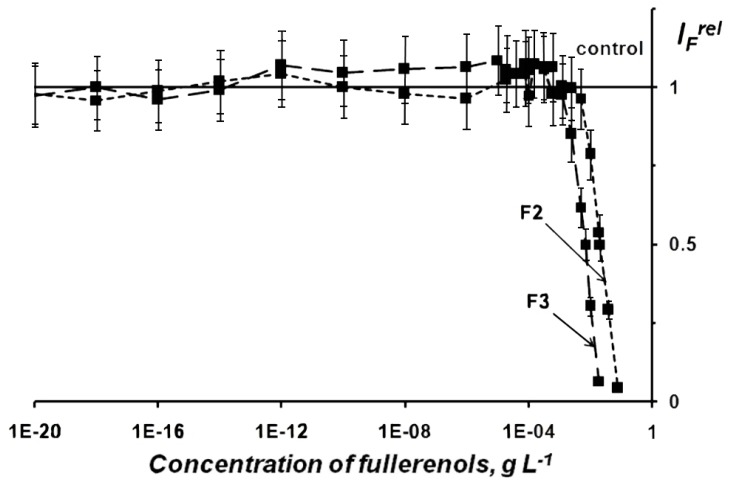
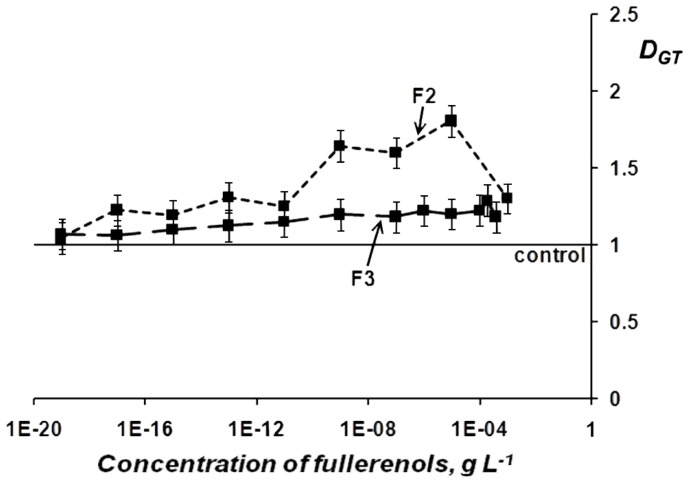
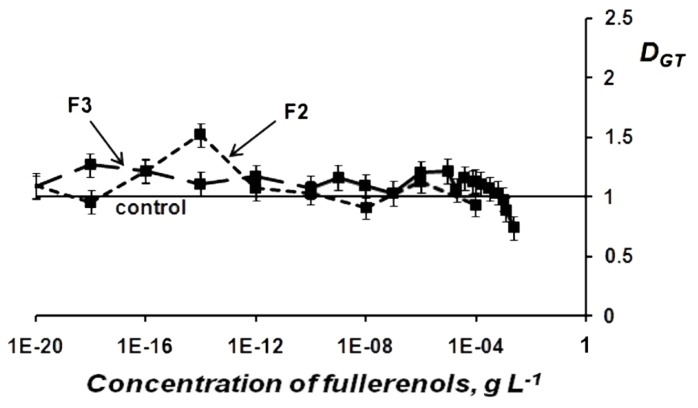
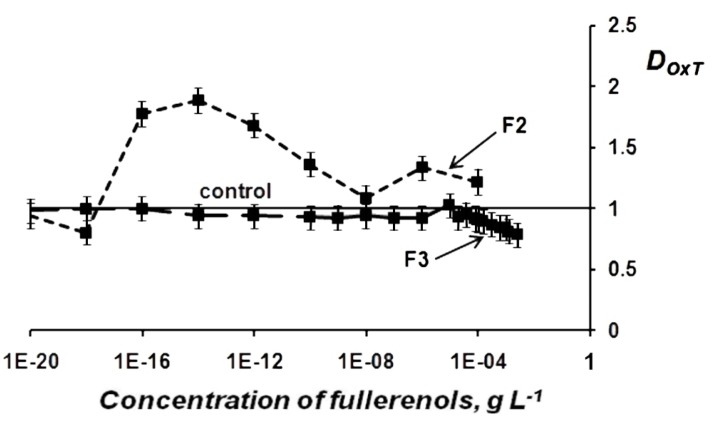
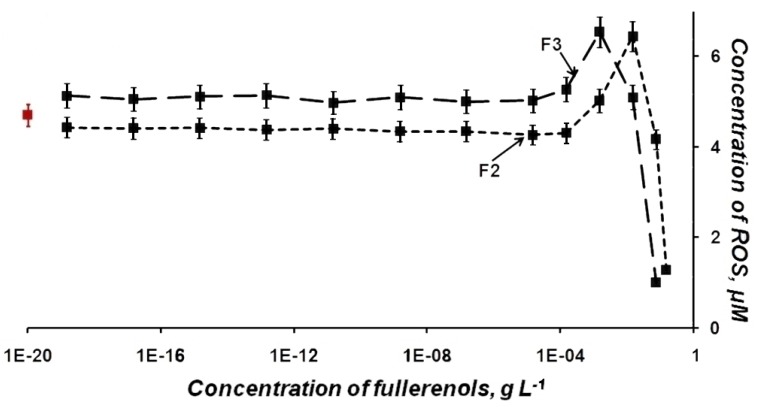
Fullerenols are nanosized water-soluble polyhydroxylated derivatives of fullerenes, a specific allotropic form of carbon, bioactive compounds, and perspective basis for drug development. Our paper analyzes the antioxidant activity and toxicity of a series of fullerenols with different number of oxygen substituents. Two groups of fullerenols were under investigation: (1) CO(OH), CO(OH), where x + y = 24-28 and (2) CO(OH), FeCO(OH), Gd@CO(OH), where x + y = 40-42. Bioluminescent cellular and enzymatic assays (luminous marine bacteria and their enzymatic reactions, respectively) were applied to monitor toxicity in the model fullerenol solutions and bioluminescence was applied as a signaling physiological parameter. The inhibiting concentrations of the fullerenols were determined, revealing the fullerenols' toxic effects. Antioxidant fullerenol' ability was studied in solutions of model oxidizer, 1,4-benzoquinone, and detoxification coefficients of general and oxidative types ( and ) were calculated. All fullerenols produced toxic effect at high concentrations (>0.01 g L), while their antioxidant activity was demonstrated at low and ultralow concentrations (<0.001 g L). Quantitative toxic and antioxidant characteristics of the fullerenols (effective concentrations, concentration ranges, , and ) were found to depend on the number of oxygen substituents. Lower toxicity and higher antioxidant activity were determined in solutions of fullerenols with fewer oxygen substituents (x + y = 24-28). The differences in fullerenol properties were attributed to their catalytic activity due to reversible electron acceptance, radical trapping, and balance of reactive oxygen species in aqueous solutions. The results provide pharmaceutical sciences with a basis for selection of carbon nanoparticles with appropriate toxic and antioxidant characteristics. Based on the results, we recommend, to reduce the toxicity of prospective endohedral gadolinium-fullerenol preparations Gd@CO(OH), decreasing the number of oxygen groups to x + y = 24-28. The potential of bioluminescence methods to compare toxic and antioxidant characteristics of carbon nanostructures were demonstrated.
富勒醇是富勒烯的纳米级水溶性多羟基衍生物,富勒烯是一种特殊的碳同素异形体,具有生物活性,是药物开发的有前途的基础。我们的论文分析了具有不同氧取代数的一系列富勒醇的抗氧化活性和毒性。我们研究了两组富勒醇:(1)CO(OH) ,CO(OH) ,其中 x + y = 24-28 和(2)CO(OH) ,FeCO(OH) ,Gd@CO(OH) ,其中 x + y = 40-42。生物发光细胞和酶测定法(发光海洋细菌及其酶反应)用于监测模型富勒醇溶液中的毒性,生物发光被用作信号生理参数。确定了富勒醇的抑制浓度,揭示了富勒醇的毒性作用。在模型氧化剂 1,4-苯醌的溶液中研究了抗氧化富勒醇的能力,并计算了一般和氧化型的解毒系数( 和 )。所有富勒醇在高浓度(>0.01 g L)时均产生毒性作用,而在低浓度和超低浓度(<0.001 g L)时则表现出抗氧化活性。富勒醇的定量毒性和抗氧化特性(有效浓度、浓度范围、 、和 )取决于氧取代基的数量。具有较少氧取代基(x + y = 24-28)的富勒醇溶液的毒性较低,抗氧化活性较高。富勒醇性质的差异归因于它们在水溶液中的可逆电子接受、自由基捕获和活性氧物质平衡的催化活性。这些结果为选择具有适当毒性和抗氧化特性的碳纳米粒子提供了药物科学的基础。基于这些结果,我们建议降低内包笼式钆富勒醇制剂 Gd@CO(OH)的毒性,将氧基团的数量减少到 x + y = 24-28。生物发光方法在比较碳纳米结构的毒性和抗氧化特性方面的潜力得到了证明。