Castrejón-Godínez María Luisa, Ortiz-Hernández Ma Laura, Salazar Emmanuel, Encarnación Sergio, Mussali-Galante Patricia, Tovar-Sánchez Efraín, Sánchez-Salinas Enrique, Rodríguez Alexis
Centro de Investigación en Biotecnología, Universidad Autónoma del Estado de Morelos, Cuernavaca, Morelos, Mexico.
Centro de Ciencias Genómicas, Universidad Nacional Autónoma de México, Cuernavaca, Morelos, Mexico.
PeerJ. 2019 Apr 24;7:e6822. doi: 10.7717/peerj.6822. eCollection 2019.
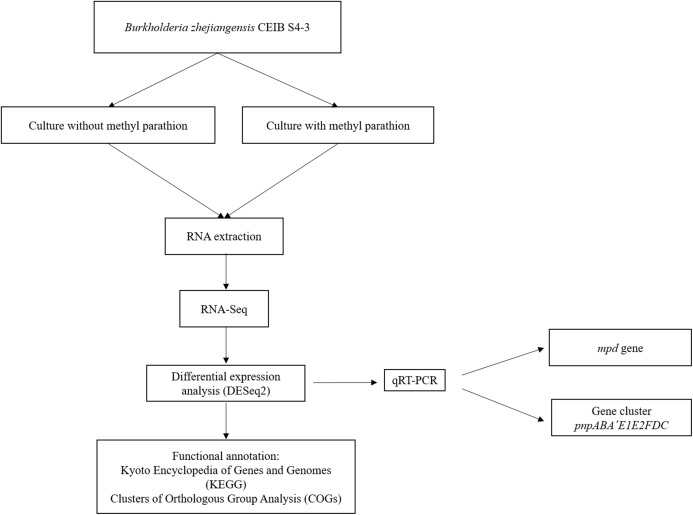
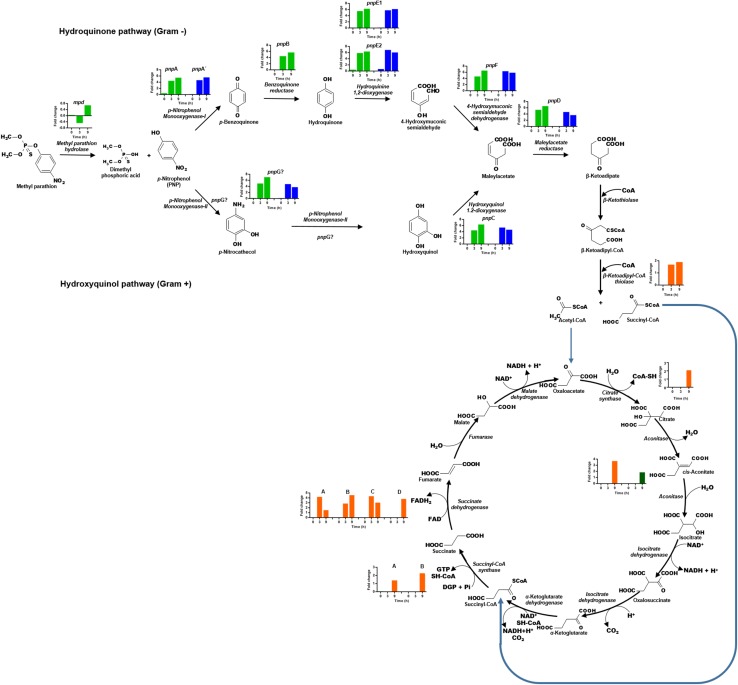
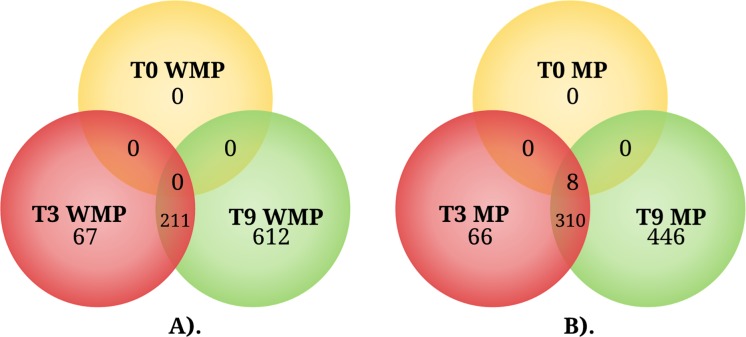
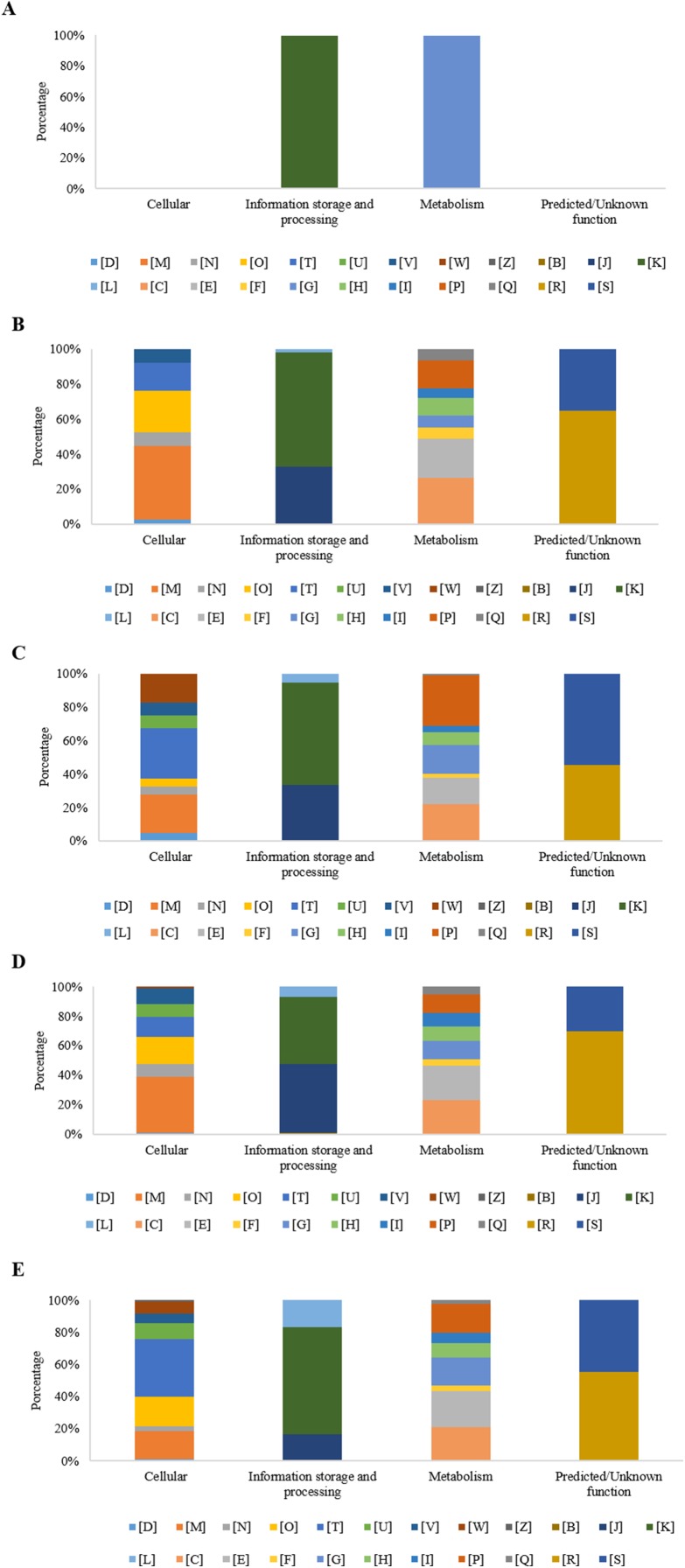
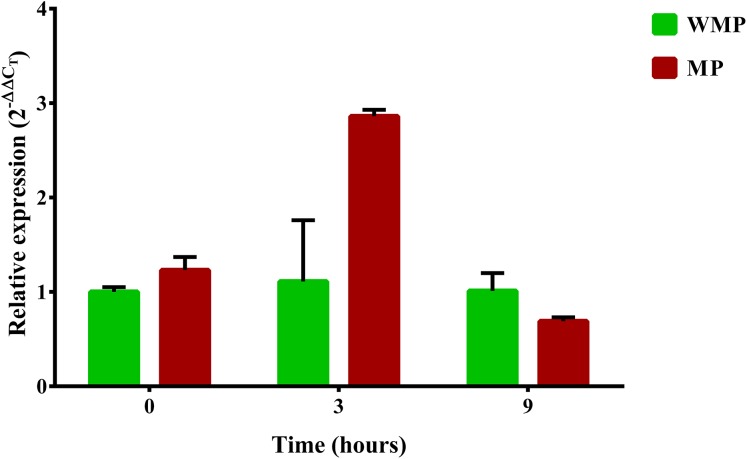
CEIB S4-3 has the ability to degrade methyl parathion (MP) and its main hydrolysis byproduct -nitrophenol (PNP). According to genomic data, several genes related with metabolism of MP and PNP were identified in this strain. However, the metabolic state of the strain during the MP degradation has not been evaluated. In the present study, we analyzed gene expression changes during MP hydrolysis and PNP degradation through a transcriptomic approach. The transcriptional analysis revealed differential changes in the expression of genes involved in important cellular processes, such as energy production and conversion, transcription, amino acid transport and metabolism, translation, ribosomal structure and biogenesis, among others. Transcriptomic data also exhibited the overexpression of both PNP-catabolic gene clusters ( and ) present in the strain. We found and validated by quantitative reverse transcription polymerase chain reaction the expression of the gene, as well as the genes responsible for PNP degradation contained in two clusters. This proves the MP degradation pathway by the strain tested in this work. The exposure to PNP activates, in the first instance, the expression of the transcriptional regulators multiple antibiotic resistance regulator and Isocitrate Lyase Regulator (IclR), which are important in the regulation of genes from aromatic compound catabolism, as well as the expression of genes that encode transporters, permeases, efflux pumps, and porins related to the resistance to multidrugs and other xenobiotics. In the presence of the pesticide, 997 differentially expressed genes grouped in 104 metabolic pathways were observed. This report is the first to describe the transcriptomic analysis of a strain of during the biodegradation of PNP.
中科院沈阳应用生态所S4-3菌株具有降解甲基对硫磷(MP)及其主要水解副产物对硝基苯酚(PNP)的能力。根据基因组数据,在该菌株中鉴定出了几个与MP和PNP代谢相关的基因。然而,该菌株在MP降解过程中的代谢状态尚未得到评估。在本研究中,我们通过转录组学方法分析了MP水解和PNP降解过程中的基因表达变化。转录分析揭示了参与重要细胞过程的基因表达的差异变化,如能量产生和转换、转录、氨基酸运输和代谢、翻译、核糖体结构和生物合成等。转录组数据还显示了该菌株中存在的两个PNP分解代谢基因簇(和)的过表达。我们通过定量逆转录聚合酶链反应发现并验证了基因的表达,以及两个簇中负责PNP降解的基因的表达。这证明了本研究中测试的菌株的MP降解途径。PNP的暴露首先激活转录调节因子多重抗生素抗性调节因子和异柠檬酸裂合酶调节因子(IclR)的表达,它们在芳香族化合物分解代谢基因的调节中很重要,以及编码与多药和其他外源性物质抗性相关的转运蛋白、通透酶、外排泵和孔蛋白的基因的表达。在农药存在的情况下,观察到997个差异表达基因,它们分属于104条代谢途径。本报告首次描述了一株在PNP生物降解过程中的转录组分析。