Loras Alba, Suárez-Cabrera Cristian, Martínez-Bisbal M Carmen, Quintás Guillermo, Paramio Jesús M, Martínez-Máñez Ramón, Gil Salvador, Ruiz-Cerdá José Luis
Unidad Mixta de Investigación en Nanomedicina y Sensores, Universitat Politècnica de València-Instituto de Investigación Sanitaria La Fe, 46026 Valencia, Spain.
Grupo de Oncología Celular y Molecular, Hospital Universitario 12 de Octubre, 28041 Madrid, Spain.
Cancers (Basel). 2019 May 16;11(5):686. doi: 10.3390/cancers11050686.
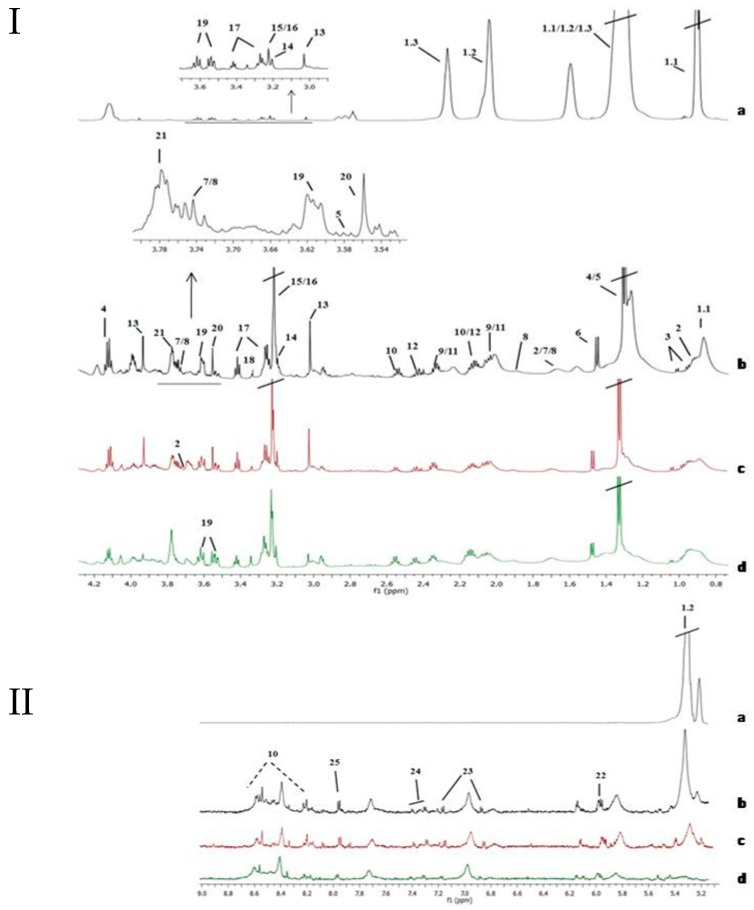
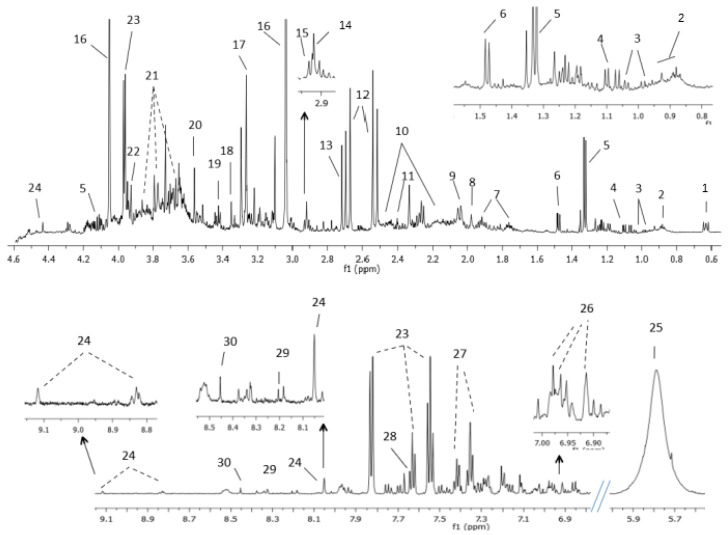
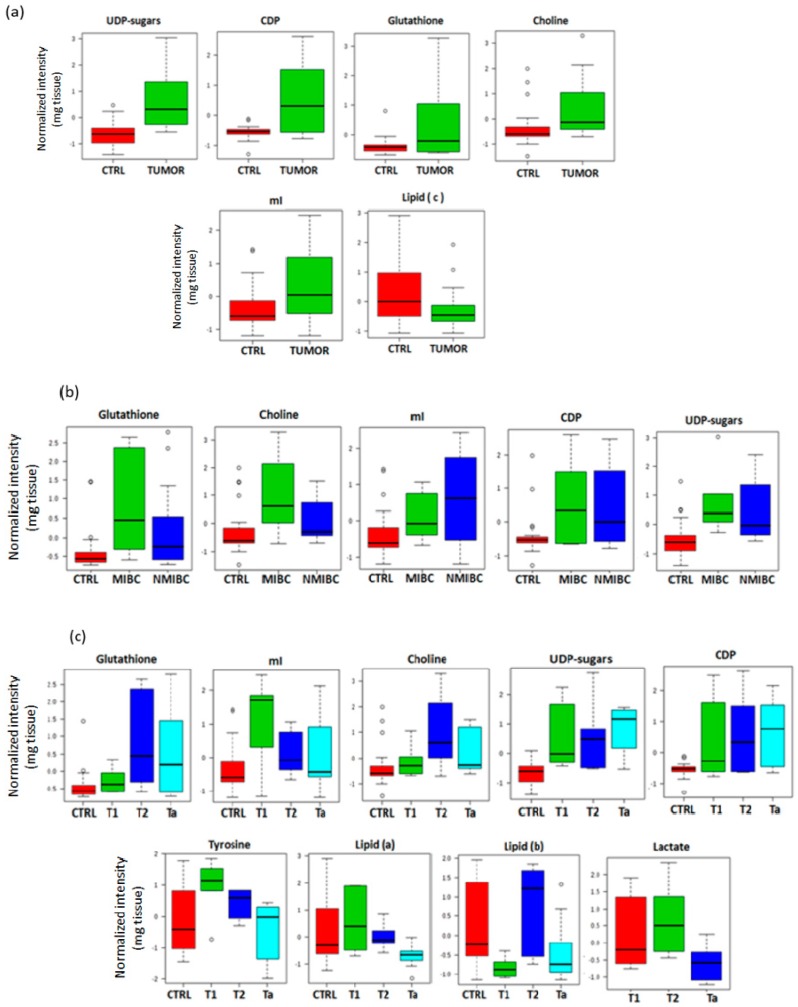
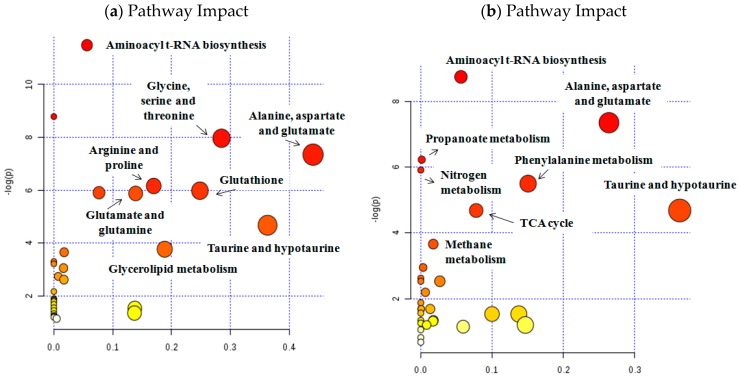
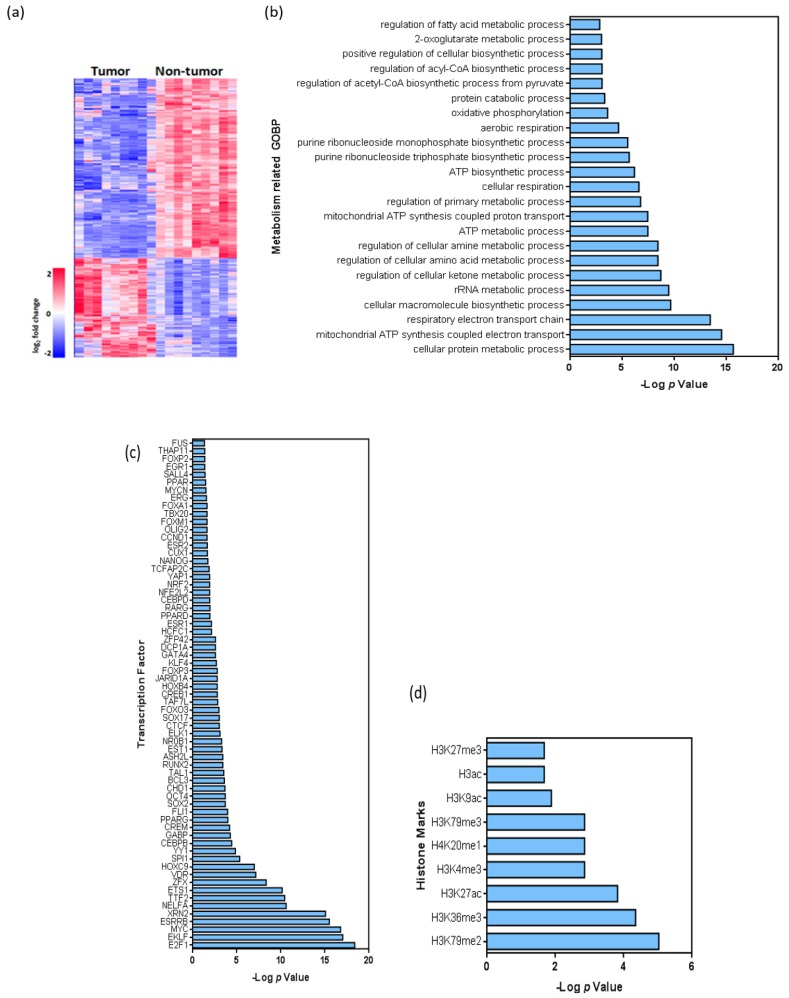
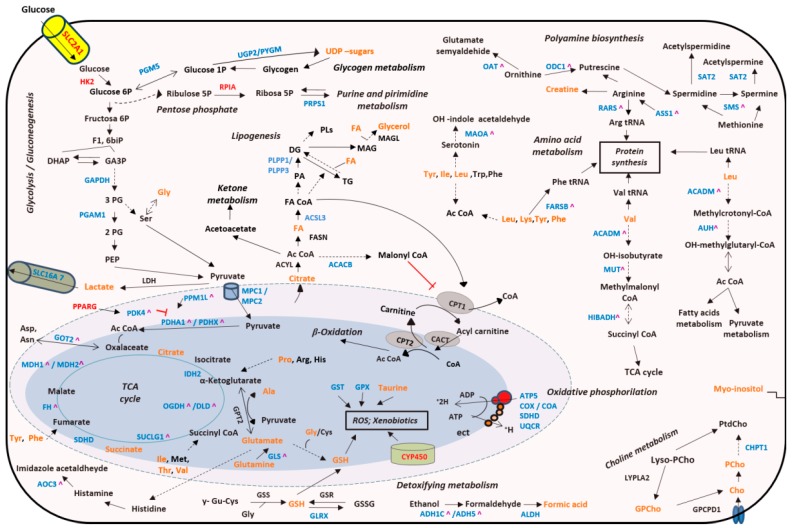
Metabolism reprogramming is considered a hallmark of cancer. The study of bladder cancer (BC) metabolism could be the key to developing new strategies for diagnosis and therapy. This work aimed to identify tissue and urinary metabolic signatures as biomarkers of BC and get further insight into BC tumor biology through the study of gene-metabolite networks and the integration of metabolomics and transcriptomics data. BC and control tissue samples (n = 44) from the same patients were analyzed by High-Resolution Magic Angle Spinning Nuclear Magnetic Resonance and microarrays techniques. Besides, urinary profiling study (n = 35) was performed in the same patients to identify a metabolomic profile, linked with BC tissue hallmarks, as a potential non-invasive approach for BC diagnosis. The metabolic profile allowed for the classification of BC tissue samples with a sensitivity and specificity of 100%. The most discriminant metabolites for BC tissue samples reflected alterations in amino acids, glutathione, and taurine metabolic pathways. Transcriptomic data supported metabolomic results and revealed a predominant downregulation of metabolic genes belonging to phosphorylative oxidation, tricarboxylic acid cycle, and amino acid metabolism. The urinary profiling study showed a relation with taurine and other amino acids perturbed pathways observed in BC tissue samples, and classified BC from non-tumor urine samples with good sensitivities (91%) and specificities (77%). This urinary profile could be used as a non-invasive tool for BC diagnosis and follow-up.
代谢重编程被认为是癌症的一个标志。膀胱癌(BC)代谢的研究可能是开发新的诊断和治疗策略的关键。这项工作旨在识别组织和尿液代谢特征作为BC的生物标志物,并通过研究基因-代谢物网络以及整合代谢组学和转录组学数据,进一步深入了解BC肿瘤生物学。采用高分辨率魔角旋转核磁共振和微阵列技术对同一患者的BC和对照组织样本(n = 44)进行分析。此外,对同一患者进行尿液分析研究(n = 35),以识别与BC组织特征相关的代谢组学特征,作为BC诊断的一种潜在非侵入性方法。代谢特征能够以100%的灵敏度和特异性对BC组织样本进行分类。BC组织样本中最具鉴别力的代谢物反映了氨基酸、谷胱甘肽和牛磺酸代谢途径的改变。转录组学数据支持了代谢组学结果,并揭示了属于磷酸化氧化、三羧酸循环和氨基酸代谢的代谢基因主要下调。尿液分析研究显示与BC组织样本中观察到的牛磺酸和其他氨基酸扰动途径有关,并以良好的灵敏度(91%)和特异性(77%)将BC与非肿瘤尿液样本区分开来。这种尿液特征可作为BC诊断和随访的非侵入性工具。