Chao Haichao, Deng Leihong, Xu Fanghua, Yu Zhaojun, Xu Xiangda, Huang Jianbiao, Zeng Tao
Institute of Clinical Medicine, Jiangxi Provincial People's Hospital Affiliated to Nanchang University, Nanchang, People's Republic of China.
Medical Department of Graduate School, Nanchang University, Nanchang, People's Republic of China.
Onco Targets Ther. 2019 May 1;12:3285-3294. doi: 10.2147/OTT.S199667. eCollection 2019.
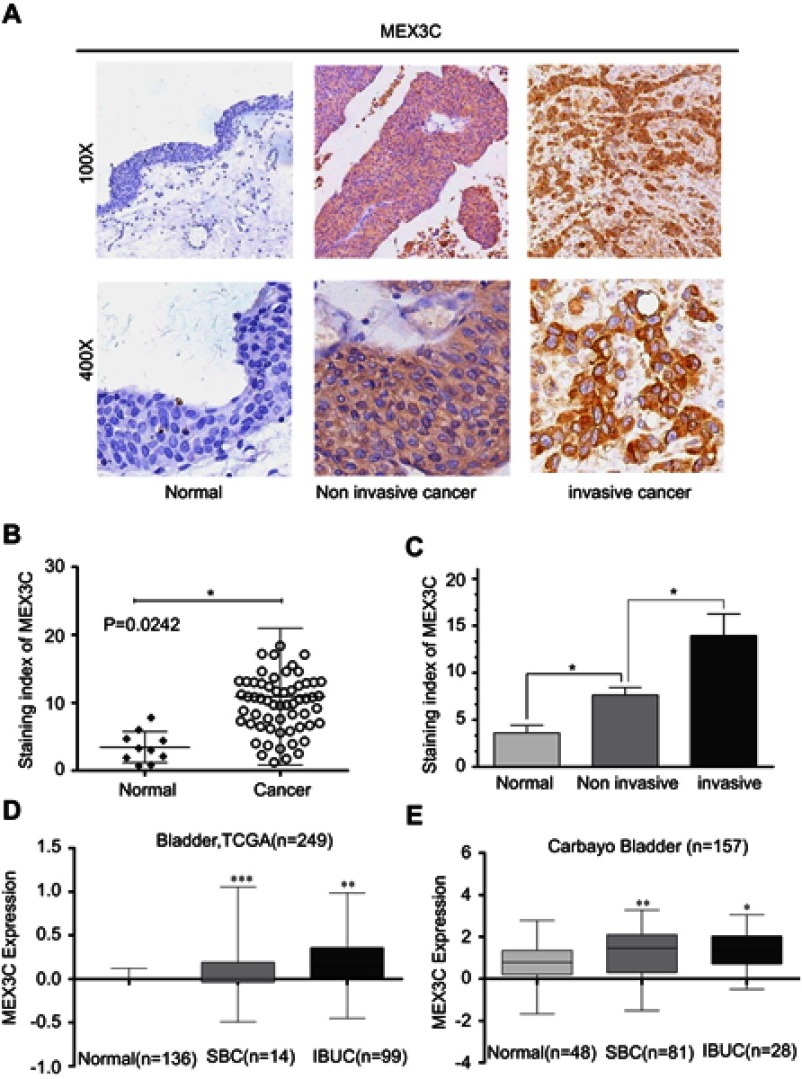
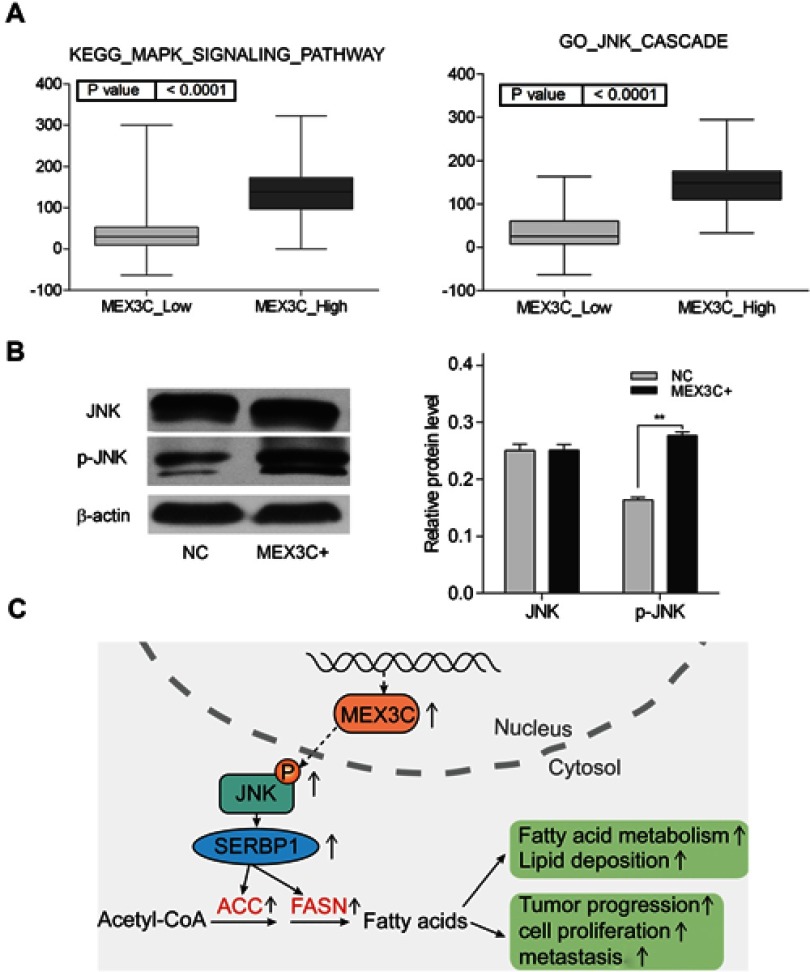
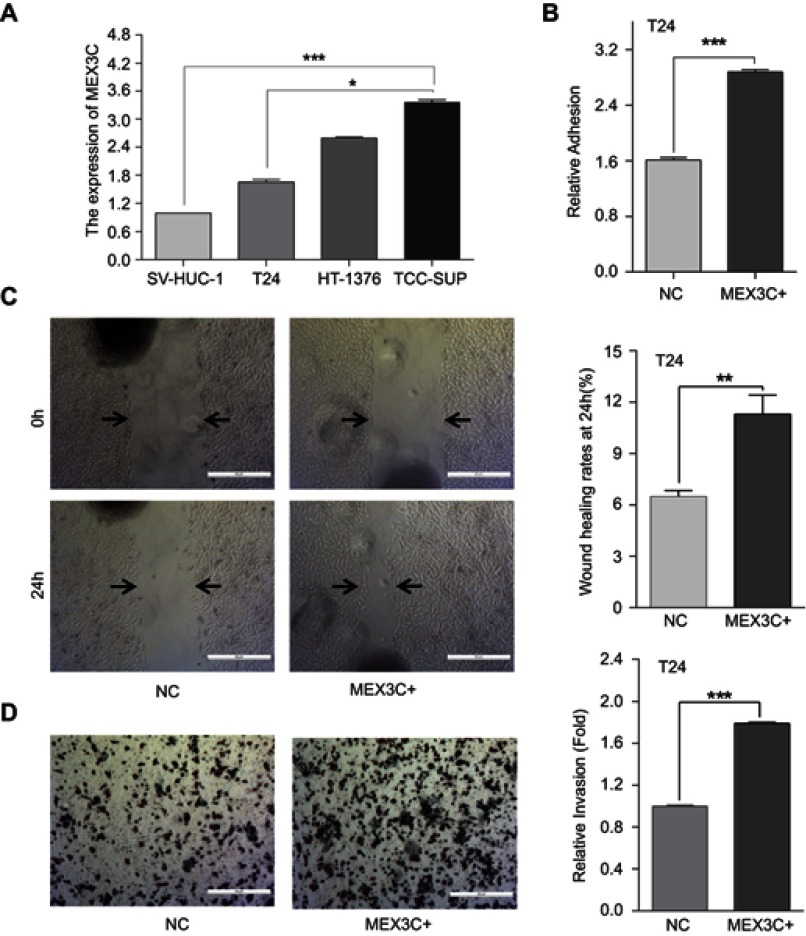
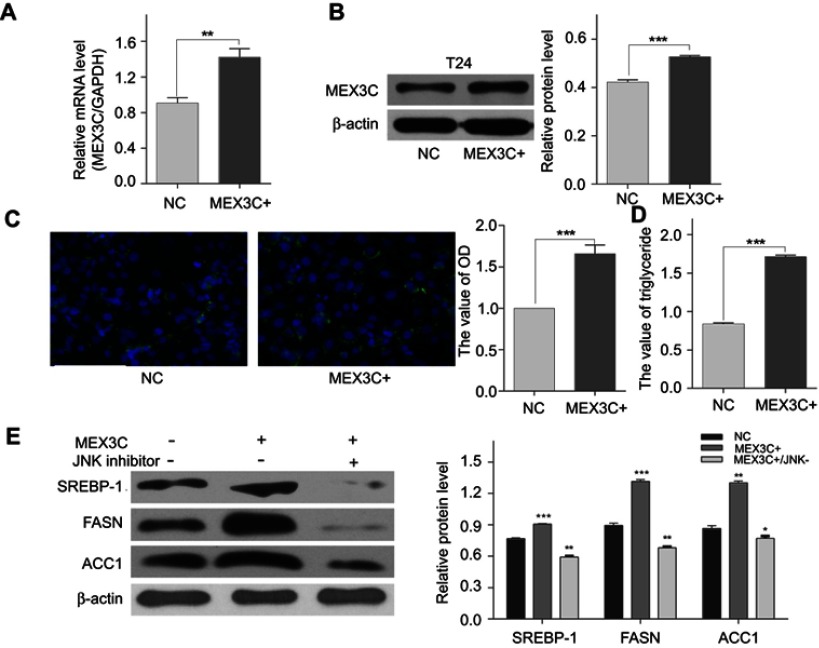
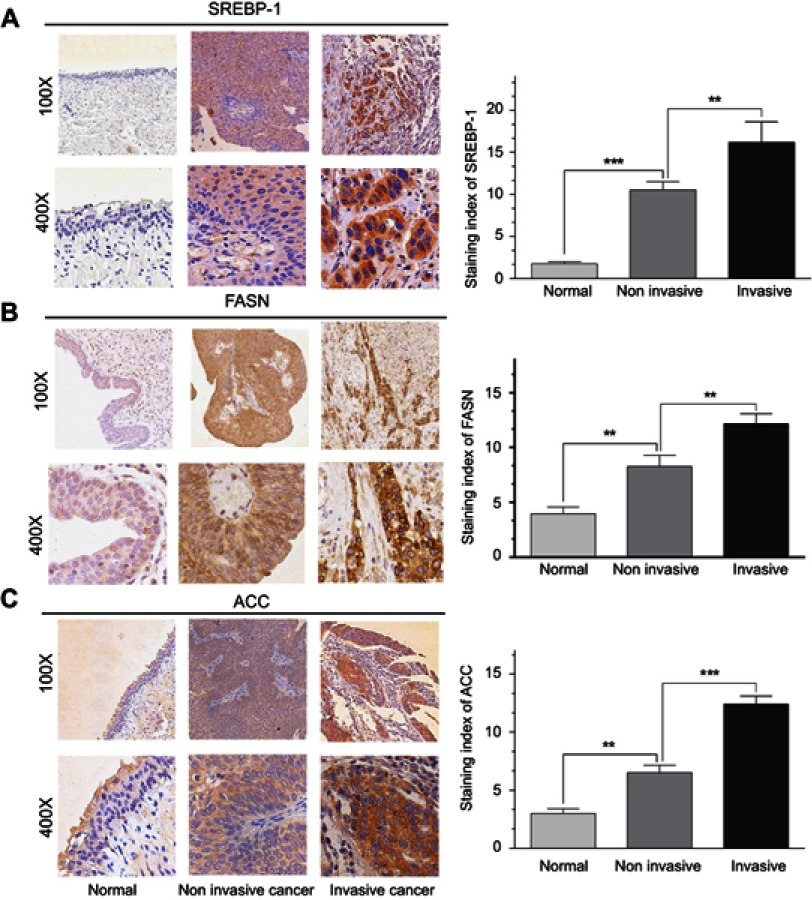
Bladder cancer (BC) is the most common urinary cancer among men with a high rate of deaths despite the improved medical technology and treatment. Recent evidence demonstrated that Mex-3 RNA-Binding Family Member C (MEX3C) plays various roles in different biological activities, but its molecular mechanisms underlying the pathogenesis of BC remain unclear yet. The aim of this research was to explore the expression patterns of MEX3C and its biological functions in human BC. The Cancer Genome Atlas (TCGA) and Oncomine databases were jointly used to analyze the expression of MEX3C in BC and its correlation with the clinicopathological features, while real-time PCR and immunohistochemistry analysis were used to verify the predicted results. Wound-healing assay, Matrigel invasion assay, BODIPY staining and Western blot analysis were used in a cell model to assess the effect of MEX3C on the lipid metabolism, invasion and migration of BC and its mechanisms. MEX3C was highly expressed in BC tissues and cells compared with their normal counterparts, and its expression was positively correlated with the clinicopathological features, especially the invasiveness phenotype. Overexpression of MEX3C accumulated lipid droplets and promoted cell adhesion, invasion and migration. We further demonstrated that MEX3C regulated lipid metabolism and promoted tumor development and progression through activation of JNK signaling and upregulating the JNK downstream protein levels of sterol regulatory element-binding proteins-1, fatty acid synthase and acetyl-CoA carboxylase-1. Here we identified MEX3C as a new oncogene to promote bladder tumorigenesis by regulating lipid metabolism through Mitogen-activated protein kinase/c-Jun N-terminal kinase (MAPK/JNK) pathway. These findings suggest a new role of MEX3C in promoting BC tumorigenesis and provide a novel biomarker or molecular target for diagnosis or treating BC.
膀胱癌(BC)是男性中最常见的泌尿系统癌症,尽管医疗技术和治疗方法有所改进,但死亡率仍然很高。最近的证据表明,Mex-3 RNA结合家族成员C(MEX3C)在不同的生物学活动中发挥着多种作用,但其在BC发病机制中的分子机制仍不清楚。本研究的目的是探讨MEX3C在人BC中的表达模式及其生物学功能。联合使用癌症基因组图谱(TCGA)和Oncomine数据库分析MEX3C在BC中的表达及其与临床病理特征的相关性,同时使用实时PCR和免疫组织化学分析来验证预测结果。在细胞模型中使用伤口愈合试验、基质胶侵袭试验、BODIPY染色和蛋白质印迹分析来评估MEX3C对BC脂质代谢、侵袭和迁移的影响及其机制。与正常组织和细胞相比,MEX3C在BC组织和细胞中高表达,其表达与临床病理特征呈正相关,尤其是侵袭性表型。MEX3C的过表达积累了脂滴并促进了细胞粘附、侵袭和迁移。我们进一步证明,MEX3C通过激活JNK信号并上调甾醇调节元件结合蛋白-1、脂肪酸合酶和乙酰辅酶A羧化酶-1的JNK下游蛋白水平来调节脂质代谢并促进肿瘤发展和进展。在这里,我们将MEX3C鉴定为一种新的癌基因,通过丝裂原活化蛋白激酶/c-Jun N端激酶(MAPK/JNK)途径调节脂质代谢来促进膀胱肿瘤发生。这些发现揭示了MEX3C在促进BC肿瘤发生中的新作用,并为BC的诊断或治疗提供了一种新的生物标志物或分子靶点。