Zhang Wei, Wu Qiong, Zhu Yaohong, Yang Guiyan, Yu Jiao, Wang Jiufeng, Ji Haifeng
Institute of Animal Husbandry and Veterinary Medicine, Beijing Academy of Agriculture and Forestry Sciences, Beijing, China.
Animal Science and Technology College, Beijing University of Agriculture, Beijing, China.
Front Microbiol. 2019 May 7;10:977. doi: 10.3389/fmicb.2019.00977. eCollection 2019.
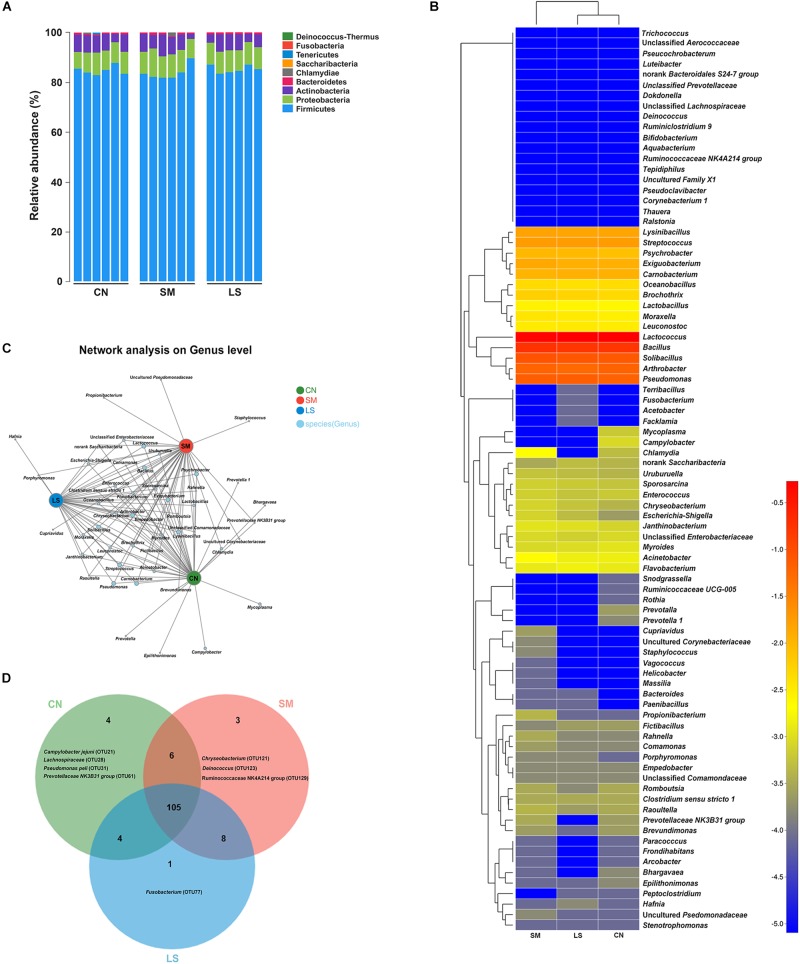
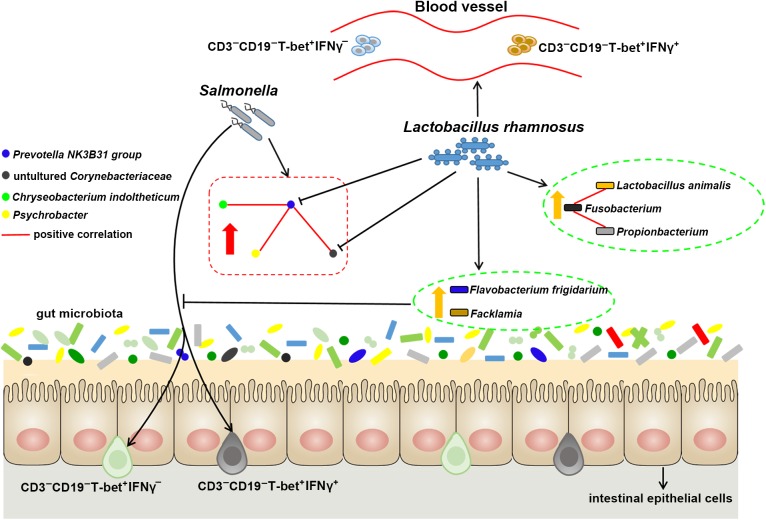
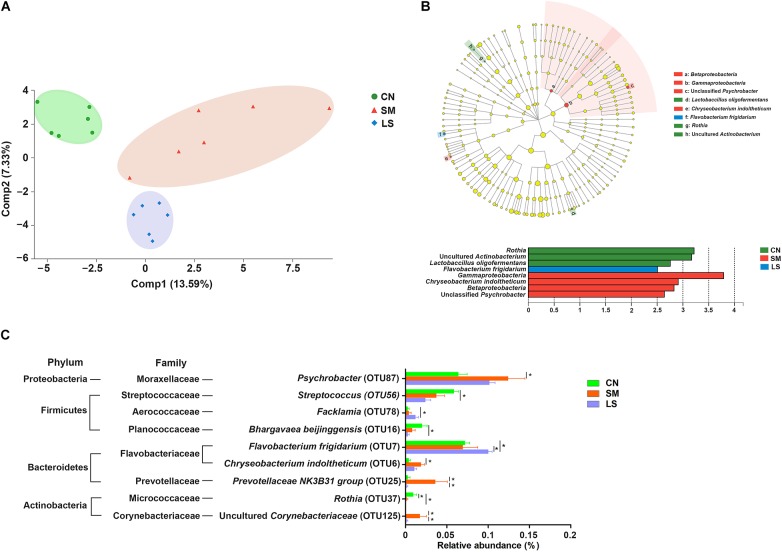
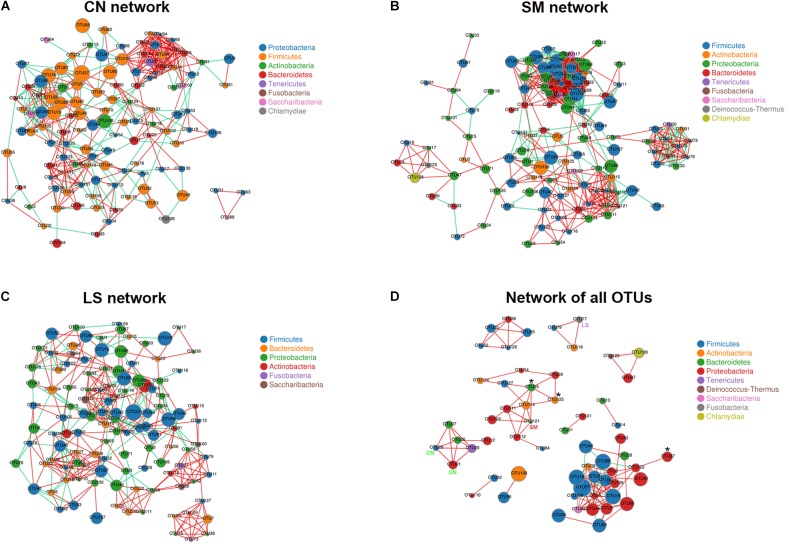
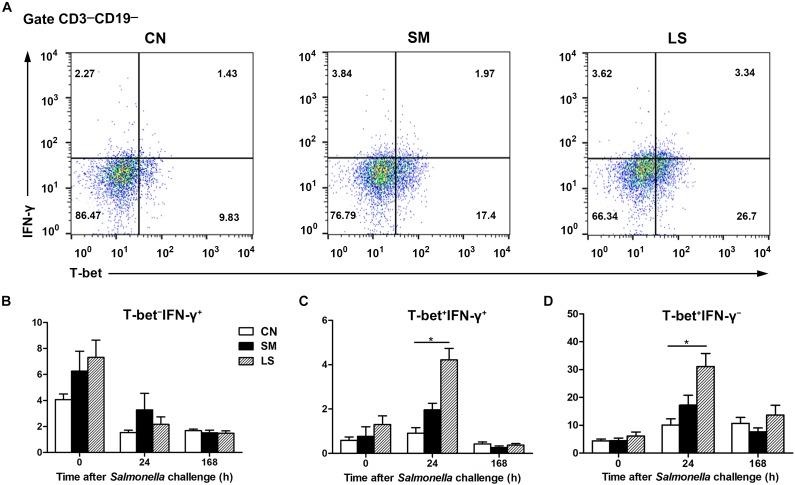
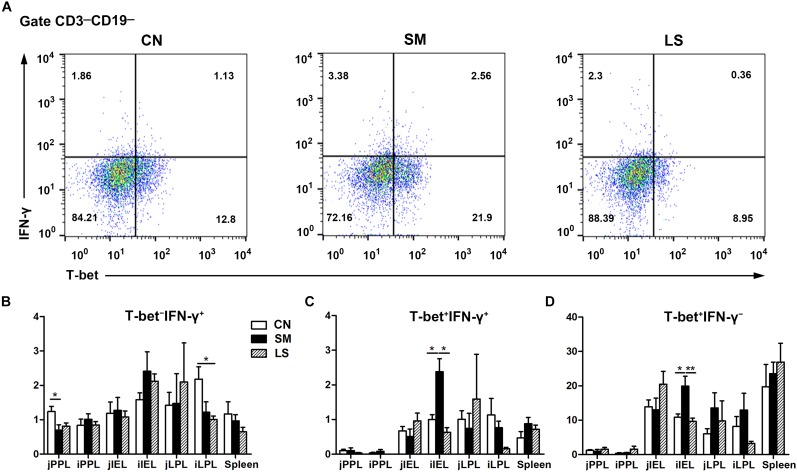
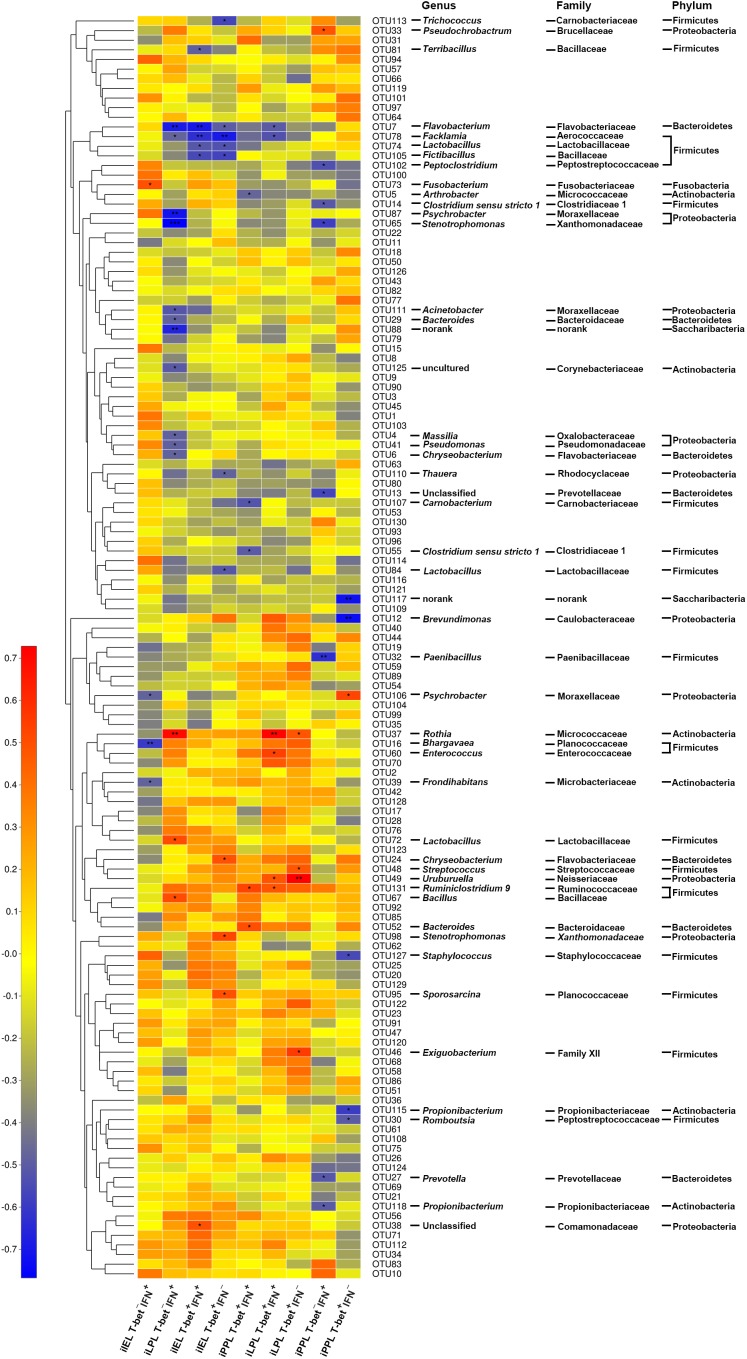
serovar 4,[5],12:i:- ( 4,[5],12:i:-) is an emerging foodborne pathogen causing salmonellosis in humans and animals. Probiotic GG (LGG) is an effective strategy for controlling enteric infections through maintaining gut microbiota homeostasis and regulating the intestinal innate immune response. Here, LGG was orally administrated to newly weaned piglets for 1 week before 4,[5],12:i:- challenge. 4,[5],12:i:- challenge led to disturbed gut microbiota, characterized by increased levels of , and uncultured populations, as well as an aberrant correlation network in -centric species. The beneficial effect of LGG correlated with attenuating the expansion of . only found in the pigs treated with LGG was positively correlated with and . Administration of LGG induced the expansion of CD3CD19T-betIFNγ and CD3CD19T-betIFNγ cell subsets in the peripheral blood at 24 h after a challenge of 4,[5],12:i:-. 4,[5],12:i:- infection increased the population of intraepithelial CD3CD19T-betIFNγ and CD3CD19T-betIFNγ cells in the ileum; however, this increase was attenuated via LGG administration. Correlation analysis revealed that LGG enriched and populations, which were negatively correlated with intraepithelial CD3CD19T-betIFNγ and CD3CD19T-betIFNγ cells in the ileum. The present data suggest that probiotic LGG alters gut microbiota with associated CD3CD19T-betIFNγ cell subset homeostasis in pigs challenged with 4,[5],12:i:-. LGG may be used in potential gut microbiota-targeted therapy regimens to regulate the specific immune cell function and, consequently, control enteric infections.
血清型4、[5]、12:i: -(4、[5]、12:i: -)是一种新出现的食源性病原体,可导致人和动物感染沙门氏菌病。益生菌GG(LGG)是通过维持肠道微生物群稳态和调节肠道固有免疫反应来控制肠道感染的有效策略。在此,在对4、[5]、12:i: -进行攻毒前1周,对刚断奶的仔猪口服LGG。4、[5]、12:i: -攻毒导致肠道微生物群紊乱,其特征为 水平和未培养菌群水平升高,以及以 为中心的物种中异常的相关网络。LGG的有益作用与减弱 的扩张有关。仅在接受LGG治疗的猪中发现的 与 和 呈正相关。在对4、[5]、12:i: -进行攻毒后24小时,口服LGG诱导外周血中CD3⁺CD19⁻T-bet⁺IFNγ⁺和CD3⁻CD19⁺T-bet⁺IFNγ⁺细胞亚群扩增。4、[5]、12:i: -感染增加了回肠上皮内CD3⁺CD19⁻T-bet⁺IFNγ⁺和CD3⁻CD19⁺T-bet⁺IFNγ⁺细胞的数量;然而,通过口服LGG,这种增加有所减弱。相关性分析显示,LGG使 菌群和 菌群富集,它们与回肠上皮内CD3⁺CD19⁻T-bet⁺IFNγ⁺和CD3⁻CD19⁺T-bet⁺IFNγ⁺细胞呈负相关。目前的数据表明,益生菌LGG可改变受4、[5]、12:i: -攻毒的猪的肠道微生物群,并使其相关的CD3⁺CD19⁻T-bet⁺IFNγ⁺和CD3⁻CD19⁺T-bet⁺IFNγ⁺细胞亚群达到稳态。LGG可用于潜在的以肠道微生物群为靶点的治疗方案,以调节特定免疫细胞功能,从而控制肠道感染。