Ju Ga-Youn, Oh Soram, Lim Bum-Soon, Lee Hyun-Seung, Chung Shin Hye
Department of Dental Biomaterials Science, School of Dentistry, Seoul National University, Seoul 03080, Korea.
Department of Conservative Dentistry, Kyung Hee University Dental Hospital (KHUDH), Seoul 02447, Korea.
Materials (Basel). 2019 May 20;12(10):1640. doi: 10.3390/ma12101640.
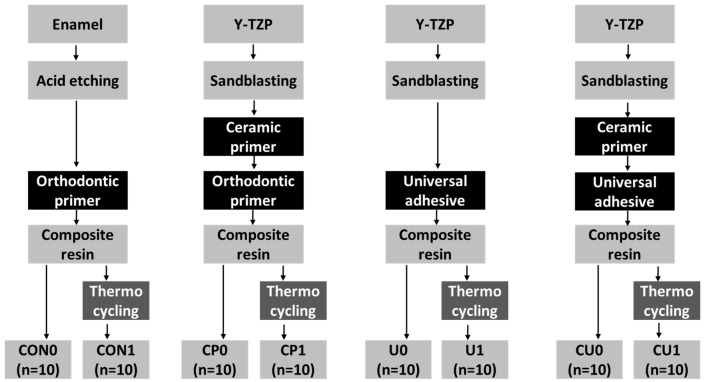
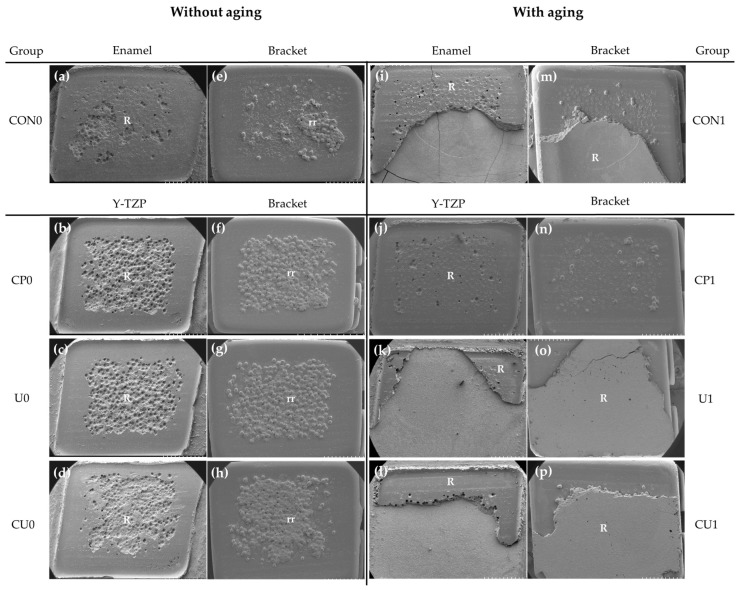
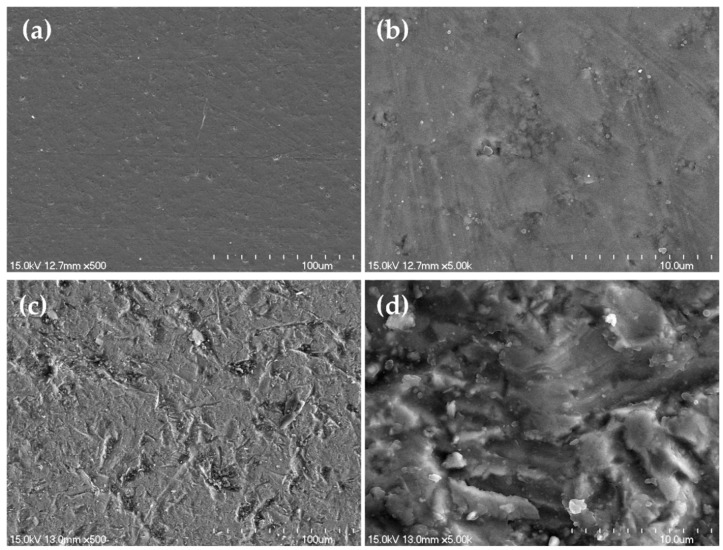
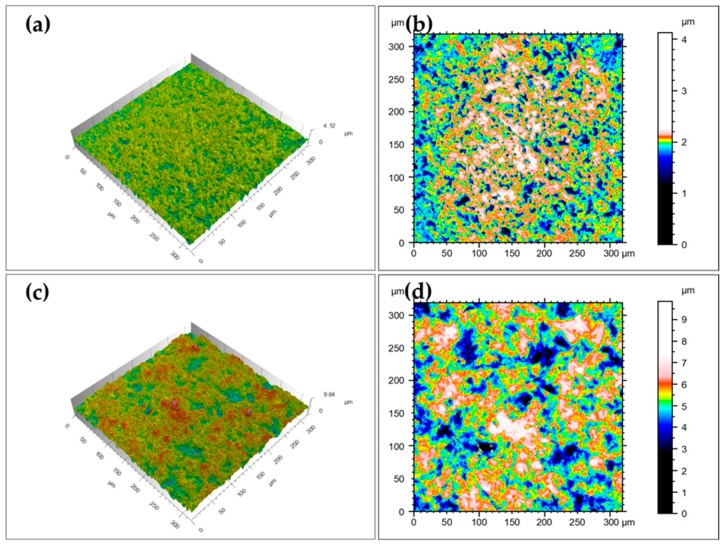
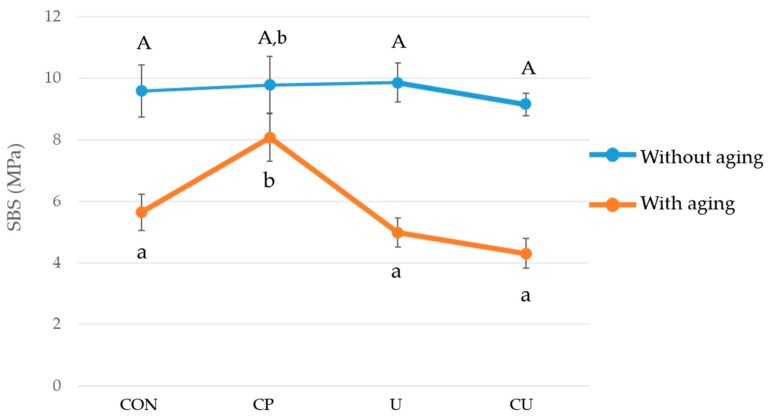
The aim of this study was to evaluate the long term stability of shear bond strength (SBS) when 10-methacryloyloxydecyl dihydrogen phosphate (10-MDP) containing universal adhesive was used in the ceramic bracket bonding on dental zirconia. Twenty human maxillary incisors were collected. The ceramic bracket was bonded on the buccal enamel surface after the acid-etching and orthodontic primer application (Group CON). Sixty zirconia specimens were sintered, sandblasted and divided into three experimental groups; group CP-ceramic primer followed by an orthodontic primer; group U-universal adhesive; group CU-ceramic primer followed by a universal adhesive. For each specimen, the bracket was bonded onto the treated surface with composite resin (Transbond XT, 3M ESPE). The SBS tested before (CON0, CP0, U0, CU0) and after the artificial aging (CON1, CP1, U1, CU1). The data were statistically analyzed with the Kruskal-Wallis test at a significance level of 0.05. The mean SBS of CON0, CP0, U0 and CU0 were within the clinically acceptable range without significant differences. After the aging process, SBS decreased in all groups. Among the aged groups, CP1 showed the highest SBS. Based on the results, when bonding ceramic brackets to a dental zirconia surface, we can conclude that ceramic primer used with an orthodontic primer, rather than using a universal adhesive, is recommended.
本研究的目的是评估在牙科氧化锆上使用含10-甲基丙烯酰氧基癸基二氢磷酸酯(10-MDP)的通用粘合剂进行陶瓷托槽粘结时,剪切粘结强度(SBS)的长期稳定性。收集了20颗人类上颌切牙。在酸蚀和应用正畸底漆后,将陶瓷托槽粘结在颊面釉质表面(CON组)。烧结、喷砂60个氧化锆标本,并将其分为三个实验组;CP组-先涂陶瓷底漆,再涂正畸底漆;U组-使用通用粘合剂;CU组-先涂陶瓷底漆,再涂通用粘合剂。对于每个标本,使用复合树脂(Transbond XT,3M ESPE)将托槽粘结到处理过的表面上。在人工老化前后测试SBS(CON0、CP0、U0、CU0和CON1、CP1、U1、CU1)。数据采用Kruskal-Wallis检验进行统计学分析,显著性水平为0.05。CON0、CP0、U0和CU0的平均SBS在临床可接受范围内,无显著差异。老化过程后,所有组的SBS均下降。在老化组中,CP1的SBS最高。基于这些结果,当将陶瓷托槽粘结到牙科氧化锆表面时,我们可以得出结论,建议使用陶瓷底漆和正畸底漆,而不是使用通用粘合剂。