Bioengineering Department, University of Texas at Arlington, Arlington, Texas, United States of America.
Graduate Biomedical Engineering Program, UT Southwestern Medical Center, Dallas, Texas, United States of America.
PLoS One. 2019 May 31;14(5):e0217640. doi: 10.1371/journal.pone.0217640. eCollection 2019.
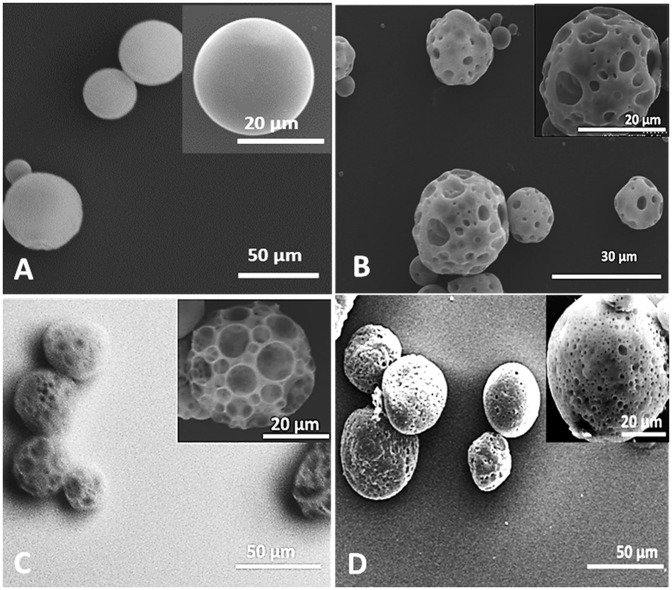
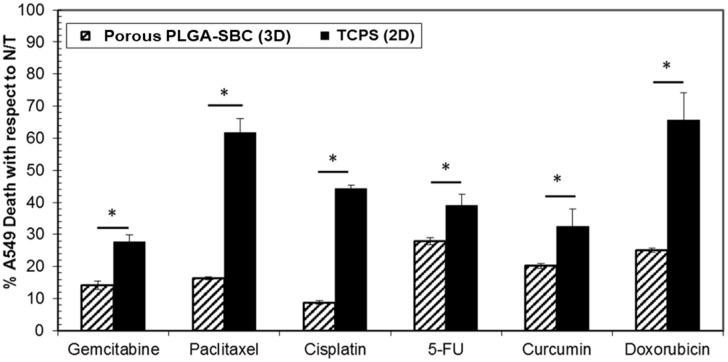
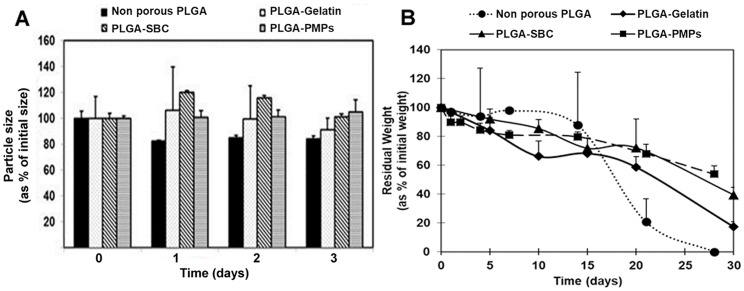
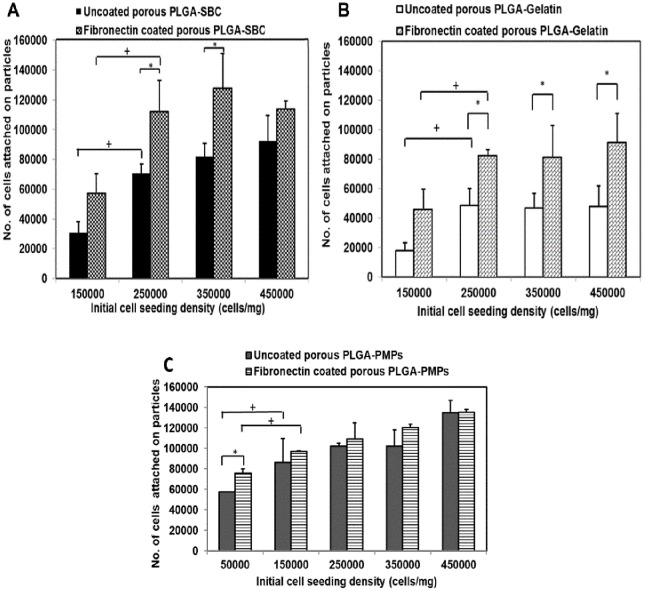
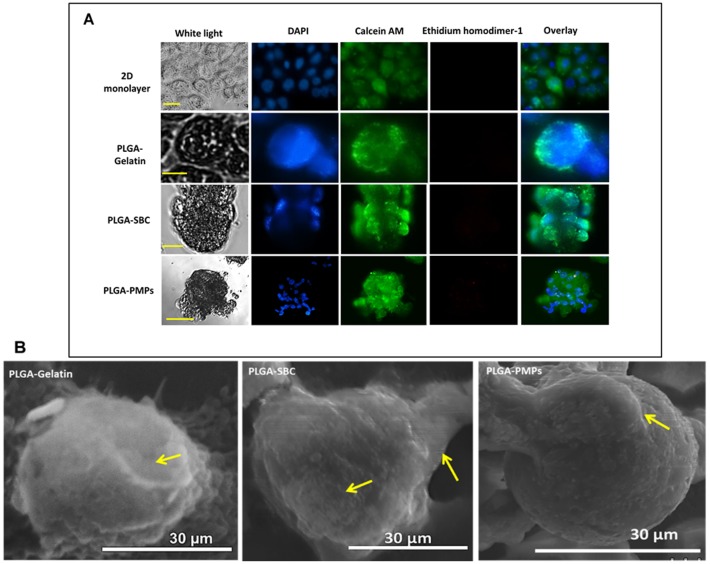
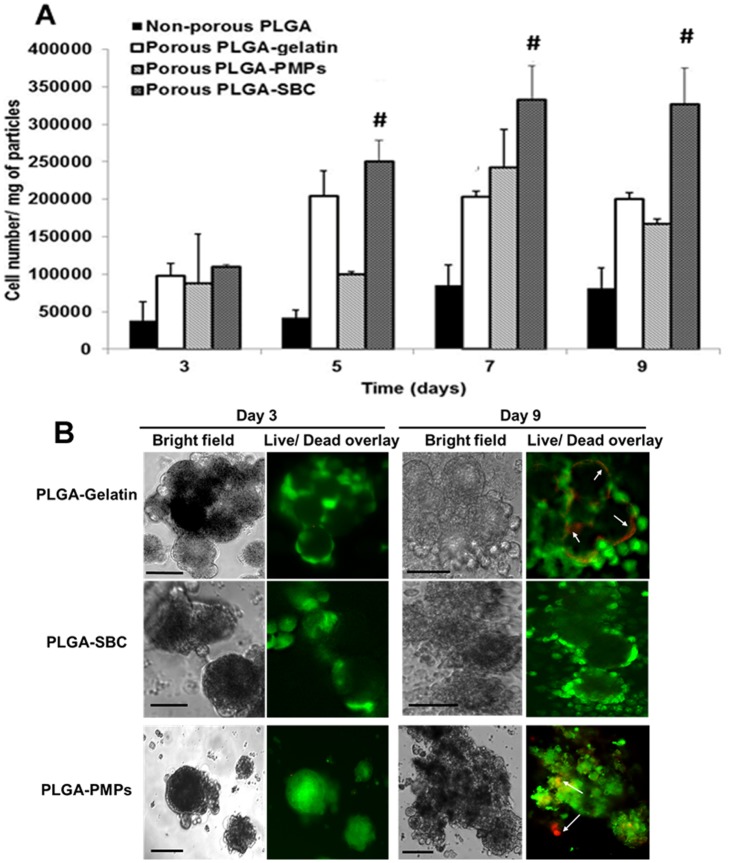
Scaffold-based cancer cell culture techniques have been gaining prominence especially in the last two decades. These techniques can potentially overcome some of the limitations of current three-dimensional cell culture methods, such as uneven cell distribution, inadequate nutrient diffusion, and uncontrollable size of cell aggregates. Porous scaffolds can provide a convenient support for cell attachment, proliferation and migration, and also allows diffusion of oxygen, nutrients and waste. In this paper, a comparative study was done on porous poly (lactic-co-glycolic acid) (PLGA) microparticles prepared using three porogens-gelatin, sodium bicarbonate (SBC) or novel poly N-isopropylacrylamide [PNIPAAm] particles, as substrates for lung cancer cell culture. These fibronectin-coated, stable particles (19-42 μm) supported A549 cell attachment at an optimal cell seeding density of 250,000 cells/ mg of particles. PLGA-SBC porous particles had comparatively larger, more interconnected pores, and favored greater cell proliferation up to 9 days than their counterparts. This indicates that pore diameters and interconnectivity have direct implications on scaffold-based cell culture compared to substrates with minimally interconnected pores (PLGA-gelatin) or pores of uniform sizes (PLGA-PMPs). Therefore, PLGA-SBC-based tumor models were chosen for preliminary drug screening studies. The greater drug resistance observed in the lung cancer cells grown on porous particles compared to conventional cell monolayers agrees with previous literature, and indicates that the PLGA-SBC porous microparticle substrates are promising for in vitro tumor or tissue development.
基于支架的癌细胞培养技术在过去二十年中越来越受到关注。这些技术有可能克服当前三维细胞培养方法的一些局限性,例如细胞分布不均匀、营养扩散不足和细胞聚集体大小不可控。多孔支架可为细胞附着、增殖和迁移提供便利的支撑,同时允许氧气、营养物质和废物扩散。在本文中,对使用三种致孔剂-明胶、碳酸氢钠(SBC)或新型聚 N-异丙基丙烯酰胺[PNIPAAm]颗粒制备的多孔聚(乳酸-共-乙醇酸)(PLGA)微球进行了比较研究,作为肺癌细胞培养的基质。这些纤维连接蛋白涂层、稳定的颗粒(19-42 μm)在最佳细胞接种密度为 250,000 个细胞/mg 颗粒时支持 A549 细胞附着。PLGA-SBC 多孔颗粒具有较大、更互连的孔,并且比其对应物更有利于细胞增殖长达 9 天。这表明与具有最小互连孔(PLGA-明胶)或均匀尺寸孔(PLGA-PMPs)的基质相比,孔径和互连性对基于支架的细胞培养有直接影响。因此,选择基于 PLGA-SBC 的肿瘤模型进行初步药物筛选研究。与传统细胞单层相比,在多孔颗粒上生长的肺癌细胞中观察到的更高药物抗性与先前的文献一致,并表明 PLGA-SBC 多孔微球基质非常适合体外肿瘤或组织发育。