Centre for Reproductive Health, The Queen's Medical Research Institute, University of Edinburgh, Edinburgh, United Kingdom.
The Roslin Institute, University of Edinburgh, Easter Bush, Midlothian, United Kingdom.
Front Immunol. 2019 May 17;10:1048. doi: 10.3389/fimmu.2019.01048. eCollection 2019.
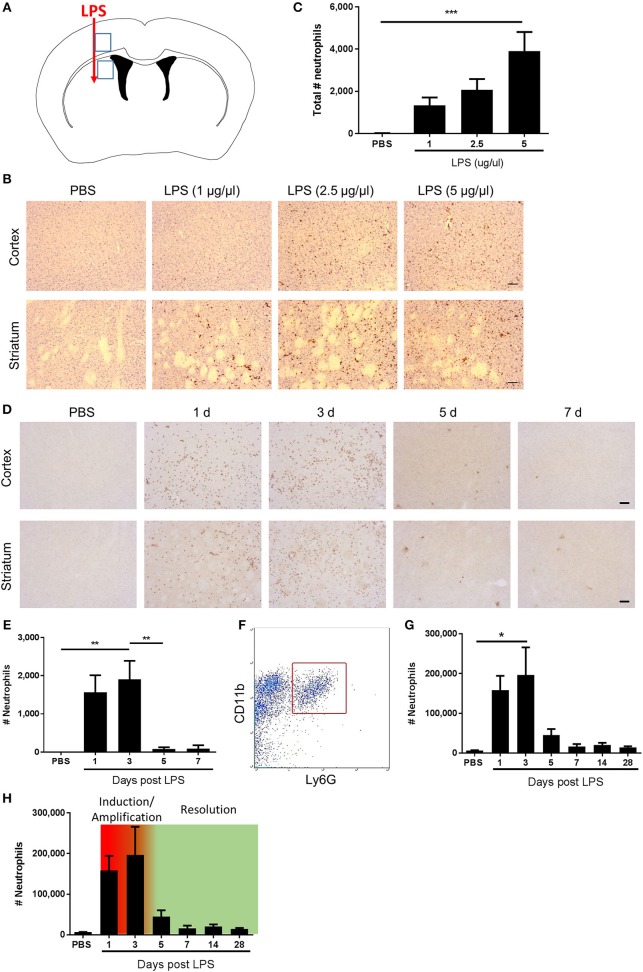
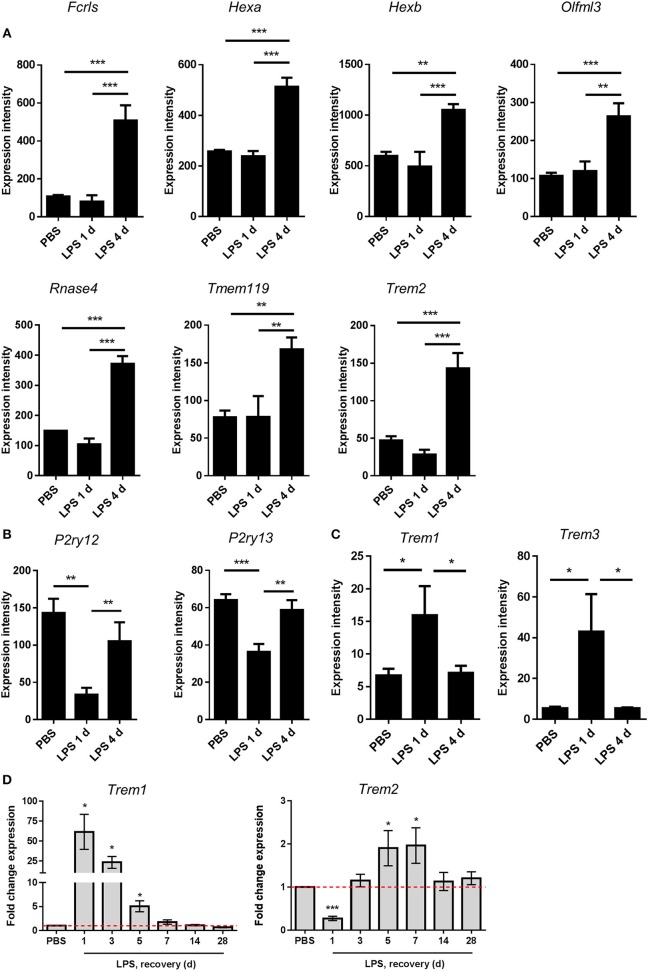
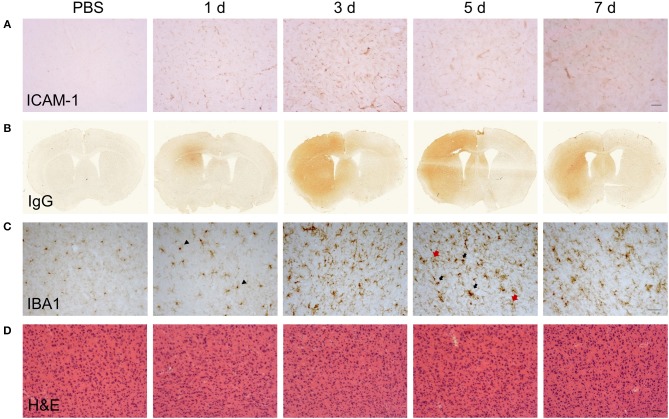
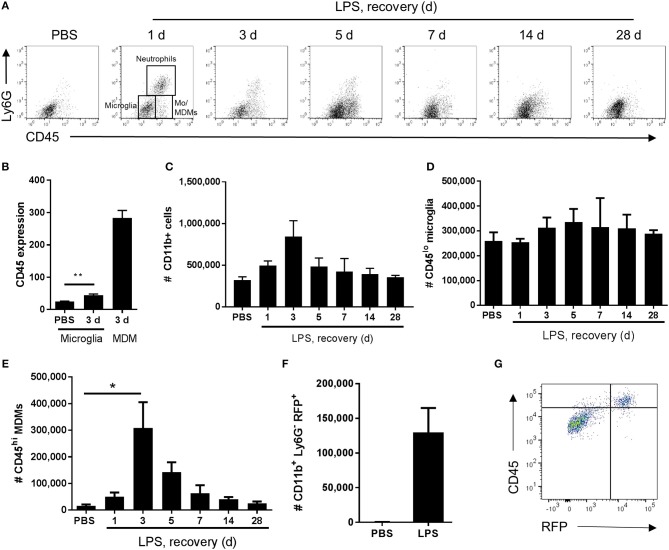
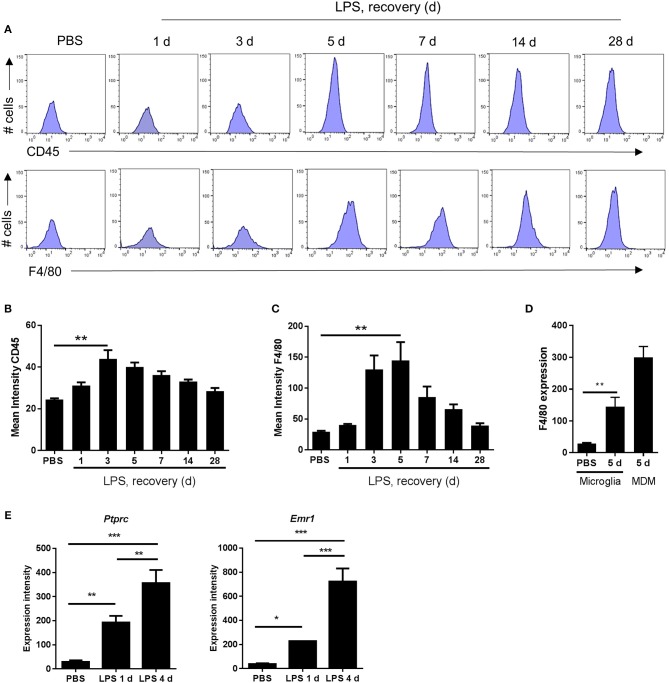
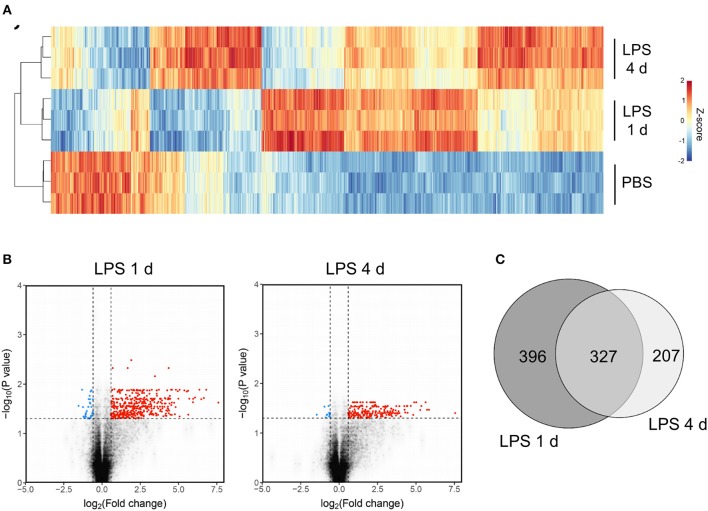
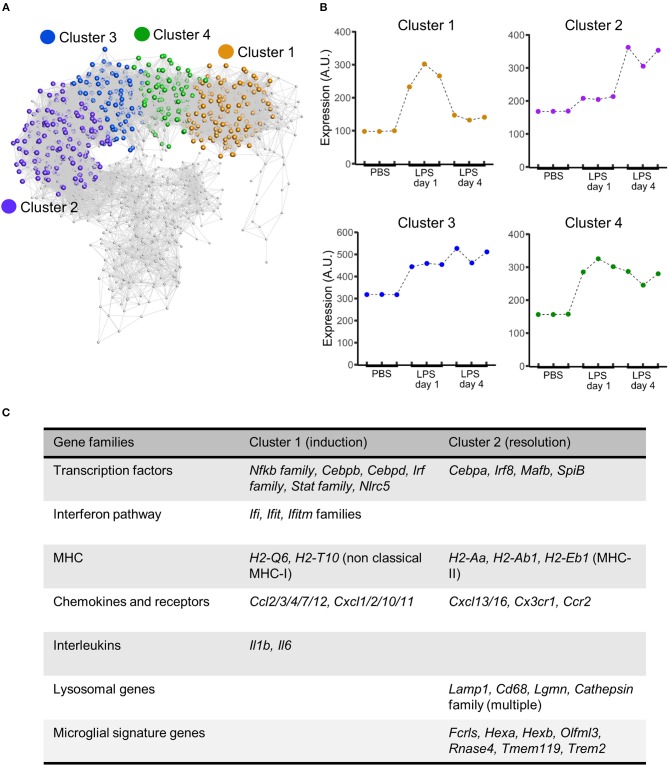
Inflammation contributes to tissue repair and restoration of function after infection or injury. However, some forms of inflammation can cause tissue damage and disease, particularly if inappropriately activated, excessive, or not resolved adequately. The mechanisms that prevent excessive or chronic inflammation are therefore important to understand. This is particularly important in the central nervous system where some effects of inflammation can have particularly harmful consequences, including irreversible damage. An increasing number of neurological disorders, both acute and chronic, and their complications are associated with aberrant neuroinflammatory activity. Here we describe a model of self-limiting acute brain inflammation optimized to study mechanisms underlying inflammation resolution. Inflammation was induced by intracerebral injection of lipopolysaccharide (LPS) and the temporal profile of key cellular and molecular changes were defined during the progression of the inflammatory response. The kinetics of accumulation and loss of neutrophils in the brain enabled well-demarcated phases of inflammation to be operatively defined, including induction and resolution phases. Microglial reactivity and accumulation of monocyte-derived macrophages were maximal at the onset of and during the resolution phase. We profiled the transcriptome-wide gene expression changes at representative induction and resolution timepoints and used gene coexpression network analysis to identify gene clusters. This revealed a distinct cluster of genes associated with inflammation resolution that were induced selectively or maximally during this phase and indicated an active programming of gene expression that may drive resolution as has been described in other tissues. Induction of gene networks involved in lysosomal function, lipid metabolism, and a comparative switch to MHC-II antigen presentation (relative to MHC-I during induction) were prominent during the resolution phase. The restoration and/or further induction of microglial homeostatic signature genes was notable during the resolution phase. We propose the current model as a tractable reductionist system to complement more complex models for further understanding how inflammation resolution in the brain is regulated and as a platform for testing/screening of candidate resolution-modifying interventions. Our data highlight how resolution involves active cellular and transcriptome reprogramming and identify candidate gene networks associated with resolution-phase adaptations that warrant further study.
炎症有助于在感染或损伤后组织修复和功能恢复。然而,某些形式的炎症会导致组织损伤和疾病,特别是如果炎症被不恰当地激活、过度激活或不能充分解决。因此,了解防止过度或慢性炎症的机制非常重要。这在中枢神经系统中尤为重要,因为炎症的一些影响可能会产生特别有害的后果,包括不可逆转的损伤。越来越多的急性和慢性神经疾病及其并发症与异常的神经炎症活动有关。在这里,我们描述了一种优化的自限性急性脑炎症模型,用于研究炎症消退的机制。通过脑内注射脂多糖(LPS)诱导炎症,并在炎症反应过程中定义关键细胞和分子变化的时间进程。中性粒细胞在大脑中的积累和损失的动力学使炎症的明确阶段能够被操作定义,包括诱导和消退阶段。小胶质细胞的反应性和单核细胞衍生的巨噬细胞的积累在诱导和消退阶段达到最大值。我们在代表性诱导和消退时间点对全转录组基因表达变化进行了分析,并使用基因共表达网络分析来识别基因簇。这揭示了一个与炎症消退相关的独特基因簇,这些基因在这个阶段被选择性地或最大程度地诱导,表明基因表达的主动编程可能像在其他组织中描述的那样驱动炎症消退。在消退阶段,参与溶酶体功能、脂质代谢和 MHC-II 抗原呈递的基因网络(相对于诱导时的 MHC-I)的诱导明显。在消退阶段,小胶质细胞稳态特征基因的恢复和/或进一步诱导是显著的。我们提出当前的模型作为一种可行的简化系统,以补充更复杂的模型,进一步了解大脑中炎症消退是如何调节的,并作为测试/筛选候选的分辨率修改干预措施的平台。我们的数据突出了分辨率涉及主动的细胞和转录组重编程,并确定了与分辨率相关的候选基因网络,这些基因网络适应需要进一步研究。