Obesity and Diabetes Clinical Research Section, Phoenix Epidemiology and Clinical Research Branch, National Institute of Diabetes and Digestive and Kidney Diseases, National Institutes of Health, Phoenix, AZ, USA.
Eur J Clin Nutr. 2020 Jan;74(1):158-166. doi: 10.1038/s41430-019-0445-6. Epub 2019 Jun 3.
BACKGROUND/OBJECTIVE: Evidence from non-human species indicate that hydration and arginine vasopressin (AVP) influence fuel selection, energy expenditure (EE), and food intake, but these relationships are unclear in humans. We sought to assess whether hydration biomarkers [24-h urine volume (UVol) and urine urea nitrogen concentration (UUN)] and copeptin (a surrogate for AVP) are associated with 24-h EE, respiratory quotient (RQ), and daily energy intake (DEI).
SUBJECTS/METHODS: In a secondary analysis of collected data, we selected healthy adults (Group 1, n = 177) who had 24-h whole-room indirect calorimetry measurements in energy balance with 24-h urine collection and fasting copeptin measurements (n = 117), followed by 3 days ad libitum food intake. A separate group (Group 2, n = 284) with hydration markers and calorimetry measurements was also studied. The main outcome measures were 24-h RQ, 24-h EE, DEI, substrate oxidation.
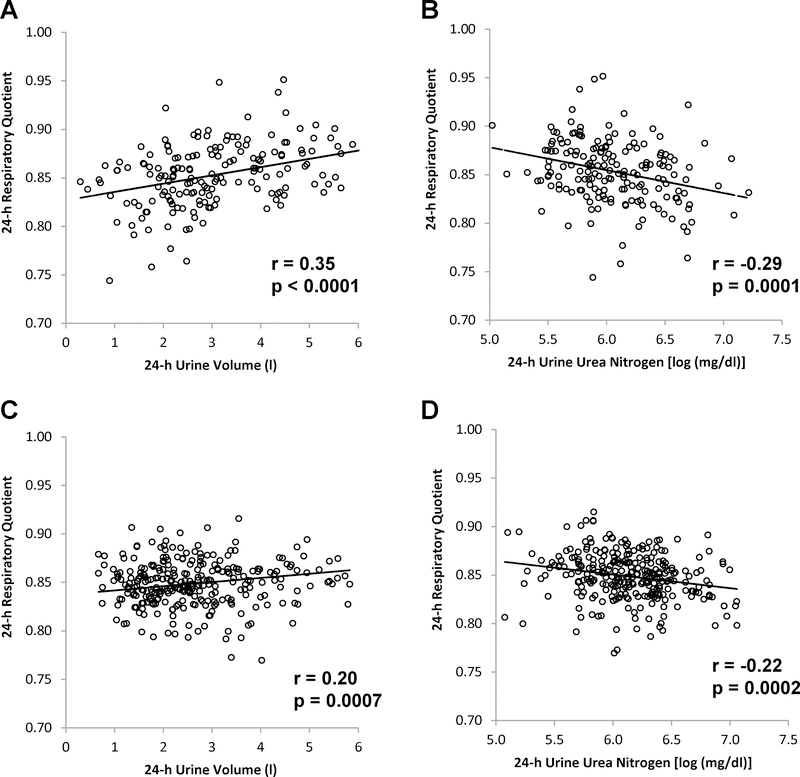
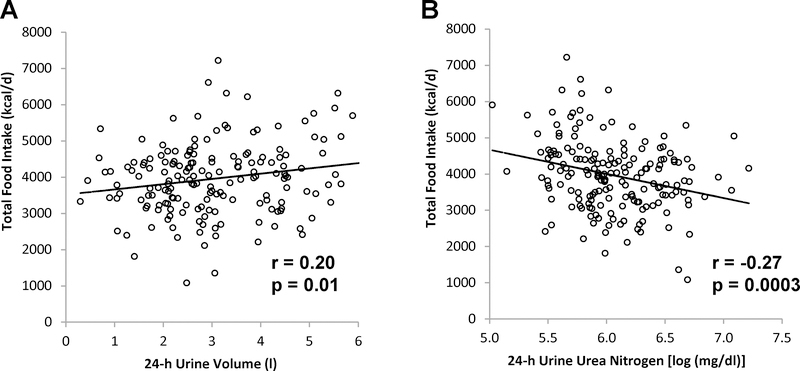
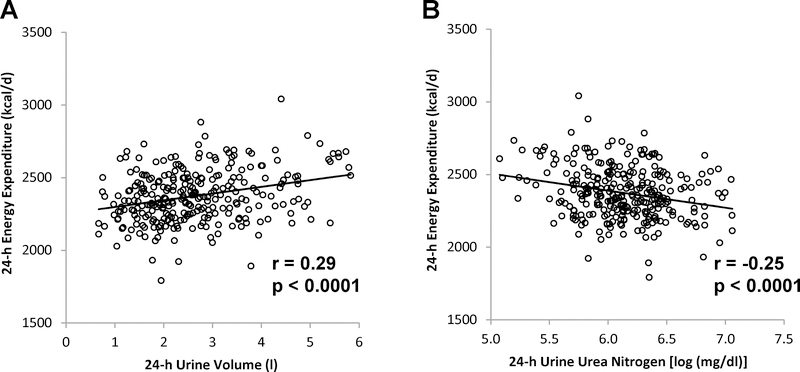
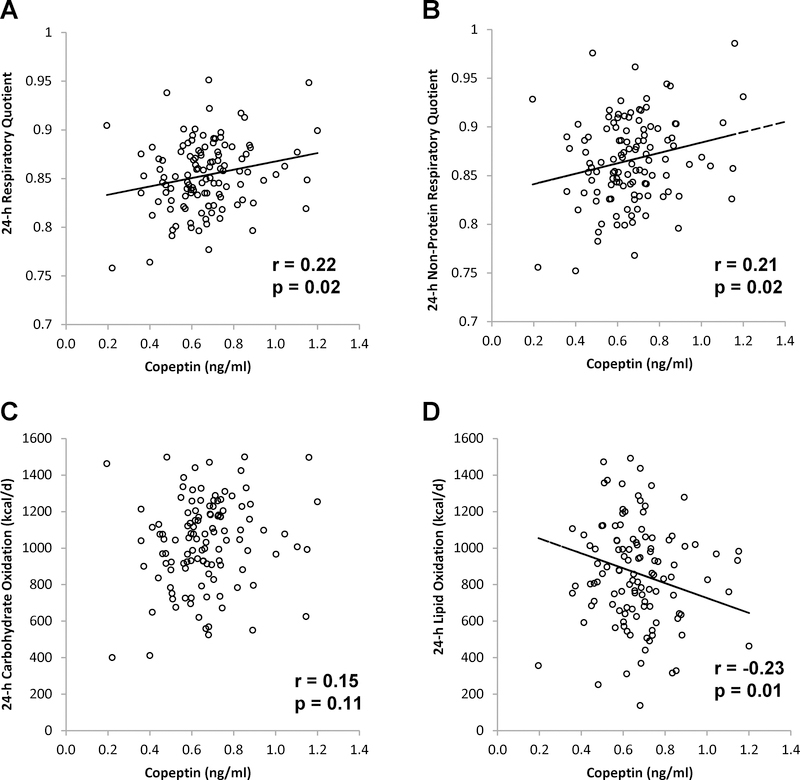
In Group 1, lower 24-h UVol and higher 24-h UUN, indicating lower hydration, were correlated with lower 24-h RQ (r = 0.35, p < 0.0001, and r = -0.29, p = 0.0001, respectively; results similar in Group 2) and predicted subsequent reduced DEI (r = 0.20, p = 0.01, and r = -0.27, p = 0.0003, respectively), adjusted for confounders. Copeptin was independently associated with 24-h lipid oxidation (r = -0.23, p = 0.01). In Group 2, lower hydration was associated with reduced 24-h EE (24-h UVol: r = 0.29, p < 0.0001; 24-h UUN: r = -0.25, p < 0.0001).
Hydration biomarkers were associated with metabolic differences characterized by altered food intake, fuel selection, and possibly EE. Independently, copeptin was associated with higher lipid oxidation.
背景/目的:来自非人类物种的证据表明,水合作用和精氨酸加压素(AVP)会影响燃料选择、能量消耗(EE)和食物摄入,但这些关系在人类中尚不清楚。我们试图评估水合作用生物标志物[24 小时尿量(UVol)和尿尿素氮浓度(UUN)]和 copeptin(AVP 的替代物)是否与 24 小时 EE、呼吸商(RQ)和每日能量摄入(DEI)相关。
受试者/方法:在已收集数据的二次分析中,我们选择了在能量平衡下进行了 24 小时整体房间间接测热法测量并进行了 24 小时尿液收集和空腹 copeptin 测量的健康成年人(第 1 组,n=177)(n=117),随后进行了 3 天的自由饮食摄入。还研究了另一组(第 2 组,n=284)的水合标志物和热量计测量值。主要观察指标是 24 小时 RQ、24 小时 EE、DEI、底物氧化。
在第 1 组中,较低的 24 小时 UVol 和较高的 24 小时 UUN,表明水合作用较低,与较低的 24 小时 RQ 相关(r=0.35,p<0.0001 和 r=0.29,p=0.0001;第 2 组结果相似),并预测随后的 DEI 减少(r=0.20,p=0.01 和 r=0.27,p=0.0003),经混杂因素调整。Copeptin 与 24 小时脂质氧化独立相关(r=-0.23,p=0.01)。在第 2 组中,较低的水合作用与 24 小时 EE 降低有关(24 小时 UVol:r=0.29,p<0.0001;24 小时 UUN:r=-0.25,p<0.0001)。
水合作用生物标志物与代谢差异相关,这些差异表现为食物摄入、燃料选择和 EE 可能发生变化。独立地,copeptin 与更高的脂质氧化有关。