Kiatsomphob Savek, Taniguchi Takako, Tarigan Elpita, Latt Khin Maung, Jeon Byeonghwa, Misawa Naoaki
Graduate School of Medicine and Veterinary Medicine, University of Miyazaki, 5200 Kihara-kiyotakecho, Miyazaki 889-1692, Japan.
Laboratory of Veterinary Public Health, Department of Veterinary Medical Science, Faculty of Agriculture, University of Miyazaki, 1-1 Gakuenkibanadai-nishi, Miyazaki 889-2192, Japan.
J Vet Med Sci. 2019 Aug 24;81(8):1144-1151. doi: 10.1292/jvms.19-0228. Epub 2019 Jul 3.
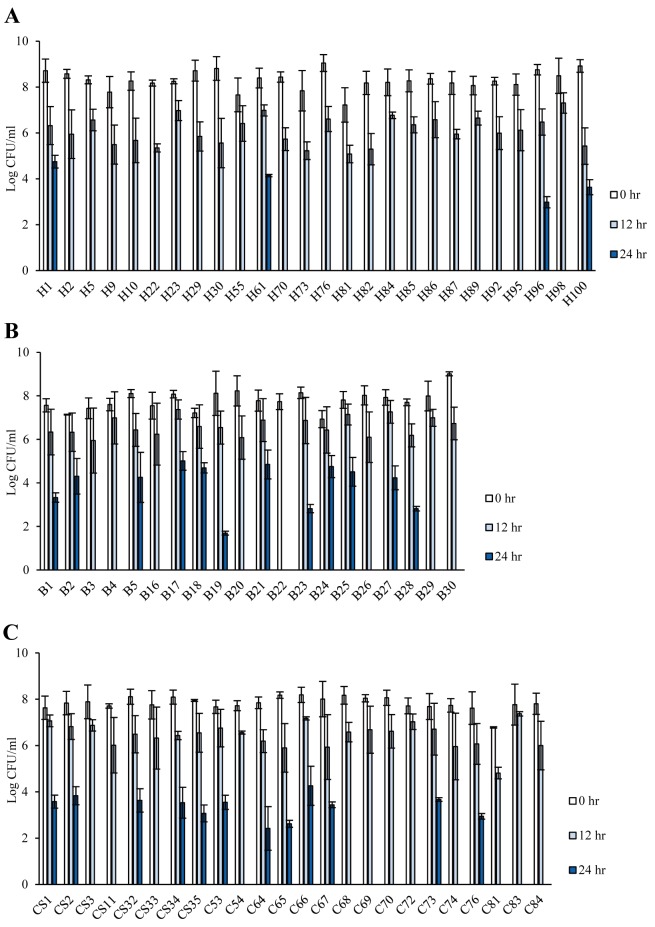
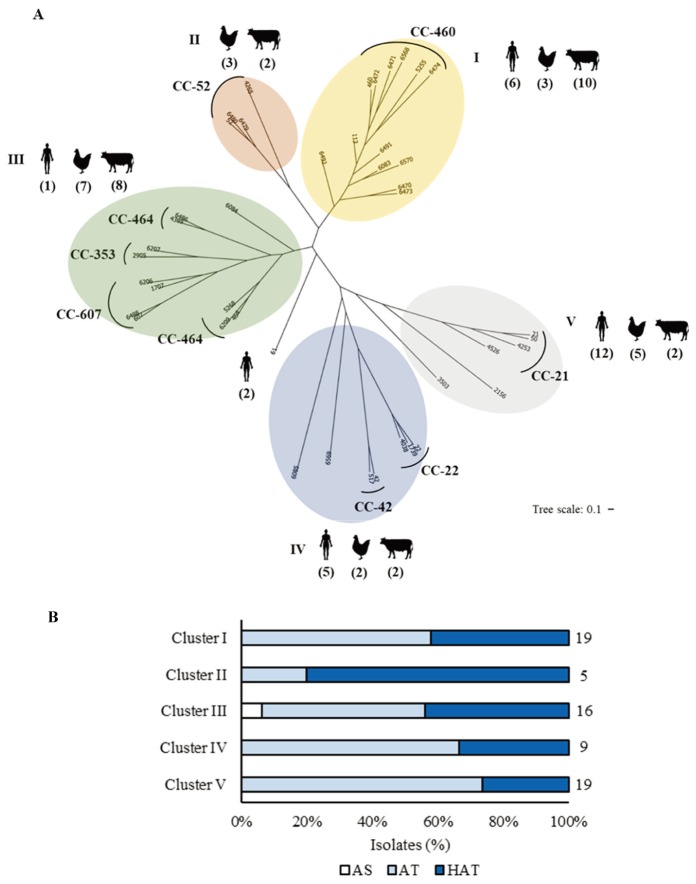
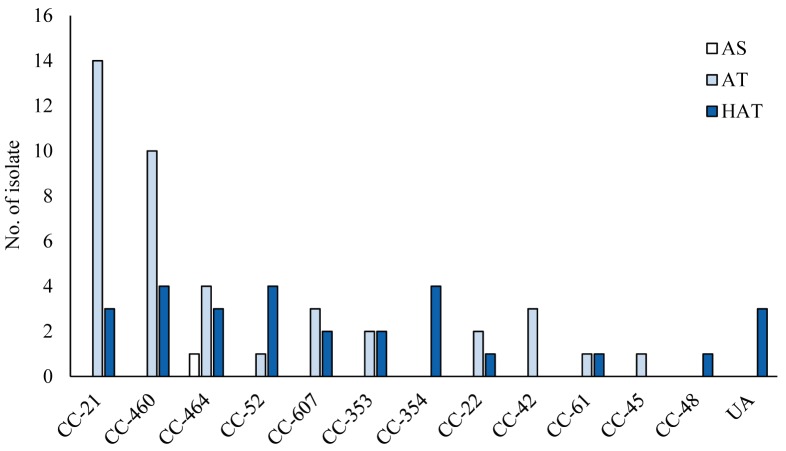
Campylobacter jejuni is one of the leading causes of human gastroenteritis in Japan. As chickens and cattle are common reservoirs for C. jejuni, this microaerophilic, stress-sensitive bacterium can overcome and survive various stress conditions during zoonotic transmission, particularly foodborne, to humans. How C. jejuni overcomes stress conditions is, however, unclear. In the present study, 70 C. jejuni strains isolated from various sources (26 human, 20 broilers, and 24 cattle isolates) in Miyazaki, Japan, from 2010 to 2012, were subjected to multilocus sequence typing (MLST) and aerotolerance testing (aerobic shaking at 200 rpm). The results demonstrated that C. jejuni strains from Miyazaki belonged to 12 clonal complexes (CCs) and 43 sequence types (STs). CC-21 and CC-460 were mainly detected in human clinical strains. Most tested strains were aerotolerant, and only one (1.4%) was deemed sensitive to aerobic stress. Approximately 40% strains survived the 24-hr vigorous aerobic shaking at 200 rpm, and these hyper-aerotolerant strains were more prevalent in broiler and cattle isolates than in human isolates. Phylogenetic analysis divided the strains into five clusters, each showing a different pattern of host association. Thus, we have demonstrated for the first time that C. jejuni strains with increased tolerance to aerobic stress are highly prevalent in broilers and cattle in Miyazaki, Japan, and that certain clonal populations are frequently implicated in human infection in this area.
空肠弯曲菌是日本人类肠胃炎的主要病因之一。由于鸡和牛是空肠弯曲菌的常见宿主,这种微需氧、对压力敏感的细菌在人畜共患病传播(尤其是食源性传播)过程中能够克服并在各种压力条件下存活。然而,空肠弯曲菌如何克服压力条件尚不清楚。在本研究中,对2010年至2012年从日本宫崎县的各种来源(26株人类分离株、20株肉鸡分离株和24株牛分离株)分离出的70株空肠弯曲菌进行了多位点序列分型(MLST)和气耐受性测试(200 rpm有氧振荡)。结果表明,宫崎县的空肠弯曲菌菌株属于12个克隆复合体(CCs)和43个序列类型(STs)。CC-21和CC-460主要在人类临床菌株中检测到。大多数测试菌株具有气耐受性,只有一株(1.4%)被认为对有氧压力敏感。约40%的菌株在200 rpm的剧烈有氧振荡24小时后存活,这些高气耐受性菌株在肉鸡和牛分离株中比在人类分离株中更普遍。系统发育分析将菌株分为五个簇,每个簇显示出不同的宿主关联模式。因此,我们首次证明,对有氧压力耐受性增强的空肠弯曲菌菌株在日本宫崎县的肉鸡和牛中高度流行,并且某些克隆群体在该地区的人类感染中经常涉及。