Spinal Cord & Brain Injury Research Center, University of Kentucky, Lexington, USA.
Department of Neuroscience, University of Kentucky, Lexington, USA.
Sci Rep. 2019 Jul 4;9(1):9656. doi: 10.1038/s41598-019-45568-3.
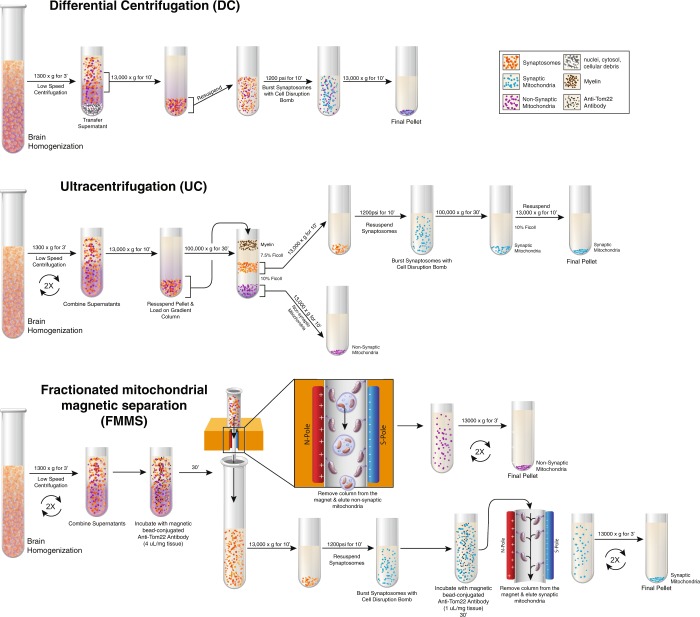
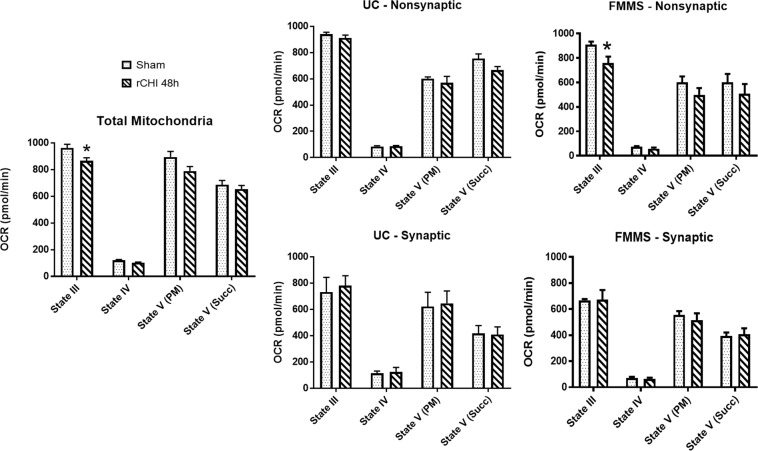
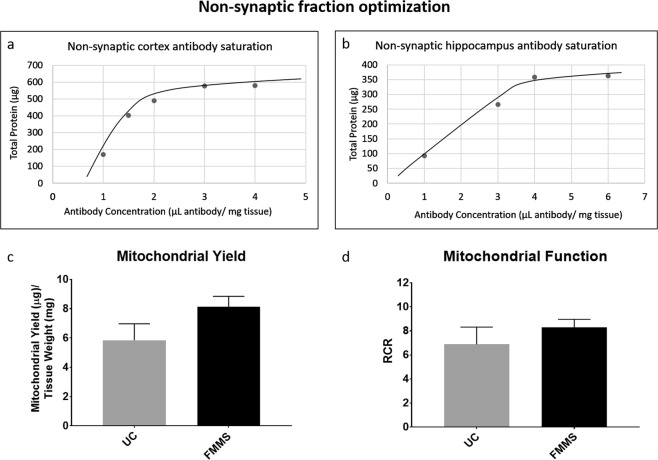
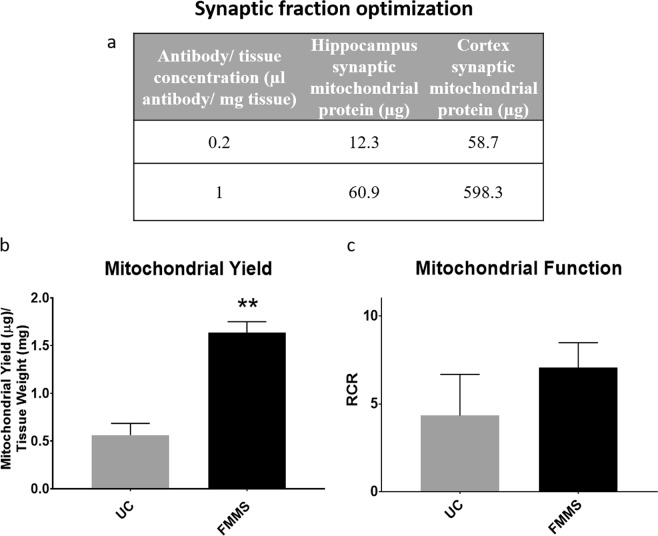
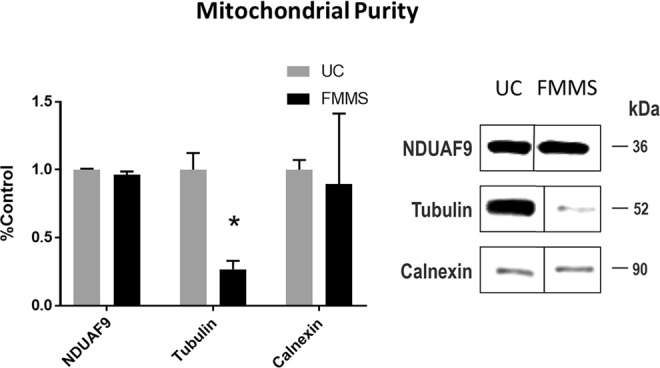
While mitochondria maintain essential cellular functions, such as energy production, calcium homeostasis, and regulating programmed cellular death, they also play a major role in pathophysiology of many neurological disorders. Furthermore, several neurodegenerative diseases are closely linked with synaptic damage and synaptic mitochondrial dysfunction. Unfortunately, the ability to assess mitochondrial dysfunction and the efficacy of mitochondrial-targeted therapies in experimental models of neurodegenerative disease and CNS injury is limited by current mitochondrial isolation techniques. Density gradient ultracentrifugation (UC) is currently the only technique that can separate synaptic and non-synaptic mitochondrial sub-populations, though small brain regions cannot be assayed due to low mitochondrial yield. To address this limitation, we used fractionated mitochondrial magnetic separation (FMMS), employing magnetic anti-Tom22 antibodies, to develop a novel strategy for isolation of functional synaptic and non-synaptic mitochondria from mouse cortex and hippocampus without the usage of UC. We compared the yield and functionality of mitochondria derived using FMMS to those derived by UC. FMMS produced 3x more synaptic mitochondrial protein yield compared to UC from the same amount of tissue, a mouse hippocampus. FMMS also has increased sensitivity, compared to UC separation, to measure decreased mitochondrial respiration, demonstrated in a paradigm of mild closed head injury. Taken together, FMMS enables improved brain-derived mitochondrial yield for mitochondrial assessments and better detection of mitochondrial impairment in CNS injury and neurodegenerative disease.
虽然线粒体维持着细胞的基本功能,如能量产生、钙稳态和调节程序性细胞死亡,但它们在许多神经紊乱的病理生理学中也起着主要作用。此外,几种神经退行性疾病与突触损伤和突触线粒体功能障碍密切相关。不幸的是,目前评估线粒体功能障碍和线粒体靶向治疗在神经退行性疾病和中枢神经系统损伤实验模型中的疗效的能力受到线粒体分离技术的限制。密度梯度超速离心(UC)是目前唯一能够分离突触和非突触线粒体亚群的技术,尽管由于线粒体产量低,无法对小脑组织区域进行检测。为了解决这一限制,我们使用了分馏线粒体磁分离(FMMS),采用磁性抗 Tom22 抗体,开发了一种从鼠皮层和海马体中分离功能性突触和非突触线粒体的新策略,而无需使用 UC。我们比较了使用 FMMS 和 UC 分离得到的线粒体的产量和功能。与 UC 相比,FMMS 从相同数量的组织(一只鼠的海马体)中产生了 3 倍的突触线粒体蛋白产量。与 UC 分离相比,FMMS 还具有更高的灵敏度,可用于测量轻度闭合性颅脑损伤模型中的线粒体呼吸减少。总之,FMMS 能够提高大脑衍生的线粒体产量,用于线粒体评估,并更好地检测中枢神经系统损伤和神经退行性疾病中的线粒体损伤。