Chakafana Graham, Zininga Tawanda, Shonhai Addmore
Department of Biochemistry, University of Venda, Private Bags X5050, Thohoyandou, 0950, South Africa.
Biophys Rev. 2019 Jul 6;11(4):591-602. doi: 10.1007/s12551-019-00563-w.
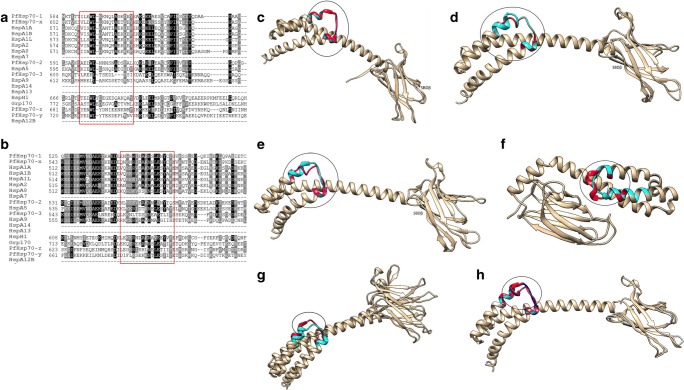
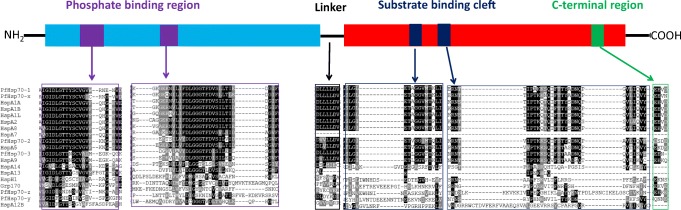
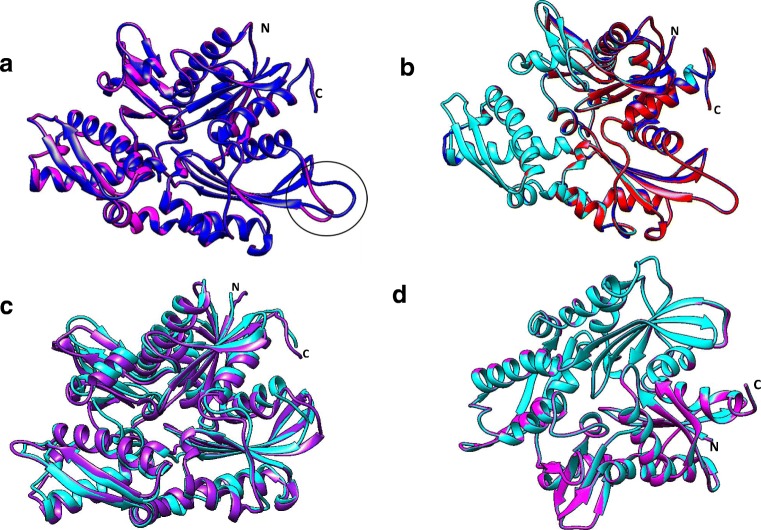
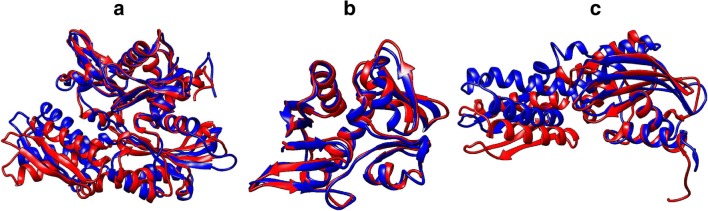
The heat shock protein 70 (Hsp70) family of molecular chaperones are crucial for the survival and pathogenicity of the main agent of malaria, Plasmodium falciparum. Hsp70 is central to cellular proteostasis and some of its isoforms are essential for survival of the malaria parasite. In addition, they are also implicated in the development of antimalarial drug resistance. For these reasons, they are thought to be potential drug targets, especially in antimalarial combination therapies. However, their high sequence conservation across species presents a hurdle with respect to their selective targeting. The human genome encodes 17 Hsp70 isoforms while P. falciparum encodes for only 6. The structural architecture of Hsp70s is typically characterized by a highly conserved N-terminal nucleotide-binding domain (NBD) and a less conserved C-terminal substrate-binding domain (SBD). The two domains are connected by a highly conserved linker. In spite of their fairly high sequence conservation, Hsp70s from various species possess unique signature motifs that appear to uniquely influence their function. In addition, their cooperation with co-chaperones further regulates their functional specificity. In the current review, bioinformatics tools were used to identify conserved and unique signature motifs in Hsp70s of P. falciparum versus their human counterparts. We discuss the common and distinctive structure-function features of these proteins. This information is important towards elucidating the prospects of selective targeting of parasite heat shock proteins as part of antimalarial design efforts.
分子伴侣热休克蛋白70(Hsp70)家族对于疟疾主要病原体恶性疟原虫的存活和致病性至关重要。Hsp70是细胞蛋白质稳态的核心,其一些同工型对疟原虫的存活至关重要。此外,它们还与抗疟药物耐药性的发展有关。由于这些原因,它们被认为是潜在的药物靶点,尤其是在抗疟联合疗法中。然而,它们在物种间的高度序列保守性给选择性靶向带来了障碍。人类基因组编码17种Hsp70同工型,而恶性疟原虫仅编码6种。Hsp70的结构架构通常以高度保守的N端核苷酸结合结构域(NBD)和保守性较低的C端底物结合结构域(SBD)为特征。这两个结构域由一个高度保守的连接子相连。尽管它们的序列保守性相当高,但来自不同物种的Hsp70具有独特的特征基序,这些基序似乎对其功能有独特影响。此外,它们与共伴侣的合作进一步调节其功能特异性。在本综述中,我们使用生物信息学工具来识别恶性疟原虫与人类Hsp70中的保守和独特特征基序。我们讨论了这些蛋白质共同和独特的结构-功能特征。这些信息对于阐明作为抗疟设计工作一部分选择性靶向寄生虫热休克蛋白的前景很重要。