• 文献检索
  • 文档翻译
  • 深度研究
  • 学术资讯
  • Suppr Zotero 插件Zotero 插件
  • 邀请有礼
  • 套餐&价格
  • 历史记录
应用&插件
Suppr Zotero 插件Zotero 插件浏览器插件Mac 客户端Windows 客户端微信小程序
定价
高级版会员购买积分包购买API积分包
服务
文献检索文档翻译深度研究API 文档MCP 服务
关于我们
关于 Suppr公司介绍联系我们用户协议隐私条款
关注我们

Suppr 超能文献

核心技术专利:CN118964589B侵权必究
粤ICP备2023148730 号-1Suppr @ 2026

文献检索

告别复杂PubMed语法,用中文像聊天一样搜索,搜遍4000万医学文献。AI智能推荐,让科研检索更轻松。

立即免费搜索

文件翻译

保留排版,准确专业,支持PDF/Word/PPT等文件格式,支持 12+语言互译。

免费翻译文档

深度研究

AI帮你快速写综述,25分钟生成高质量综述,智能提取关键信息,辅助科研写作。

立即免费体验

现在齐聚一堂:使用类器官模型模拟神经系统与非神经系统的相互作用。

All Together Now: Modeling the Interaction of Neural With Non-neural Systems Using Organoid Models.

作者信息

Chukwurah Evelyn, Osmundsen Allison, Davis Shannon W, Lizarraga Sofia B

机构信息

Department of Biological Sciences, University of South Carolina, Columbia, SC, United States.

Center for Childhood Neurotherapeutics, University of South Carolina, Columbia, SC, United States.

出版信息

Front Neurosci. 2019 Jun 21;13:582. doi: 10.3389/fnins.2019.00582. eCollection 2019.

DOI:10.3389/fnins.2019.00582
PMID:31293366
原文链接:https://pmc.ncbi.nlm.nih.gov/articles/PMC6598414/
Abstract

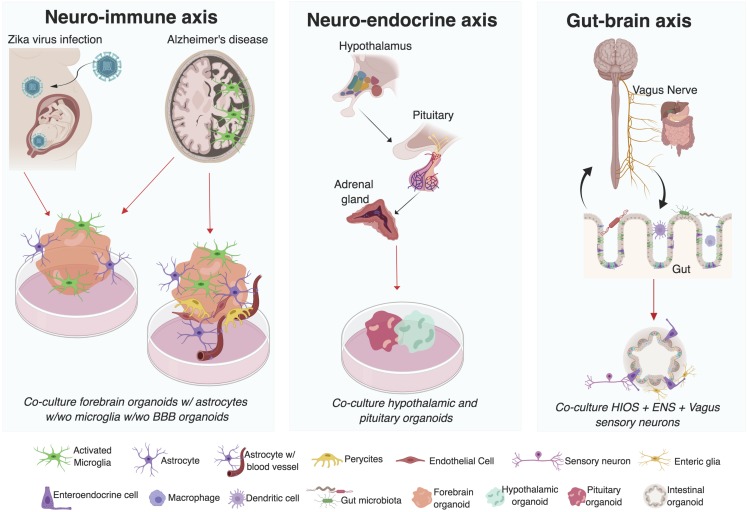
The complex development of the human nervous system has been traditionally studied using a combination of animal models, human post-mortem brain tissue, and human genetics studies. However, there has been a lack of experimental human cellular models that would allow for a more precise elucidation of the intricate dynamics of early human brain development. The development of stem cell technologies, both embryonic and induced pluripotent stem cells (iPSCs), has given neuroscientists access to the previously inaccessible early stages of human brain development. In particular, the recent development of three-dimensional culturing methodologies provides a platform to study the differentiation of stem cells in both normal development and disease states in a more like context. Three-dimensional neural models or cerebral organoids possess an innate advantage over two-dimensional neural cultures as they can recapitulate tissue organization and cell type diversity that resemble the developing brain. Brain organoids also provide the exciting opportunity to model the integration of different brain regions . Furthermore, recent advances in the differentiation of non-neuronal tissue from stem cells provides the opportunity to study the interaction between the developing nervous system and other non-neuronal systems that impact neuronal function. In this review, we discuss the potential and limitations of the organoid system to study neurological diseases that arise in the neuroendocrine and the enteric nervous system or from interactions with the immune system.

摘要

传统上,人类神经系统的复杂发育是通过动物模型、人类尸检脑组织和人类遗传学研究相结合的方式进行研究的。然而,一直缺乏实验性的人类细胞模型,无法更精确地阐明人类早期大脑发育的复杂动态。干细胞技术的发展,包括胚胎干细胞和诱导多能干细胞(iPSC),使神经科学家能够接触到以前无法触及的人类大脑发育早期阶段。特别是,三维培养方法的最新发展提供了一个平台,以便在更接近真实的环境中研究干细胞在正常发育和疾病状态下的分化。三维神经模型或脑类器官相对于二维神经培养具有先天优势,因为它们可以重现类似于发育中大脑的组织结构和细胞类型多样性。脑类器官还为模拟不同脑区的整合提供了令人兴奋的机会。此外,干细胞分化为非神经组织的最新进展提供了机会,来研究发育中的神经系统与影响神经元功能的其他非神经系统之间的相互作用。在这篇综述中,我们讨论了类器官系统在研究神经内分泌和肠神经系统中出现的神经系统疾病或免疫系统相互作用引起的神经系统疾病方面的潜力和局限性。
https://cdn.ncbi.nlm.nih.gov/pmc/blobs/a468/6598414/a5fc1c749b85/fnins-13-00582-g001.jpg

相似文献

1
All Together Now: Modeling the Interaction of Neural With Non-neural Systems Using Organoid Models.现在齐聚一堂:使用类器官模型模拟神经系统与非神经系统的相互作用。
Front Neurosci. 2019 Jun 21;13:582. doi: 10.3389/fnins.2019.00582. eCollection 2019.
2
Advances in Central Nervous System Organoids: A Focus on Organoid-Based Models for Motor Neuron Disease.中枢神经系统类器官的研究进展:聚焦基于类器官的运动神经元疾病模型。
Tissue Eng Part C Methods. 2021 Mar;27(3):213-224. doi: 10.1089/ten.TEC.2020.0337. Epub 2021 Mar 3.
3
Human Cytomegalovirus Compromises Development of Cerebral Organoids.人类巨细胞病毒损害脑类器官的发育。
J Virol. 2019 Aug 13;93(17). doi: 10.1128/JVI.00957-19. Print 2019 Sep 1.
4
What Makes Organoids Good Models of Human Neurogenesis?是什么让类器官成为人类神经发生的良好模型?
Front Neurosci. 2022 Apr 14;16:872794. doi: 10.3389/fnins.2022.872794. eCollection 2022.
5
Generating Neuroimmune Assembloids Using Human Induced Pluripotent Stem Cell (iPSC)-Derived Cortical Organoids and Microglia.利用人诱导多能干细胞(iPSC)衍生的皮质类器官和小胶质细胞生成神经免疫组装体。
Methods Mol Biol. 2024 Jul 9. doi: 10.1007/7651_2024_554.
6
Stem cell-based region-specific brain organoids: Novel models to understand neurodevelopmental defects.基于干细胞的区域特异性脑类器官:理解神经发育缺陷的新型模型。
Birth Defects Res. 2022 Oct 1;114(16):1003-1013. doi: 10.1002/bdr2.2004. Epub 2022 Mar 25.
7
Building the brain from scratch: Engineering region-specific brain organoids from human stem cells to study neural development and disease.从头开始构建大脑:从人类干细胞中工程区域特异性脑类器官以研究神经发育和疾病。
Curr Top Dev Biol. 2021;142:477-530. doi: 10.1016/bs.ctdb.2020.12.011. Epub 2021 Feb 18.
8
Modelling neurodegenerative diseases with 3D brain organoids.用 3D 脑类器官模型来模拟神经退行性疾病。
Biol Rev Camb Philos Soc. 2020 Oct;95(5):1497-1509. doi: 10.1111/brv.12626. Epub 2020 Jun 22.
9
Application of Human Brain Organoids-Opportunities and Challenges in Modeling Human Brain Development and Neurodevelopmental Diseases.人脑类器官的应用——模拟人类大脑发育和神经发育疾病的机遇与挑战
Int J Mol Sci. 2023 Aug 7;24(15):12528. doi: 10.3390/ijms241512528.
10
The Evolving Role of Induced Pluripotent Stem Cells and Cerebral Organoids in Treating and Modeling Neurosurgical Diseases.诱导多能干细胞和脑类器官在神经外科学疾病治疗和建模中的不断演变的角色。
World Neurosurg. 2021 Nov;155:171-179. doi: 10.1016/j.wneu.2021.08.081. Epub 2021 Aug 25.

引用本文的文献

1
Assembloid models of cell-cell interaction to study tissue and disease biology.细胞间相互作用的聚集体模型用于研究组织和疾病生物学。
Cell Stem Cell. 2024 Nov 7;31(11):1563-1573. doi: 10.1016/j.stem.2024.09.017. Epub 2024 Oct 24.
2
Bioprinting of Cells, Organoids and Organs-on-a-Chip Together with Hydrogels Improves Structural and Mechanical Cues.细胞、类器官和芯片上器官与水凝胶的生物打印提高了结构和机械线索。
Cells. 2024 Oct 1;13(19):1638. doi: 10.3390/cells13191638.
3
The reprotoxic adverse side effects of neurogenic and neuroprotective drugs: current use of human organoid modeling as a potential alternative to preclinical models.

本文引用的文献

1
Assembly of Human Stem Cell-Derived Cortical Spheroids and Vascular Spheroids to Model 3-D Brain-like Tissues.人干细胞来源的皮质球体和血管球体的组装,以模拟 3D 类脑组织。
Sci Rep. 2019 Apr 12;9(1):5977. doi: 10.1038/s41598-019-42439-9.
2
Brain organoids as a model system for human neurodevelopment and disease.脑类器官作为人类神经发育和疾病的模型系统。
Semin Cell Dev Biol. 2019 Nov;95:93-97. doi: 10.1016/j.semcdb.2019.03.002. Epub 2019 Mar 23.
3
Flow-enhanced vascularization and maturation of kidney organoids in vitro.体外增强肾类器官的血管生成和成熟。
神经源性和神经保护药物的生殖毒性不良副作用:当前将人体类器官模型用作临床前模型潜在替代方法的应用情况。
Front Pharmacol. 2024 Jun 14;15:1412188. doi: 10.3389/fphar.2024.1412188. eCollection 2024.
4
Modeling of the brain-lung axis using organoids in traumatic brain injury: an updated review.使用类器官对创伤性脑损伤中的脑-肺轴进行建模:最新综述
Cell Biosci. 2024 Jun 22;14(1):83. doi: 10.1186/s13578-024-01252-2.
5
Guidelines for Manufacturing and Application of Organoids: Brain.类器官制造与应用指南:脑
Int J Stem Cells. 2024 May 30;17(2):158-181. doi: 10.15283/ijsc24056. Epub 2024 May 23.
6
The NAD Precursor Nicotinamide Riboside Rescues Mitochondrial Defects and Neuronal Loss in iPSC derived Cortical Organoid of Alpers' Disease.烟酰胺核糖核苷酸作为 NAD 前体可挽救 Alpers 病诱导多能干细胞来源皮质类器官中的线粒体缺陷和神经元丢失。
Int J Biol Sci. 2024 Jan 25;20(4):1194-1217. doi: 10.7150/ijbs.91624. eCollection 2024.
7
The evolution of models of lung fibrosis: promising prospects for drug discovery.肺纤维化模型的演变:药物发现的前景广阔。
Eur Respir Rev. 2024 Jan 17;33(171). doi: 10.1183/16000617.0127-2023. Print 2024 Jan 31.
8
Organoid-on-a-chip: Current challenges, trends, and future scope toward medicine.芯片上的类器官:医学面临的当前挑战、趋势及未来展望
Biomicrofluidics. 2023 Oct 27;17(5):051505. doi: 10.1063/5.0171350. eCollection 2023 Sep.
9
3D Cell Models in Radiobiology: Improving the Predictive Value of In Vitro Research.3D 细胞模型在放射生物学中的应用:提高体外研究的预测价值。
Int J Mol Sci. 2023 Jun 25;24(13):10620. doi: 10.3390/ijms241310620.
10
Infections During Pregnancy and Risks for Adult Psychosis: Findings from the New England Family Study.孕期感染与成人精神病风险:来自新英格兰家庭研究的发现
Curr Top Behav Neurosci. 2023;61:49-69. doi: 10.1007/7854_2022_397.
Nat Methods. 2019 Mar;16(3):255-262. doi: 10.1038/s41592-019-0325-y. Epub 2019 Feb 11.
4
Differentiation and maturation of oligodendrocytes in human three-dimensional neural cultures.人源三维神经培养物中少突胶质细胞的分化和成熟。
Nat Neurosci. 2019 Mar;22(3):484-491. doi: 10.1038/s41593-018-0316-9. Epub 2019 Jan 28.
5
Microglia Increase Inflammatory Responses in iPSC-Derived Human BrainSpheres.小胶质细胞增强诱导多能干细胞衍生的人脑球体中的炎症反应。
Front Microbiol. 2018 Dec 4;9:2766. doi: 10.3389/fmicb.2018.02766. eCollection 2018.
6
Regulation of cell-type-specific transcriptomes by microRNA networks during human brain development.人类大脑发育过程中 miRNA 网络对细胞类型特异性转录组的调控。
Nat Neurosci. 2018 Dec;21(12):1784-1792. doi: 10.1038/s41593-018-0265-3. Epub 2018 Nov 19.
7
Exploring landscapes of brain morphogenesis with organoids.利用类器官探索脑形态发生的景观。
Development. 2018 Nov 19;145(22):dev172049. doi: 10.1242/dev.172049.
8
Congenital brain abnormalities during a Zika virus epidemic in Salvador, Brazil, April 2015 to July 2016.2015 年 4 月至 2016 年 7 月巴西萨尔瓦多寨卡病毒流行期间的先天性脑异常。
Euro Surveill. 2018 Nov;23(45). doi: 10.2807/1560-7917.ES.2018.23.45.1700757.
9
Modeling organ-specific vasculature with organ-on-a-chip devices.利用器官芯片设备对器官特异性脉管系统进行建模。
Nanotechnology. 2019 Jan 11;30(2):024002. doi: 10.1088/1361-6528/aae7de. Epub 2018 Nov 5.
10
Blood-brain-barrier organoids for investigating the permeability of CNS therapeutics.用于研究中枢神经系统治疗药物渗透性的血脑屏障类器官。
Nat Protoc. 2018 Dec;13(12):2827-2843. doi: 10.1038/s41596-018-0066-x.