Wisconsin Veterinary Referral Center, Waukesha, Wisconsin.
Internal Medicine Unit, CHV Fregis, Arcueil, France.
J Vet Intern Med. 2019 Sep;33(5):1880-1891. doi: 10.1111/jvim.15568. Epub 2019 Jul 11.
The pathogenic role of mycoplasmas in the lower respiratory tract (LRT) of dogs is debated, because mycoplasmas can be isolated from both healthy and sick dogs.
To critically assess available data from controlled observational studies on the role of 4 mycoplasma species in LRT disease of dogs.
Systematic review and meta-analyses.
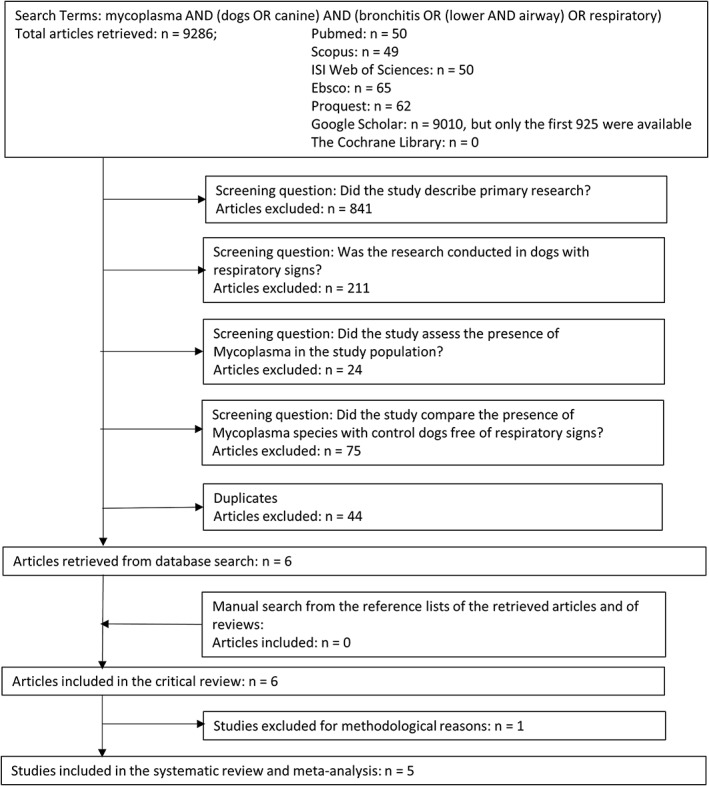
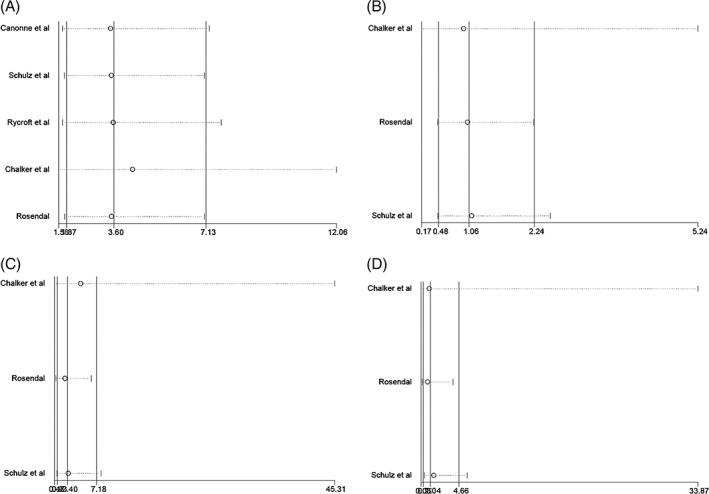
Seven electronic databases were searched for relevant publications. Risk of bias was assessed by the Newcastle-Ottawa Scale. Meta-analyses, stratified by mycoplasmal species, were performed using a random effects Bayesian model with noninformative priors to estimate pooled odds ratios (ORs) and 95% confidence intervals (CIs) for the association between Mycoplasma cynos, Mycoplasma canis, Mycoplasma spumans, and Mycoplasma edwardii and LRT disease in dogs.
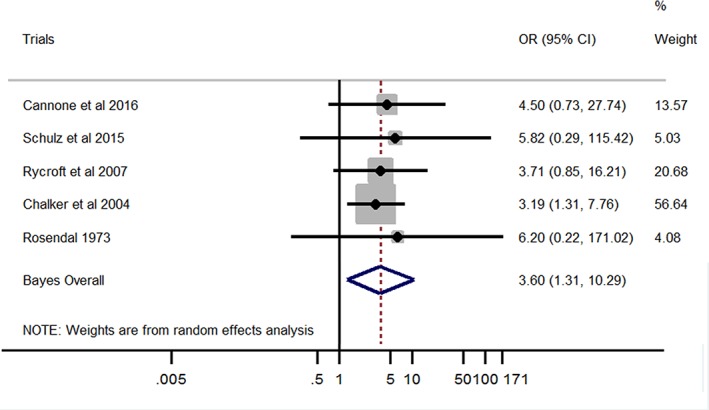
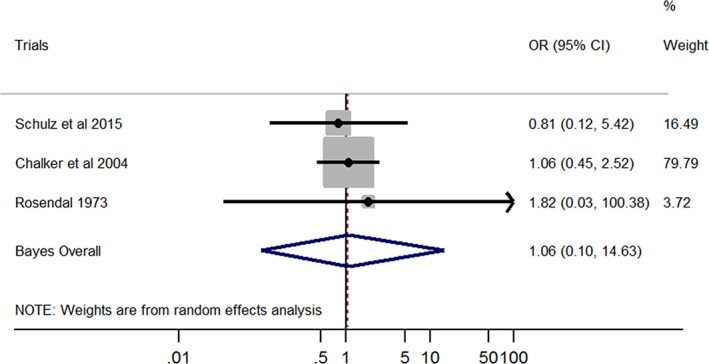
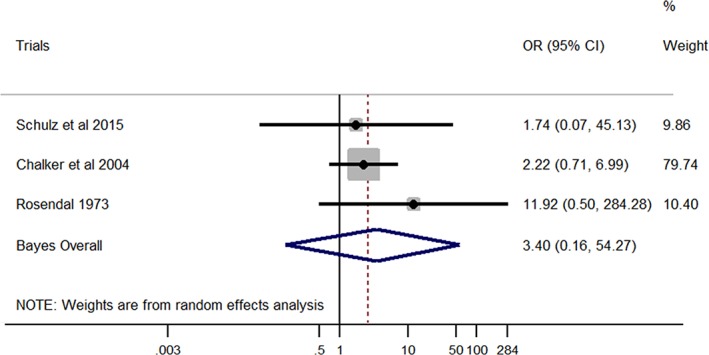
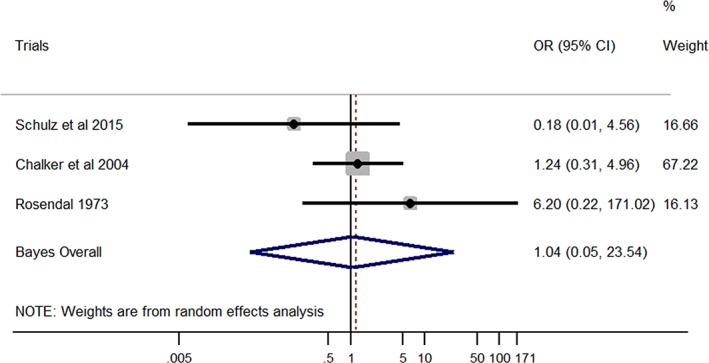
Five studies were included from 1201 references identified. All studies dealt with M. cynos, whereas 3 dealt with the other mycoplasma species. A significant association was found between M. cynos and LRT disease (Bayesian OR, 3.60; CI, 1.31-10.29). Conversely, M. canis, M. spumans, and M. edwardii were not significantly associated with LRT signs (Bayesian OR, 1.06; CI, 0.10-14.63; Bayesian OR, 3.40; CI, 0.16-54.27; and Bayesian OR, 1.04; CI, 0.05-23.54, respectively).
Results support a pathogenic role of M. cynos and a commensal role of M. canis and M. edwardii in LRT in dogs. Although the association was not significant based on the CI, the point estimate of the Bayesian OR was relatively high for M. spumans, making its role less clear. Mycoplasma cynos-specific polymerase chain reaction should be considered on samples from dogs with LRT.
支原体在犬下呼吸道(LRT)中的致病作用存在争议,因为支原体既可以从健康犬中分离出来,也可以从患病犬中分离出来。
批判性评估关于 4 种支原体物种在犬 LRT 疾病中的作用的对照观察性研究的现有数据。
系统评价和荟萃分析。
检索了 7 个电子数据库以查找相关出版物。使用纽卡斯尔-渥太华量表评估偏倚风险。使用具有非信息先验的随机效应贝叶斯模型对荟萃分析进行分层,以估计犬支原体、犬支原体、支原体和支原体与 LRT 疾病之间关联的汇总优势比(OR)和 95%置信区间(CI)。
从 1201 篇参考文献中确定了 5 项研究。所有研究都涉及 M. cynos,而 3 项研究涉及其他支原体物种。发现 M. cynos 与 LRT 疾病之间存在显著关联(贝叶斯 OR,3.60;CI,1.31-10.29)。相反,M. canis、M. spumans 和 M. edwardii 与 LRT 体征无显著关联(贝叶斯 OR,1.06;CI,0.10-14.63;贝叶斯 OR,3.40;CI,0.16-54.27;贝叶斯 OR,1.04;CI,0.05-23.54)。
结果支持 M. cynos 在犬 LRT 中具有致病性作用,而 M. canis 和 M. edwardii 具有共生作用。尽管基于 CI,贝叶斯 OR 的点估计值相对较高,但 M. spumans 的关联并不显著,因此其作用不太明确。应考虑在患有 LRT 的犬的样本中进行支原体特异性聚合酶链反应。