Department of Psychiatry, SMG-SNU Boramae Medical Center, Seoul, South Korea.
Department of Clinical Medical Sciences, Seoul National University College of Medicine, Seoul, South Korea.
Addict Biol. 2020 Jul;25(4):e12805. doi: 10.1111/adb.12805. Epub 2019 Jul 12.
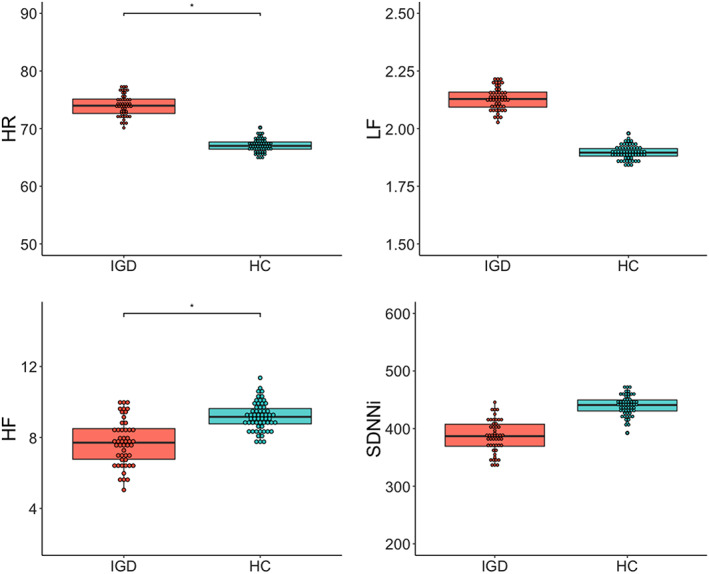
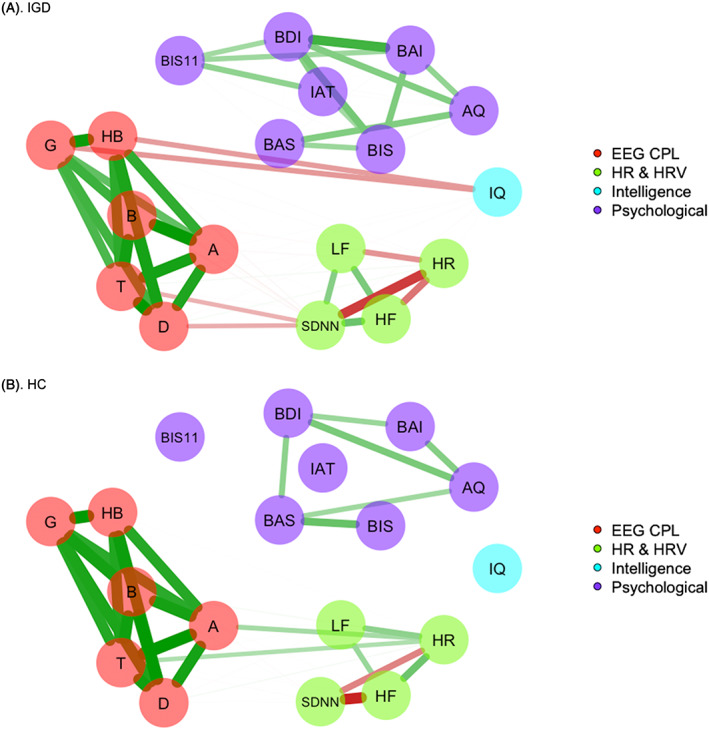
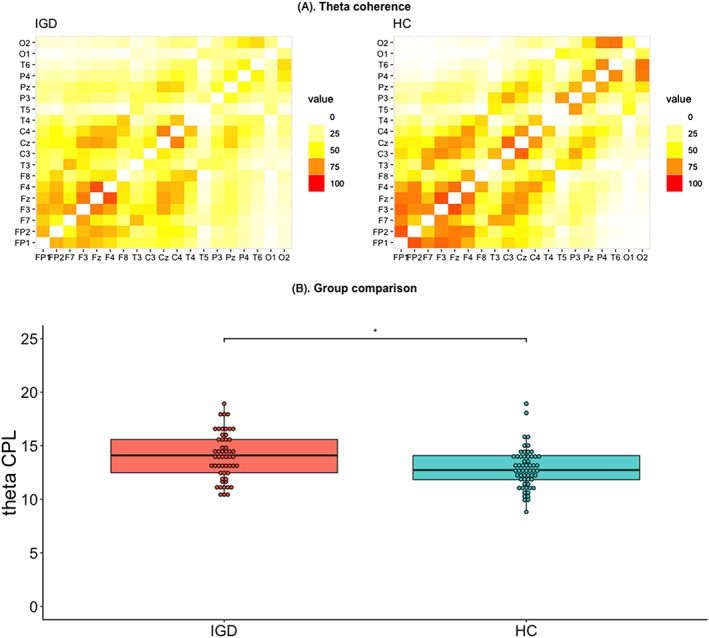
Heart rate variability (HRV) can be used to represent the regulatory adaptive system and is a proxy for neurovisceral integration. Consistent with the view that, like other addictions, Internet gaming disorder (IGD) involves disrupted regulatory function, the present study hypothesized that IGD patients would show (a) decreased HRV, (b) ineffective functional neural connectivity, and (c) differential patterns of association between HRV and functional neural connectivity relative to healthy controls (HCs). The present study included 111 young adults (53 IGD patients and 58 age- and sex-matched HCs) who underwent simultaneous recordings with an electrocardiogram and electroencephalogram during a resting state. Heart rate (HR), HRV, and functional neural connectivity were calculated using the graph theory approach. Compared with the HCs, the IGD patients exhibited elevated HR and decreased HRV based on the high frequency (HF), which reflects suppression of parasympathetic and/or vagal tone. The IGD patients also exhibited a heightened theta band characteristic path length (CPL) compared with HCs, indicating decreased efficacy of the functional network. Furthermore, IGD patients exhibited negative correlations between the standard deviation of the normal-to-normal interval index (SDNNi) and theta and delta CPL values, which were not observed in HCs. In conclusion, the present findings suggest that IGD patients might have maladaptive brain-body integration features involving disruptions of the autonomic nervous system and brain function.
心率变异性(HRV)可用于表示调节适应系统,是神经内脏整合的代理指标。与其他成瘾一样,网络成瘾障碍(IGD)涉及调节功能障碍的观点一致,本研究假设 IGD 患者将表现出(a)HRV 降低,(b)功能性神经连接无效,以及(c)HRV 与功能性神经连接之间的关联模式与健康对照(HCs)不同。本研究包括 111 名年轻成年人(53 名 IGD 患者和 58 名年龄和性别匹配的 HCs),他们在静息状态下同时进行心电图和脑电图记录。使用图论方法计算心率(HR)、HRV 和功能性神经连接。与 HCs 相比,IGD 患者的 HR 升高,高频(HF)的 HRV 降低,这反映了副交感神经和/或迷走神经张力的抑制。与 HCs 相比,IGD 患者还表现出较高的θ波段特征路径长度(CPL),表明功能网络的效能降低。此外,IGD 患者表现出正常到正常间隔指数(SDNNi)的标准差与θ和δ CPL 值之间的负相关,而 HCs 中则没有观察到这种相关性。总之,本研究结果表明,IGD 患者可能具有涉及自主神经系统和大脑功能障碍的适应性脑-体整合特征。