Sramka Martin, Slovak Martin, Tuckova Jana, Stodulka Pavel
Department of Circuit Theory/Faculty of Electrical Engineering, Czech Technical University in Prague, Prague, Czech Republic.
Research and Development Department, Gemini Eye Clinic, Zlin, Czech Republic.
PeerJ. 2019 Jul 2;7:e7202. doi: 10.7717/peerj.7202. eCollection 2019.
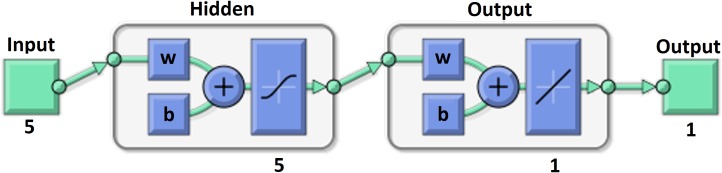
To evaluate the potential of the Support Vector Machine Regression model (SVM-RM) and Multilayer Neural Network Ensemble model (MLNN-EM) to improve the intraocular lens (IOL) power calculation for clinical workflow.
Current IOL power calculation methods are limited in their accuracy with the possibility of decreased accuracy especially in eyes with an unusual ocular dimension. In case of an improperly calculated power of the IOL in cataract or refractive lens replacement surgery there is a risk of re-operation or further refractive correction. This may create potential complications and discomfort for the patient.
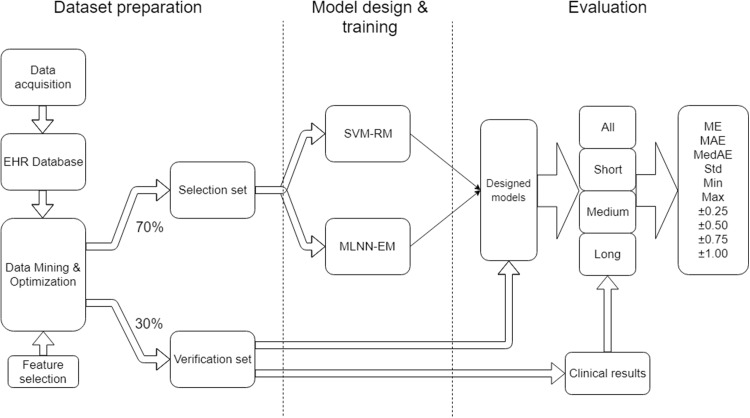
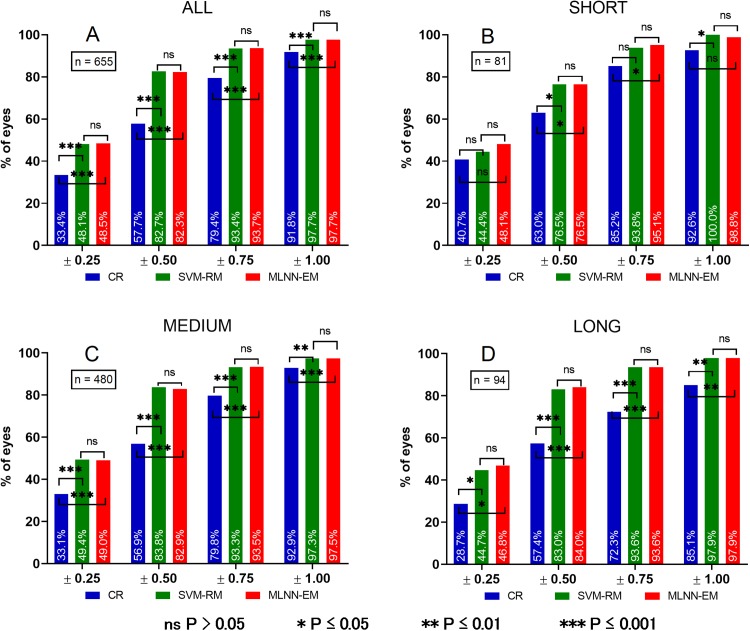
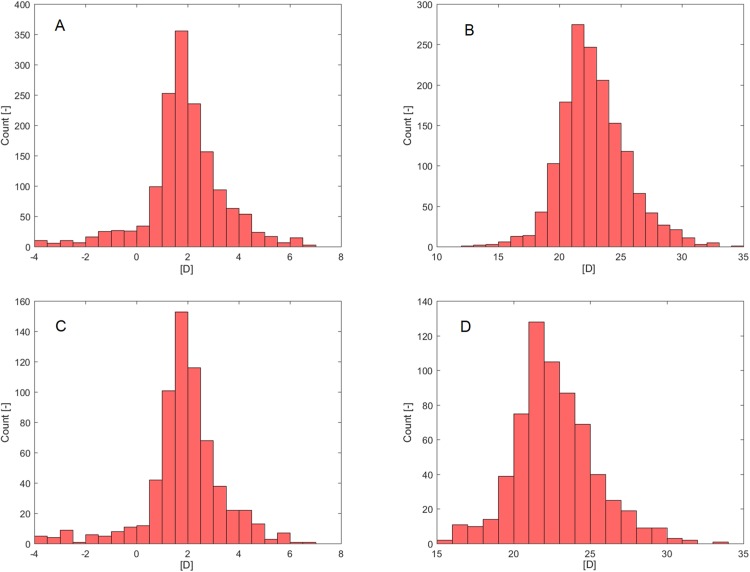
A dataset containing information about 2,194 eyes was obtained using data mining process from the Electronic Health Record (EHR) system database of the Gemini Eye Clinic. The dataset was optimized and split into the selection set (used in the design for models and training), and the verification set (used in the evaluation). The set of mean prediction errors (PEs) and the distribution of predicted refractive errors were evaluated for both models and clinical results (CR).
Both models performed significantly better for the majority of the evaluated parameters compared with the CR. There was no significant difference between both evaluated models. In the ±0.50 D PE category both SVM-RM and MLNN-EM were slightly better than the Barrett Universal II formula, which is often presented as the most accurate calculation formula.
In comparison to the current clinical method, both SVM-RM and MLNN-EM have achieved significantly better results in IOL calculations and therefore have a strong potential to improve clinical cataract refractive outcomes.
评估支持向量机回归模型(SVM-RM)和多层神经网络集成模型(MLNN-EM)在改善临床工作流程中人工晶状体(IOL)屈光力计算方面的潜力。
当前的IOL屈光力计算方法在准确性方面存在局限性,尤其是在眼轴尺寸异常的眼中,准确性可能会降低。在白内障或屈光性晶状体置换手术中,如果IOL屈光力计算不当,存在再次手术或进一步屈光矫正的风险。这可能给患者带来潜在的并发症和不适。
通过数据挖掘过程,从Gemini眼科诊所的电子健康记录(EHR)系统数据库中获取了一个包含2194只眼睛信息的数据集。对该数据集进行优化,并分为选择集(用于模型设计和训练)和验证集(用于评估)。评估了两个模型和临床结果(CR)的平均预测误差(PE)集以及预测屈光不正的分布情况。
与CR相比,两个模型在大多数评估参数上的表现均明显更好。两个评估模型之间没有显著差异。在±0.50 D PE类别中,SVM-RM和MLNN-EM均略优于通常被认为是最准确计算公式的Barrett Universal II公式。
与当前临床方法相比,SVM-RM和MLNN-EM在IOL计算中均取得了明显更好的结果,因此在改善临床白内障屈光手术结果方面具有很大潜力。