Danish Centre for Studies on Research and Research Policy, Aarhus University, Aarhus, Denmark.
Department of Radiation Oncology, University of Michigan, Ann Arbor, United States.
Elife. 2019 Jul 15;8:e45374. doi: 10.7554/eLife.45374.
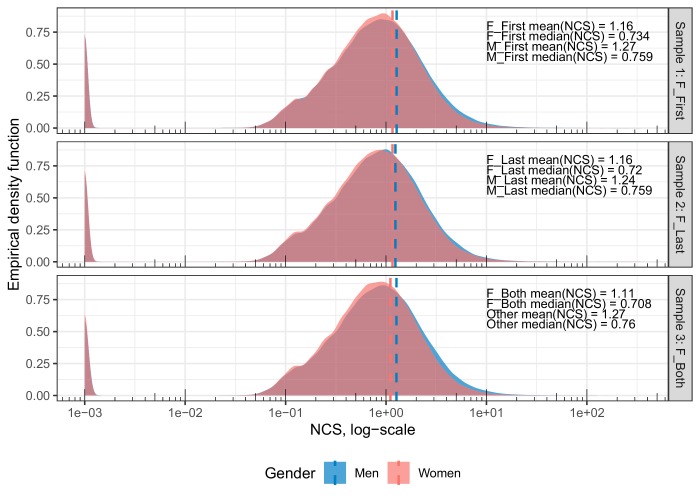
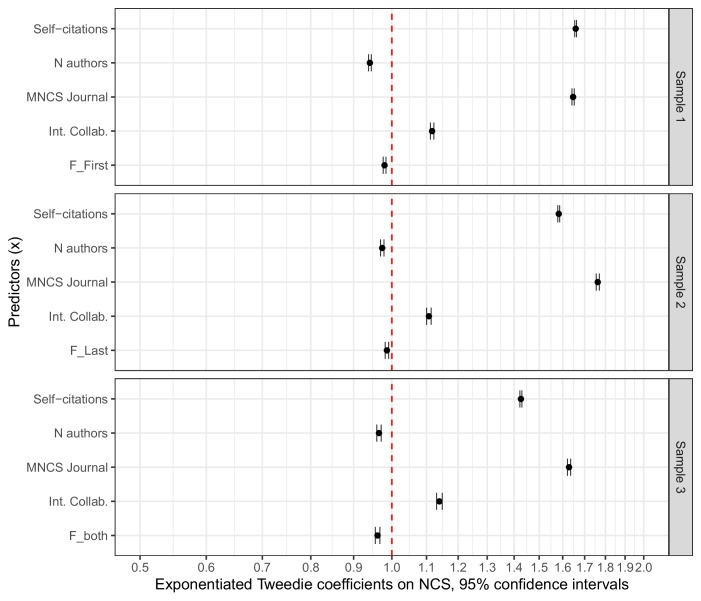
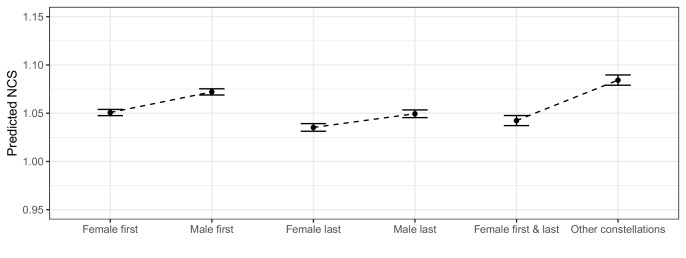
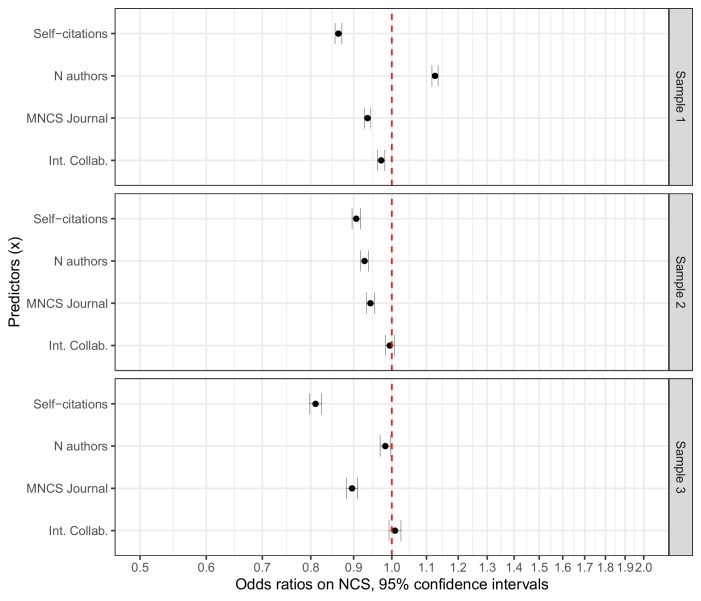
A number of studies suggest that scientific papers with women in leading-author positions attract fewer citations than those with men in leading-author positions. We report the results of a matched case-control study of 1,269,542 papers in selected areas of medicine published between 2008 and 2014. We find that papers with female authors are, on average, cited between 6.5 and 12.6% less than papers with male authors. However, the standardized mean differences are very small, and the percentage overlaps between the distributions for male and female authors are extensive. Adjusting for self-citations, number of authors, international collaboration and journal prestige, we find near-identical per-paper citation impact for women and men in first and last author positions, with self-citations and journal prestige accounting for most of the small average differences. Our study demonstrates the importance of focusing greater attention on within-group variability and between-group overlap of distributions when interpreting and reporting results of gender-based comparisons of citation impact.
许多研究表明,处于第一作者位置的女性撰写的科学论文比处于第一作者位置的男性撰写的论文获得的引用量更少。我们报告了一项针对特定医学领域 2008 年至 2014 年间发表的 1269542 篇论文的匹配病例对照研究的结果。我们发现,与男性作者的论文相比,女性作者的论文平均被引用的次数少 6.5%至 12.6%。然而,标准化平均差异非常小,而且男性和女性作者的分布之间的百分比重叠范围很广。在调整了自引、作者数量、国际合作和期刊声望后,我们发现女性和男性在第一作者和最后作者位置的每篇论文的引用影响力几乎相同,自引和期刊声望解释了平均差异较小的主要原因。我们的研究表明,在解释和报告基于性别的引用影响力比较结果时,关注组内变异性和组间分布的重叠性非常重要。