Looney David P, Long Edwin T, Potter Adam W, Xu Xiaojiang, Friedl Karl E, Hoyt Reed W, Chalmers Christopher R, Buller Mark J, Florian John P
Biophysics and Biomedical Modeling Division, United States Army Research Institute of Environmental Medicine (USARIEM), Natick, Massachusetts, USA.
Navy Experimental Diving Unit (NEDU), Panama City, Florida, USA.
Temperature (Austin). 2019 Apr 13;6(2):150-157. doi: 10.1080/23328940.2019.1599182. eCollection 2019.
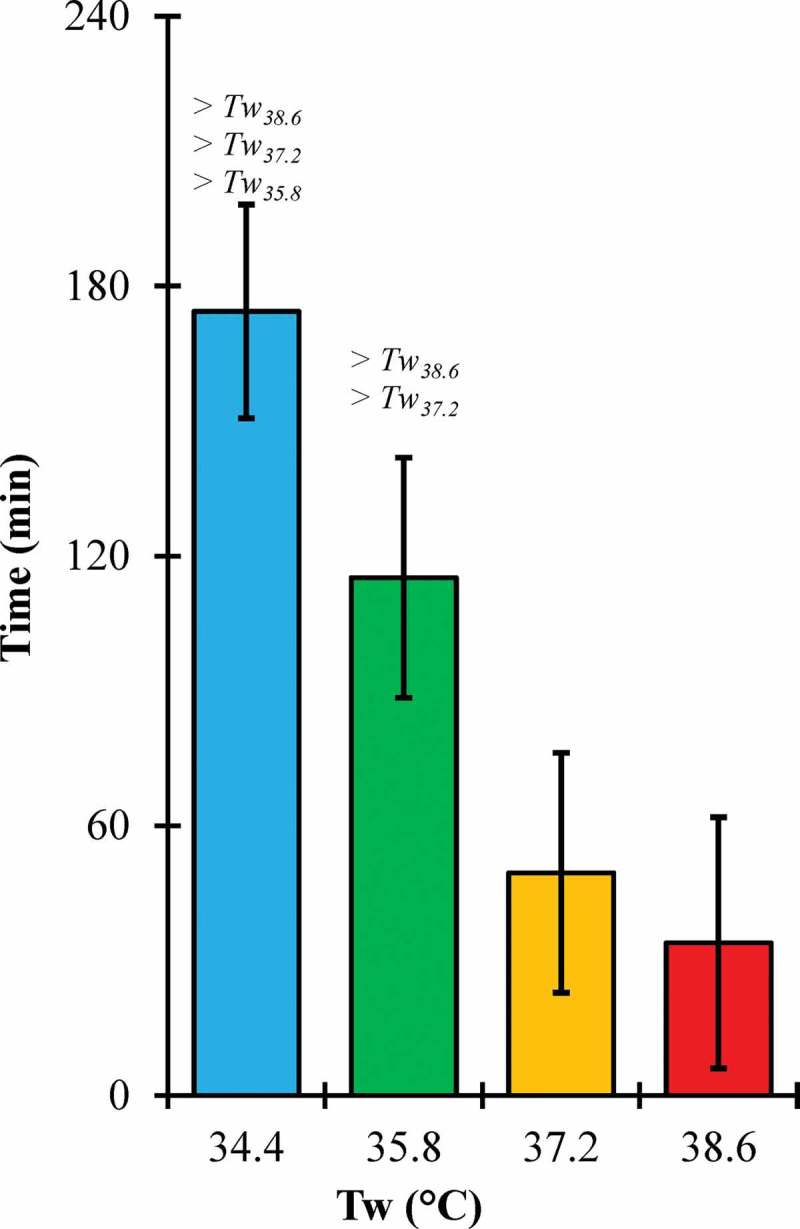
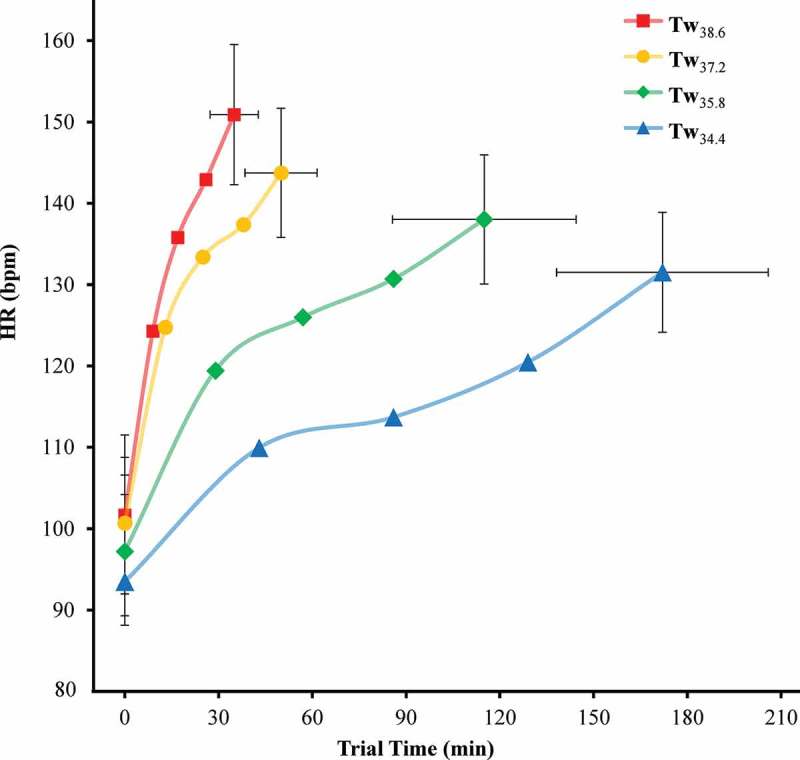
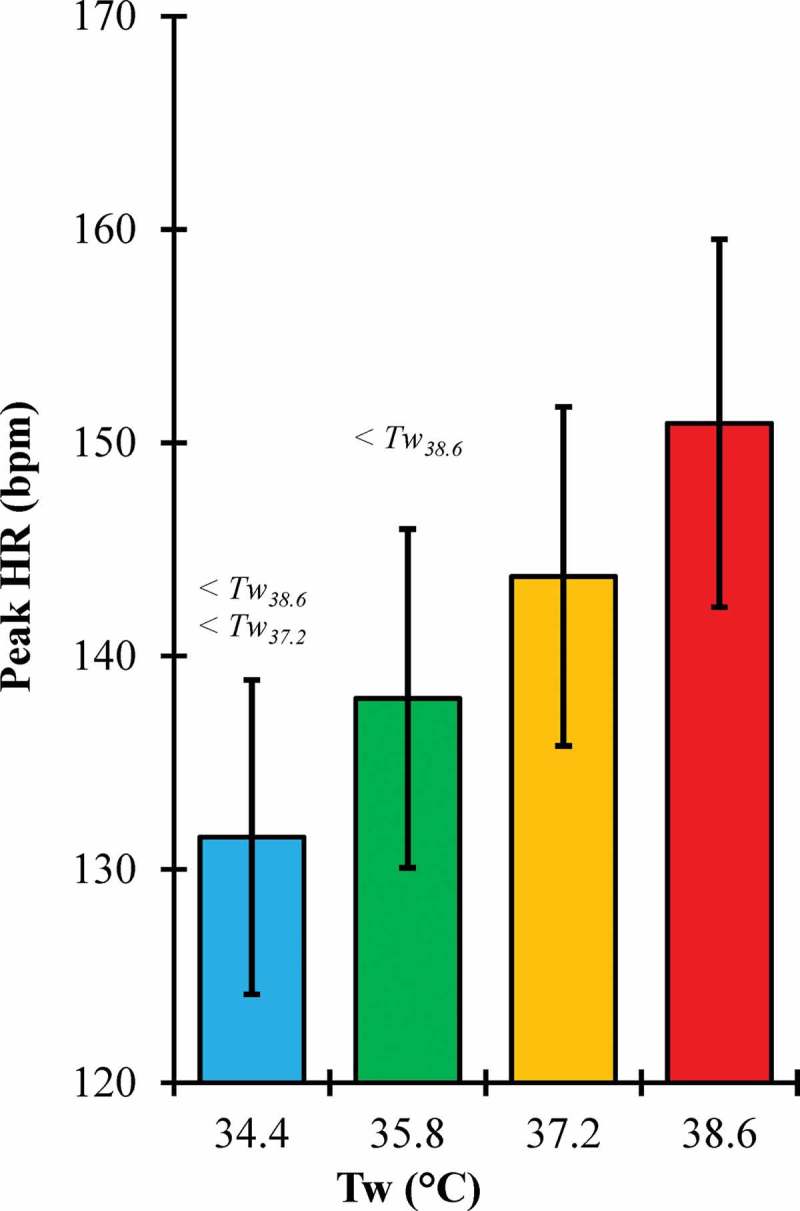
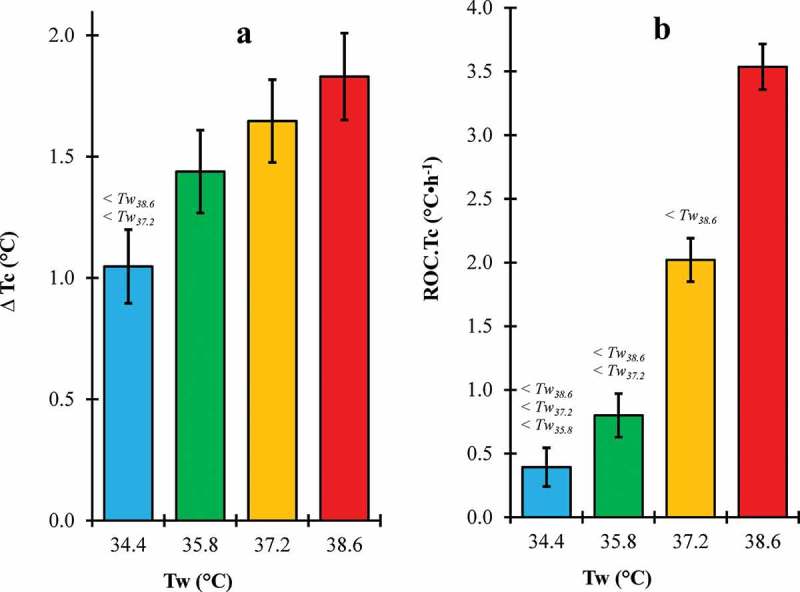
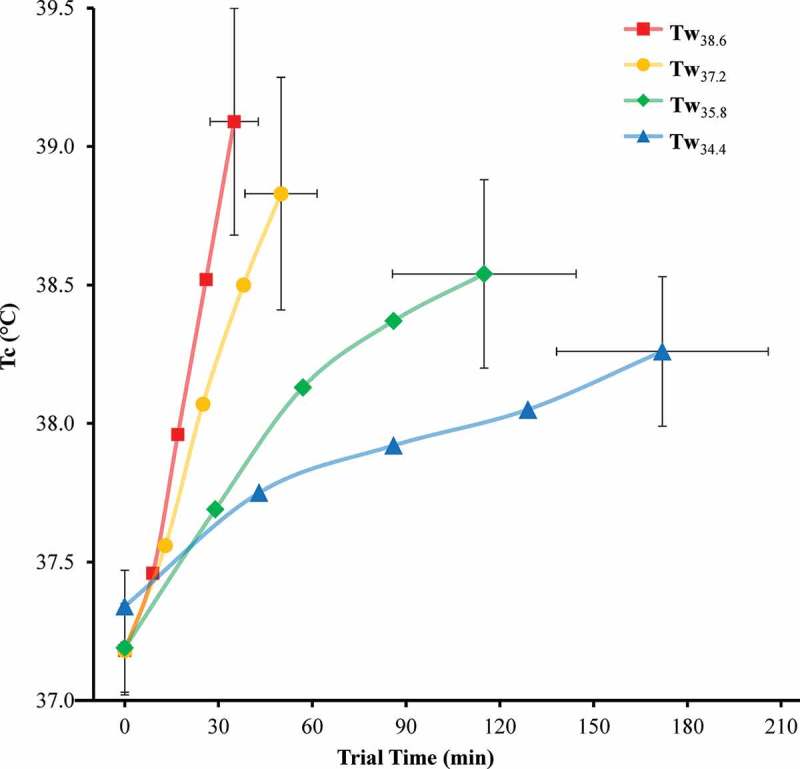
Physiological responses to work in cold water have been well studied but little is known about the effects of exercise in warm water; an overlooked but critical issue for certain military, scientific, recreational, and professional diving operations. This investigation examined core temperature responses to fatiguing, fully-immersed exercise in extremely warm waters. Twenty-one male U.S. Navy divers (body mass, 87.3 ± 12.3 kg) were monitored during rest and fatiguing exercise while fully-immersed in four different water temperatures (Tw): 34.4, 35.8, 37.2, and 38.6°C (Tw, Tw, Tw, and Tw respectively). Participants exercised on an underwater cycle ergometer until volitional fatigue or core temperature limits were reached. Core body temperature and heart rate were monitored continuously. Trial performance time decreased significantly as water temperature increased (Tw, 174 ± 12 min; Tw, 115 ± 13 min; Tw, 50 ± 13 min; Tw, 34 ± 14 min). Peak core body temperature during work was significantly lower in Tw water (38.31 ± 0.49°C) than in warmer temperatures (Tw, 38.60 ± 0.55°C; Tw, 38.82 ± 0.76°C; Tw, 38.97 ± 0.65°C). Core body temperature rate of change increased significantly with warmer water temperature (Tw, 0.39 ± 0.28°C·h; Tw, 0.80 ± 0.19°C·h; Tw, 2.02 ± 0.31°C·h; Tw, 3.54 ± 0.41°C·h). Physically active divers risk severe hyperthermia in warmer waters. Increases in water temperature drastically increase the rate of core body temperature rise during work in warm water. New predictive models for core temperature based on workload and duration of warm water exposure are needed to ensure warm water diving safety.
人们对在冷水中工作的生理反应已经进行了充分研究,但对于在温水中运动的影响却知之甚少;这是某些军事、科学、休闲和专业潜水作业中一个被忽视但至关重要的问题。本研究调查了在极温暖的水中进行疲劳性全身浸入式运动时的核心体温反应。21名美国海军男性潜水员(体重87.3±12.3千克)在完全浸入四种不同水温(分别为34.4、35.8、37.2和38.6°C,即Tw1、Tw2、Tw3和Tw4)的情况下,于休息和疲劳运动期间接受监测。参与者在水下自行车测力计上运动,直至达到自愿疲劳或核心体温极限。持续监测核心体温和心率。随着水温升高,试验表现时间显著缩短(Tw1为174±12分钟;Tw2为115±13分钟;Tw3为50±13分钟;Tw4为34±14分钟)。在Tw1水温下工作期间的核心体温峰值(38.31±0.49°C)显著低于较温暖水温(Tw2为38.60±0.55°C;Tw3为38.82±0.76°C;Tw4为38.97±0.65°C)。随着水温升高,核心体温变化率显著增加(Tw1为0.39±0.28°C·小时;Tw2为0.80±0.19°C·小时;Tw3为2.02±0.31°C·小时;Tw4为3.54±0.41°C·小时)。在较温暖的水中,活跃的潜水员有发生严重体温过高的风险。水温升高会大幅增加在温水中工作时核心体温上升的速率。需要基于工作量和温水暴露持续时间的新的核心体温预测模型,以确保温水潜水安全。