Neuromodulation Center, Spaulding Rehabilitation Hospital, Harvard Medical School, Boston, USA.
Coma Science Group, GIGA-Consciousness, University of Liege, Liege, Belgium.
J Neuroeng Rehabil. 2019 Jul 17;16(1):90. doi: 10.1186/s12984-019-0561-5.
Transcranial direct current stimulation (tDCS) has been investigated over the years due to its short and also long-term effects on cortical excitability and neuroplasticity. Although its mechanisms to improve motor function are not fully understood, this technique has been suggested as an alternative therapeutic method for motor rehabilitation, especially those with motor function deficits. When applied to the primary motor cortex, tDCS has shown to improve motor function in healthy individuals, as well as in patients with neurological disorders. Based on its potential effects on motor recovery, identifying optimal targets for tDCS stimulation is essential to improve knowledge regarding neuromodulation as well as to advance the use of tDCS in clinical motor rehabilitation.
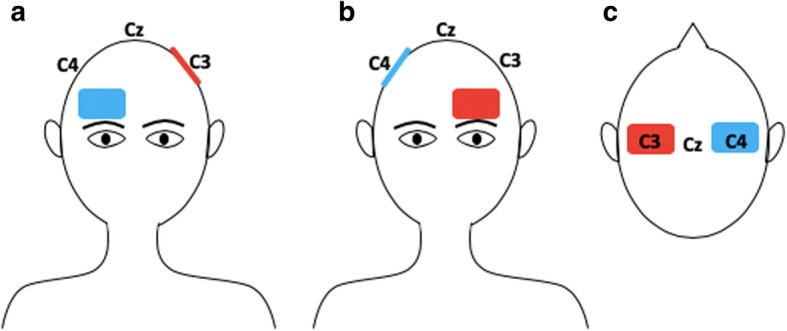
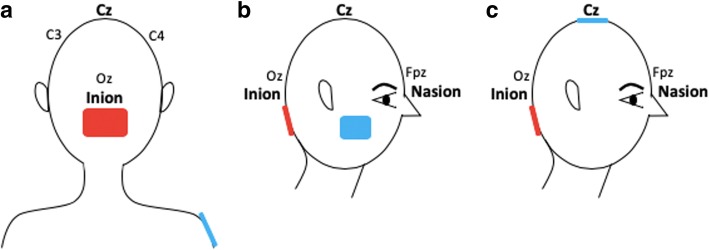
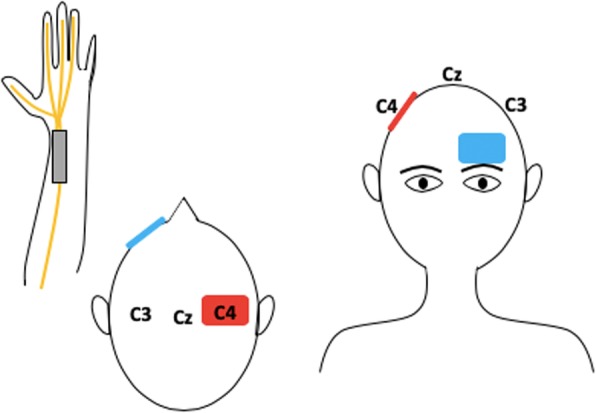
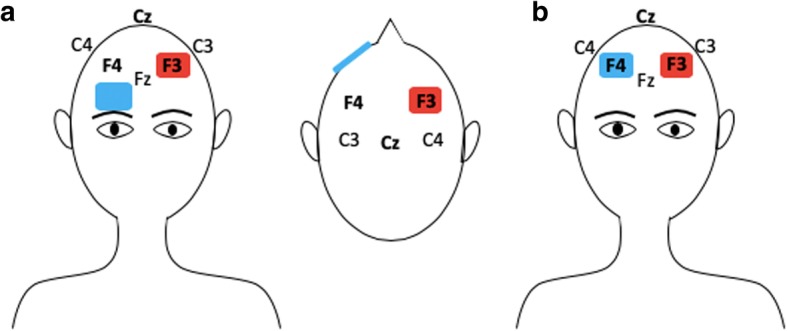
Therefore, this review discusses the existing evidence on the application of four different tDCS montages to promote and enhance motor rehabilitation: (1) anodal ipsilesional and cathodal contralesional primary motor cortex tDCS, (2) combination of central tDCS and peripheral electrical stimulation, (3) prefrontal tDCS montage and (4) cerebellar tDCS stimulation. Although there is a significant amount of data testing primary motor cortex tDCS for motor recovery, other targets and strategies have not been sufficiently tested. This review then presents the potential mechanisms and available evidence of these other tDCS strategies to promote motor recovery.
In spite of the large amount of data showing that tDCS is a promising adjuvant tool for motor rehabilitation, the diversity of parameters, associated with different characteristics of the clinical populations, has generated studies with heterogeneous methodologies and controversial results. The ideal montage for motor rehabilitation should be based on a patient-tailored approach that takes into account aspects related to the safety of the technique and the quality of the available evidence.
由于经颅直流电刺激 (tDCS) 对皮质兴奋性和神经可塑性具有短期和长期影响,因此近年来对其进行了研究。尽管其改善运动功能的机制尚未完全阐明,但该技术已被提议作为运动康复的替代治疗方法,尤其是那些存在运动功能障碍的患者。当应用于初级运动皮层时,tDCS 已被证明可改善健康个体以及神经障碍患者的运动功能。基于其对运动恢复的潜在影响,确定 tDCS 刺激的最佳靶标对于提高神经调节知识以及将 tDCS 推进临床运动康复应用至关重要。
因此,本综述讨论了应用四种不同 tDCS 模式促进和增强运动康复的现有证据:(1)同侧阳极和对侧阴极初级运动皮层 tDCS;(2)中央 tDCS 与外周电刺激相结合;(3)前额叶 tDCS 模式;(4)小脑 tDCS 刺激。尽管有大量数据测试初级运动皮层 tDCS 对运动恢复的作用,但其他靶标和策略尚未得到充分测试。然后,本综述介绍了这些其他 tDCS 策略促进运动恢复的潜在机制和现有证据。
尽管大量数据表明 tDCS 是运动康复有前途的辅助工具,但参数的多样性与临床人群的不同特征相关,导致研究具有异质性的方法和有争议的结果。运动康复的理想模式应基于个体化的方法,考虑到与技术安全性和现有证据质量相关的方面。