Miklavčič Višnjevec Ana, Baruca Arbeiter Alenka, Hladnik Matjaž, Ota Ajda, Skrt Mihaela, Butinar Bojan, Nečemer Marijan, Krapac Marin, Ban Dean, Bučar-Miklavčič Milena, Poklar Ulrih Nataša, Bandelj Dunja
Faculty of Mathematics, Natural Sciences and Information Technologies, University of Primorska, Glagoljaška 8, 6000 Koper, Slovenia.
Department of Food Science and Technology, Biotechnical Faculty, Jamnikarjeva ulica 101, 1000 Ljubljana, Slovenia.
Food Technol Biotechnol. 2019 Mar;57(1):17-28. doi: 10.17113/ftb.57.01.19.5910.
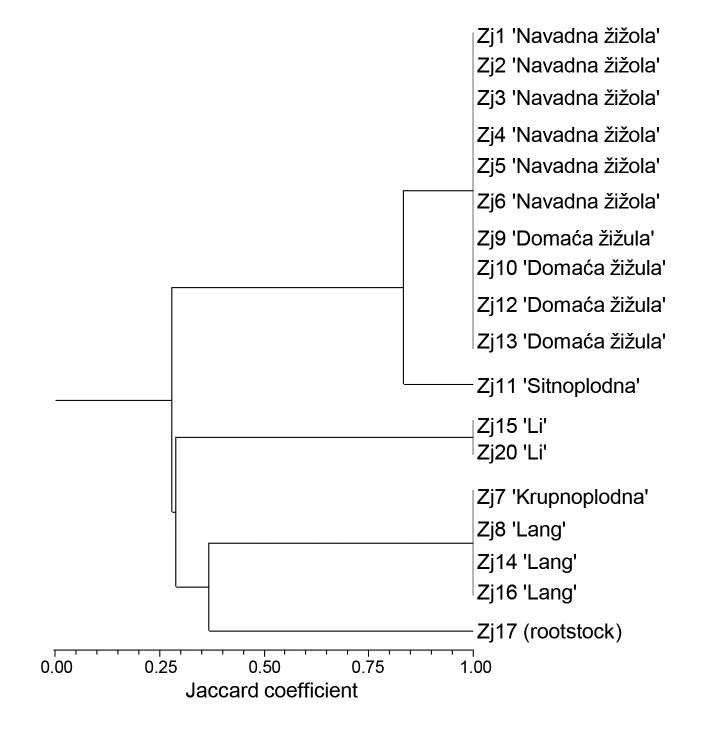
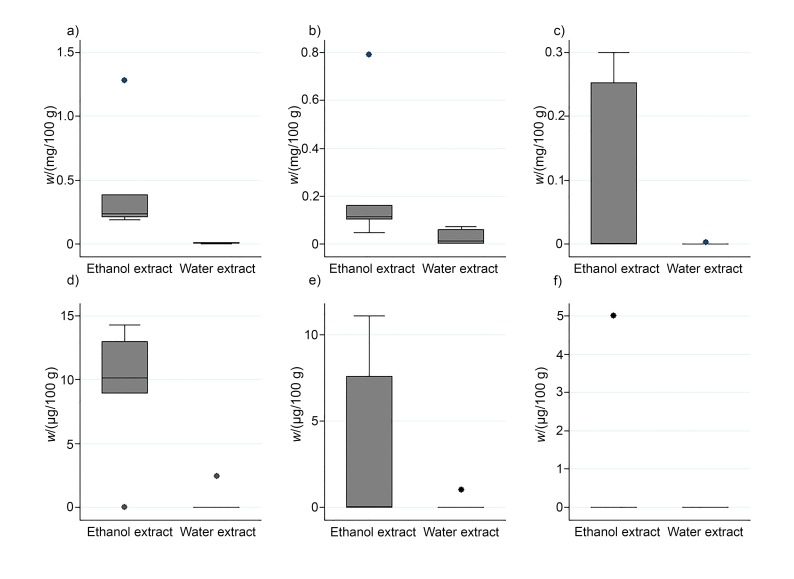
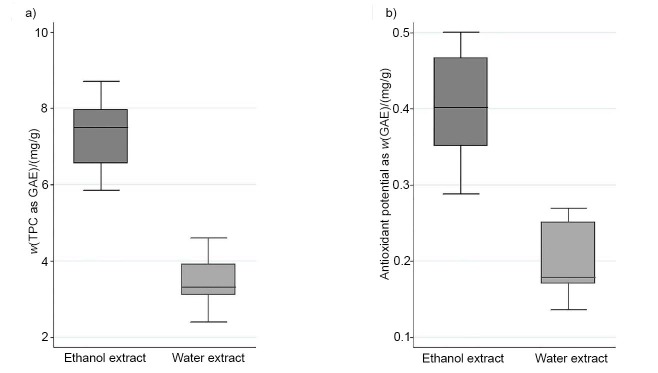
Jujube ( Mill.) has favourable horticultural properties including adaptation to arid conditions, abiotic and biotic stresses, as well as positive impact on human health. The present study describes the characterization of genetic diversity of the germplasm of jujube from the Istrian peninsula, the determination of important chemical compounds, antioxidative properties in relation to antibacterial and antifungal activities of jujube fruit extracts, and the determination of nutritional properties of jujube fruit. The results of the genetic analysis showed that most of the samples from the Istrian peninsula belong to two recently introduced varieties, 'Li' and 'Lang', and the most widespread local variety 'Navadna žižola'. The local variety has smaller fruit than the 'Li' and 'Lang' varieties, with thick and fleshy mesocarp. Chemical analysis indicated that fruits of the local variety contained a valuable source of dietary fibre ((9.7±0.6) g/100 g) and were rich in minerals such as (in g/100 g dry mass): potassium (829±51), calcium (177±11) and phosphorus (129±19). Aqueous extracts showed slight antibacterial activity, while ethanol extracts had higher mass fractions of phenolic compounds (expressed as gallic acid equivalents (GAE), 5.8-8.7 mg/g) than the aqueous extracts, but did not show antimicrobial activity. Compounds other than phenolic compounds in jujube fruit may be more biologically active. Based on the results of these analyses, the local Istrian jujube variety is a promising candidate for cultivation potential.
枣(Mill.)具有良好的园艺特性,包括适应干旱条件、非生物和生物胁迫,以及对人类健康有积极影响。本研究描述了伊斯特拉半岛枣种质的遗传多样性特征、重要化合物的测定、枣果提取物的抗氧化性能及其抗菌和抗真菌活性,以及枣果营养特性的测定。遗传分析结果表明,伊斯特拉半岛的大多数样本属于两个最近引进的品种,即“梨枣”和“郎枣”,以及分布最广的当地品种“纳瓦德纳齐佐拉”。当地品种的果实比“梨枣”和“郎枣”品种小,中果皮厚且肉质。化学分析表明,当地品种的果实含有丰富的膳食纤维((9.7±0.6)g/100g),富含矿物质(以g/100g干质量计):钾(829±51)、钙(177±11)和磷(129±19)。水提取物显示出轻微的抗菌活性,而乙醇提取物的酚类化合物质量分数(以没食子酸当量(GAE)表示,5.8 - 8.7mg/g)高于水提取物,但未显示出抗菌活性。枣果中除酚类化合物外的其他化合物可能具有更高的生物活性。基于这些分析结果,伊斯特拉当地枣品种具有良好的栽培潜力。