Jergens Albert E, Guard Blake C, Redfern Alana, Rossi Giacomo, Mochel Jonathan P, Pilla Rachel, Chandra Lawrance, Seo Yeon-Jung, Steiner Joerg M, Lidbury Jonathan, Allenspach Karin, Suchodolski Jan
Department of Veterinary Clinical Sciences, College of Veterinary Medicine, Iowa State University, Ames, IA, United States.
Gastrointestinal Laboratory, Department of Small Animal Clinical Sciences, College of Veterinary Medicine and Biomedical Sciences, Texas A&M University, College Station, TX, United States.
Front Vet Sci. 2019 Jun 27;6:199. doi: 10.3389/fvets.2019.00199. eCollection 2019.
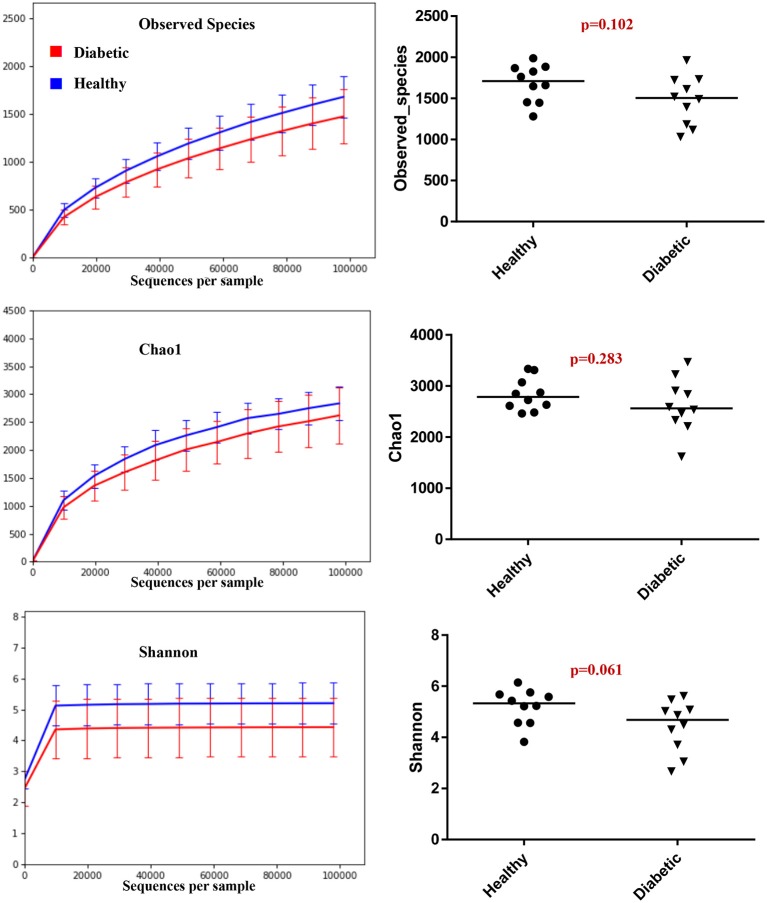
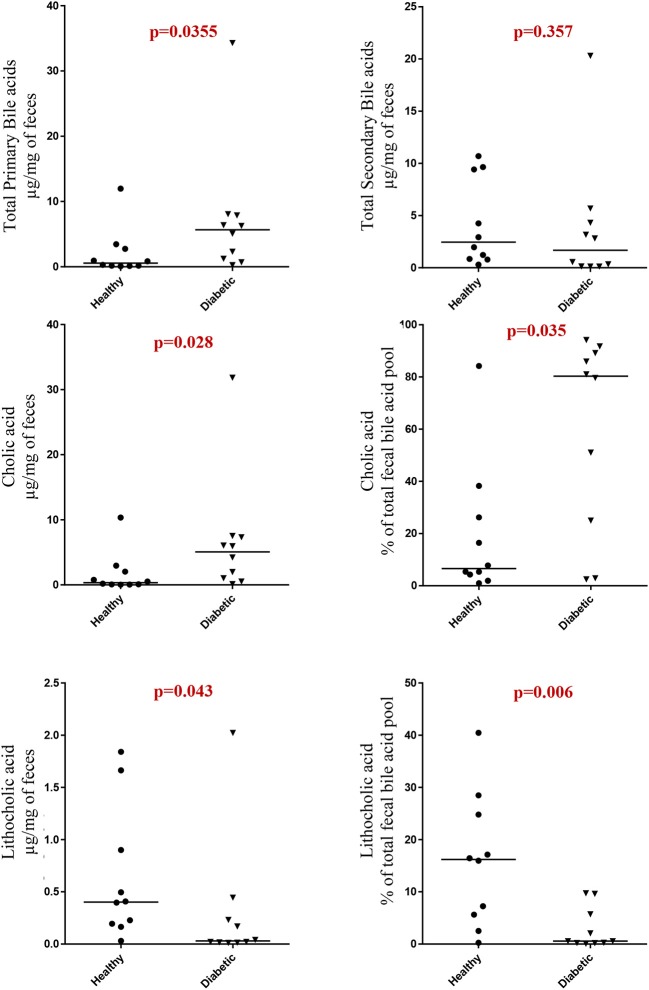
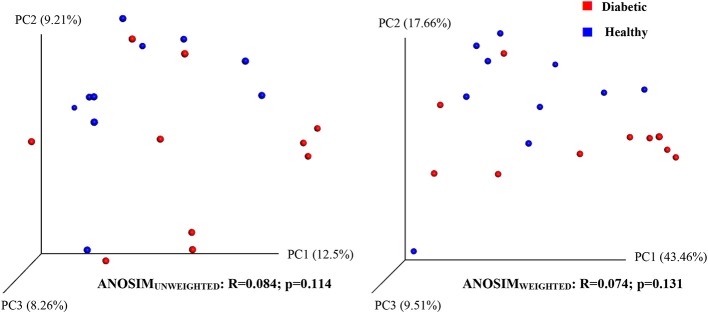
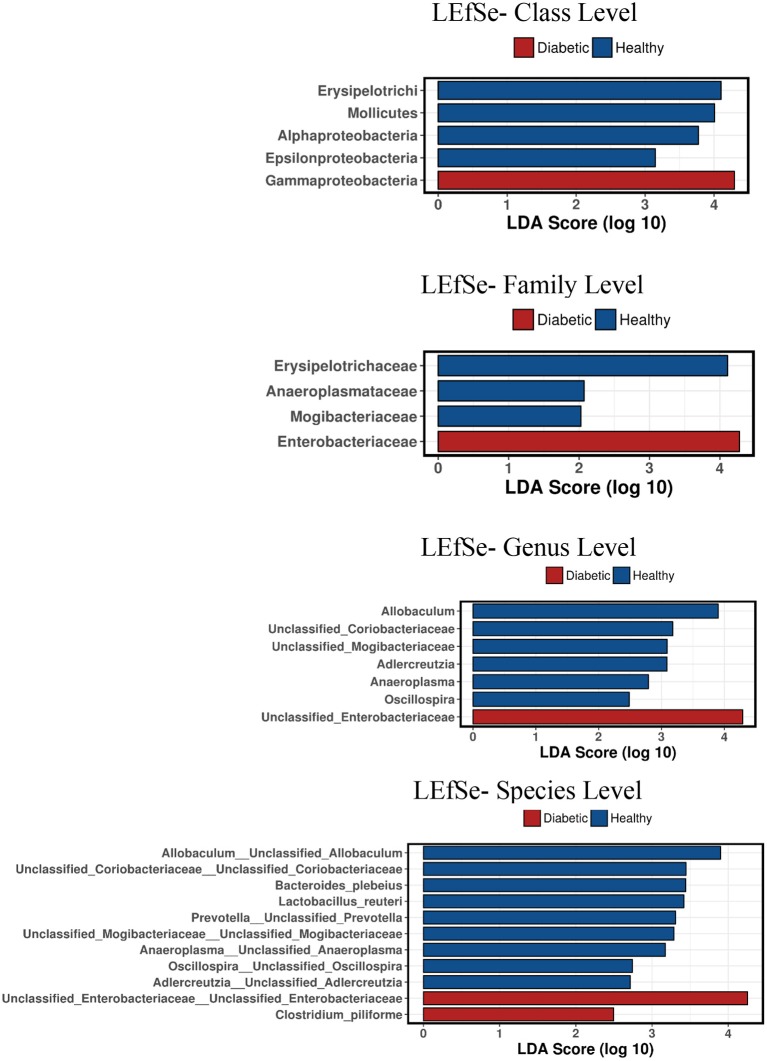
Diabetes mellitus (DM) in humans has recently been associated with altered intestinal microbiota. The consequences of intestinal dysbiosis, such as increased intestinal permeability and altered microbial metabolites, are suspected to contribute to the host inflammatory state and peripheral insulin resistance. Human diabetics have been shown to have changes in bile acid (BA) metabolism which may be detrimental to glycemic control. The purpose of this study was to examine BA metabolism in dogs with naturally-occurring, insulin-dependent DM and to relate these findings to changes in the intestinal microbiota. A prospective observational study of adult dogs with a clinical diagnosis of DM ( = 10) and healthy controls (HC, = 10) was performed. The fecal microbiota were analyzed by 16S rRNA gene next-generation (Illumina) sequencing. Concentrations of fecal unconjugated BA (fUBA) were measured using gas chromatography and mass spectrometry. Analysis of bacterial communities showed no significant difference for any of the alpha-diversity measures between DM vs. HC dogs. Principal coordinate analysis based on unweighted Unifrac distance metric failed to show significant clustering between dog groups (ANOSIM: = 0.084; = 0.114). However, linear discriminate analysis effects size (LEfSe) detected differentially abundant bacterial taxa (α = 0.01, LDA score >2.0) on various phylogenetic levels. While was overrepresented in dogs with DM, the proportions of Erysipelotrichia, , and were increased in HC dogs. Dogs with DM had increased concentration of total primary fUBA compared to HC dogs ( = 0.028). The concentrations of cholic acid and the cholic acid percentage of the total fUBA were increased ( = 0.028 and = 0.035, respectively) in the feces of DM dogs relative to HC dogs. The levels of lithocholic acid (both absolute value and percentage of the total fUBA) were decreased ( = 0.043 and < 0.01, respectively) in DM dogs vs. HC dogs. Results indicate that dogs with DM have both intestinal dysbiosis and associated fUBA alterations. The pattern of dysbiosis and altered BA composition is similar to that seen in humans with Type 2 DM. The dog represents a novel large animal model for advancing translational medicine research efforts (e.g., investigating pathogenesis and therapeutics) in DM affecting humans.
人类糖尿病(DM)最近被认为与肠道微生物群的改变有关。肠道生态失调的后果,如肠道通透性增加和微生物代谢产物改变,被怀疑会导致宿主炎症状态和外周胰岛素抵抗。已证明人类糖尿病患者胆汁酸(BA)代谢发生变化,这可能不利于血糖控制。本研究的目的是检查自然发生的胰岛素依赖型糖尿病犬的BA代谢,并将这些发现与肠道微生物群的变化联系起来。对临床诊断为糖尿病的成年犬(n = 10)和健康对照犬(HC,n = 10)进行了一项前瞻性观察研究。通过16S rRNA基因下一代(Illumina)测序分析粪便微生物群。使用气相色谱和质谱法测量粪便未结合BA(fUBA)的浓度。细菌群落分析显示,糖尿病犬与健康对照犬之间的任何α多样性指标均无显著差异。基于未加权Unifrac距离度量的主坐标分析未能显示犬组之间的显著聚类(ANOSIM:R = 0.084;P = 0.114)。然而,线性判别分析效应大小(LEfSe)在不同系统发育水平上检测到差异丰富的细菌分类群(α = 0.01,LDA得分>2.0)。虽然[某菌属]在糖尿病犬中占比过高,但丹毒丝菌纲、[某菌属]和[某菌属]在健康对照犬中的比例增加。与健康对照犬相比,糖尿病犬的总初级fUBA浓度增加(P = 0.028)。相对于健康对照犬,糖尿病犬粪便中胆酸浓度和胆酸占总fUBA的百分比增加(分别为P = 0.028和P = 0.035)。与健康对照犬相比,糖尿病犬中石胆酸的水平(绝对值和占总fUBA的百分比)降低(分别为P = 0.043和P < 0.01)。结果表明,糖尿病犬存在肠道生态失调和相关的fUBA改变。生态失调和BA组成改变的模式与2型糖尿病患者相似。犬代表了一种新型的大型动物模型,可用于推进影响人类的糖尿病转化医学研究工作(例如,研究发病机制和治疗方法)。