Laboratory of Translational Research on Transgenic Crops, Department of Botany, University of Calcutta, 35 Ballygunge Circular Road, Kolkata, 700019, West Bengal, India.
ICAR-National Rice Research Institute, Cuttack, 753 006, Odisha, India.
Sci Rep. 2019 Jul 18;9(1):10461. doi: 10.1038/s41598-019-46885-3.
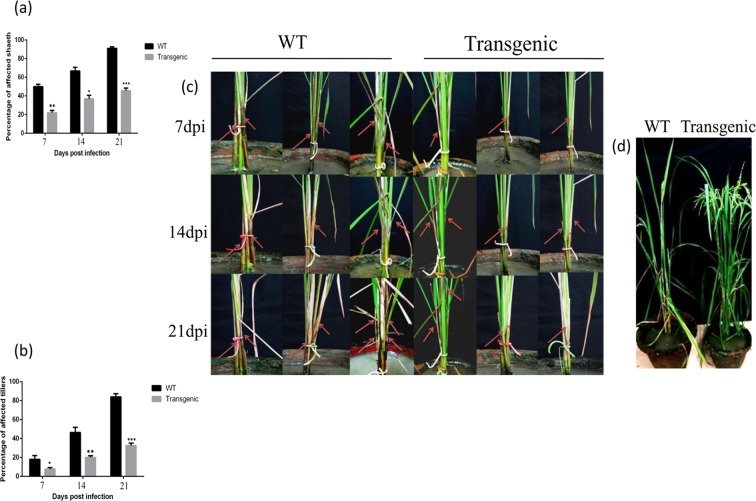
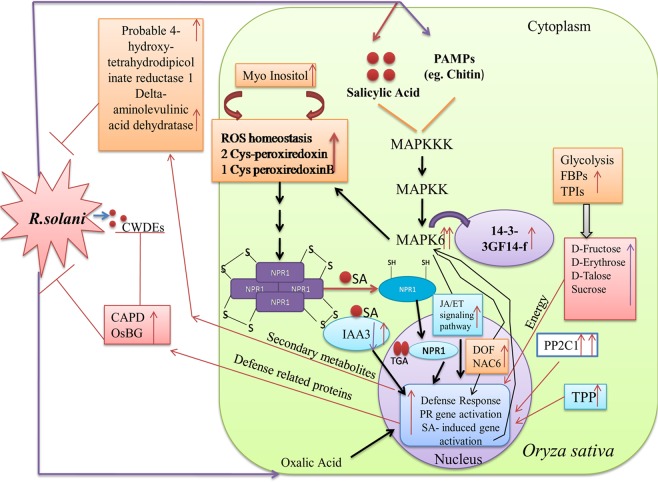
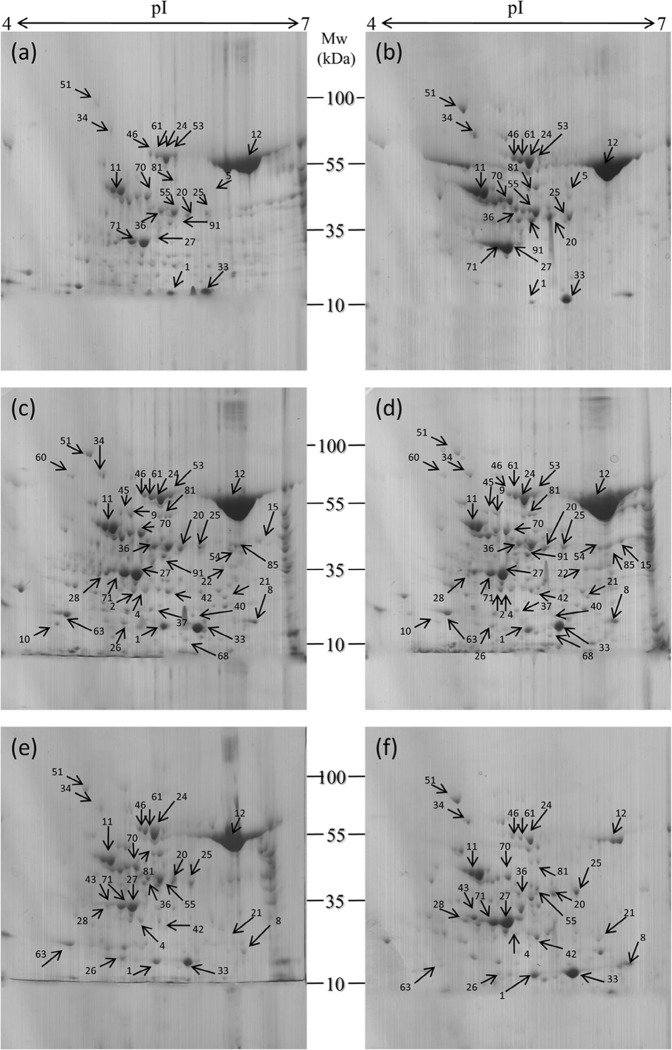
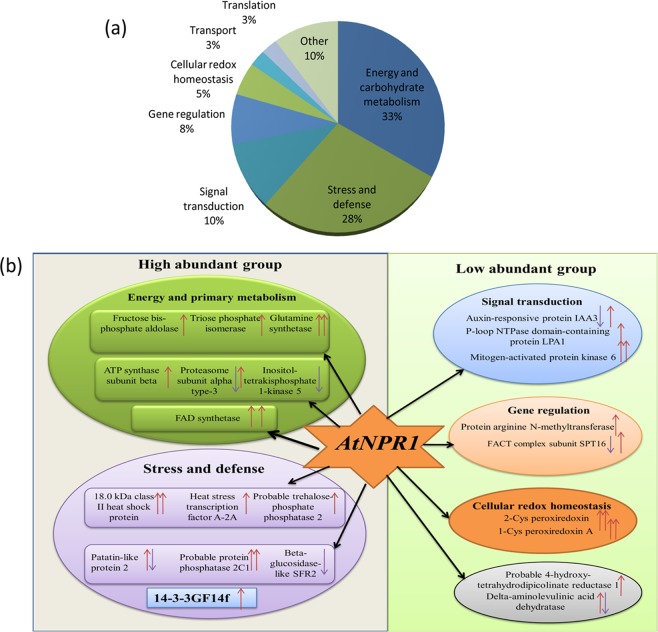
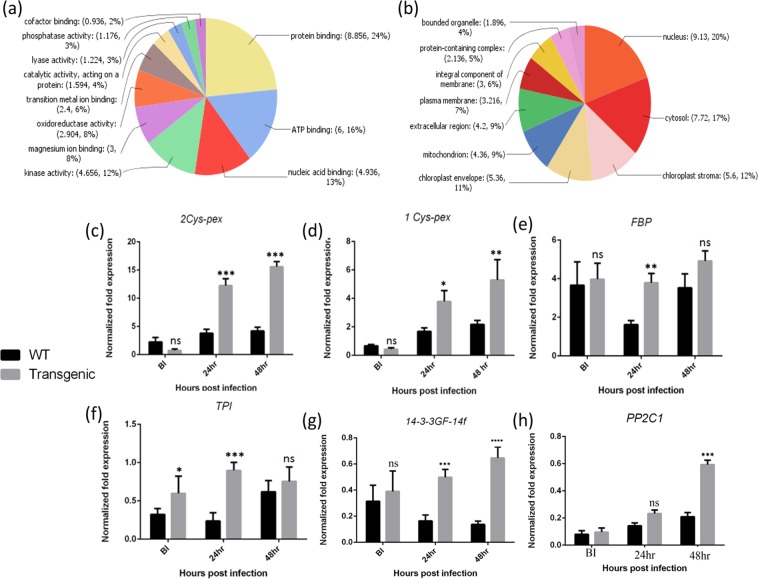
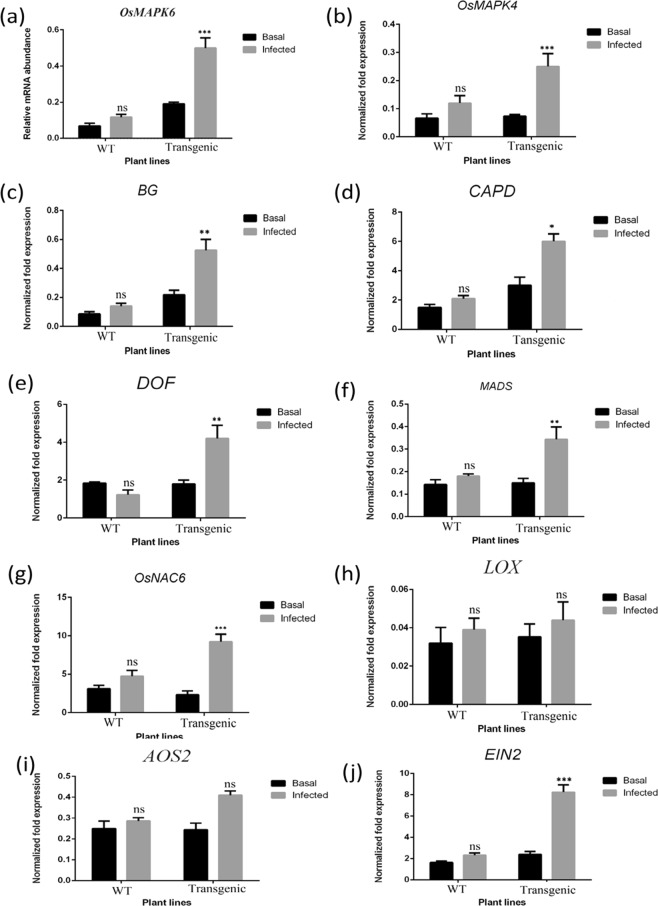
The generation of sheath blight (ShB)-resistant transgenic rice plants through the expression of Arabidopsis NPR1 gene is a significant development for research in the field of biotic stress. However, to our knowledge, regulation of the proteomic and metabolic networks in the ShB-resistant transgenic rice plants has not been studied. In the present investigation, the relative proteome and metabolome profiles of the non-transformed wild-type and the AtNPR1-transgenic rice lines prior to and subsequent to the R. solani infection were investigated. Total proteins from wild type and transgenic plants were investigated using two-dimensional gel electrophoresis (2-DE) followed by mass spectrometry (MS). The metabolomics study indicated an increased abundance of various metabolites, which draws parallels with the proteomic analysis. Furthermore, the proteome data was cross-examined using network analysis which identified modules that were rich in known as well as novel immunity-related prognostic proteins, particularly the mitogen-activated protein kinase 6, probable protein phosphatase 2C1, probable trehalose-phosphate phosphatase 2 and heat shock protein. A novel protein, 14-3-3GF14f was observed to be upregulated in the leaves of the transgenic rice plants after ShB infection, and the possible mechanistic role of this protein in ShB resistance may be investigated further.
通过表达拟南芥 NPR1 基因生成抗鞘枯病(ShB)的转基因水稻植株是生物胁迫研究领域的重大进展。然而,据我们所知,尚未研究 ShB 抗性转基因水稻植株中的蛋白质组和代谢网络的调控。在本研究中,在 R. solani 感染前后,对非转化的野生型和 AtNPR1 转基因水稻系的相对蛋白质组和代谢组图谱进行了研究。使用二维凝胶电泳(2-DE)和质谱(MS)对野生型和转基因植物的总蛋白进行了研究。代谢组学研究表明,各种代谢物的丰度增加,与蛋白质组分析相平行。此外,使用网络分析对蛋白质组数据进行了交叉检查,鉴定出富含已知和新型免疫相关预后蛋白的模块,特别是丝裂原活化蛋白激酶 6、可能的蛋白磷酸酶 2C1、可能的海藻糖-6-磷酸磷酸酶 2 和热休克蛋白。在 ShB 感染后,观察到转基因水稻叶片中 14-3-3GF14f 蛋白上调,该蛋白在 ShB 抗性中的可能作用机制可能进一步研究。